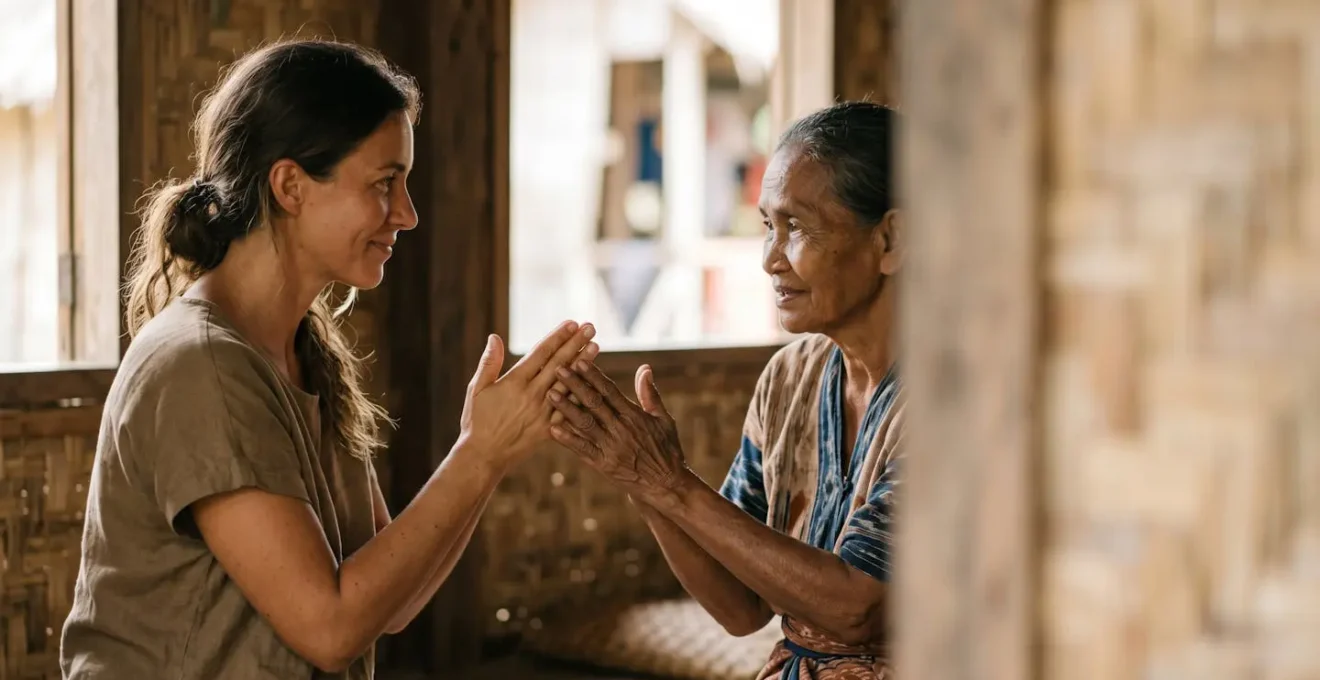
True cultural respect on islands isn’t about memorizing rules, but mastering a framework for observation and adaptation.
- Focus on the « Cultural Triage » model to prioritize what’s non-negotiable versus what is flexible.
- Adopt an « Observe, Mirror, Ask » approach when encountering new social situations to show genuine interest.
Recommendation: Shift your goal from perfectly executing customs to sincerely demonstrating respect and a willingness to learn; the effort is often more valued than perfection.
The desire to connect genuinely with the places we visit is a hallmark of a thoughtful traveler. You book a trip to a sun-drenched archipelago, dreaming of pristine beaches and vibrant culture. Yet, a quiet anxiety often accompanies this excitement: the fear of inadvertently causing offense. You want to be a respectful guest, but navigating an unfamiliar web of island customs can feel like walking through a minefield. The common advice— »be respectful, » « dress modestly »—is often too vague to be truly useful, leaving you unsure of what respect actually looks like in practice.
Many guides offer simple lists of dos and don’ts, which can be helpful but are ultimately limited. They don’t equip you for the countless unscripted moments that define travel. What happens when a custom conflicts with your own habits? How do you know which rules are sacred and which are merely local quirks? The real challenge isn’t memorizing a script; it’s learning how to improvise with cultural intelligence and grace.
This guide offers a different approach. Instead of a rigid list of rules, we will provide you with a set of mental frameworks and observational skills. The key to avoiding embarrassing mistakes isn’t about having all the answers beforehand, but about learning how to read a situation, understand the underlying principles of a culture, and adapt your behavior accordingly. We will explore the deep significance behind specific customs, from eye contact to dining, and equip you with practical strategies to engage with island communities in a way that fosters mutual respect and enriches your travel experience. By the end, you’ll have the confidence to move beyond being a tourist who follows instructions to become a traveler who truly understands context.
To navigate this complex but rewarding journey, this article is structured to build your cultural competency from the ground up. We will delve into specific customs and provide you with actionable frameworks to apply in any island destination. Here is a look at what we’ll cover.
Summary: A Traveler’s Guide to Island Etiquette
- Why Do Some Island Cultures Consider Direct Eye Contact Rude or Aggressive?
- How to Greet Island Residents: Handshakes, Bows or Verbal-Only in Different Cultures?
- Pacific Island Gift Etiquette or Caribbean: Which Cultures Expect Visitor Gifts?
- The Dining Etiquette Mistake That Deeply Offends Island Hosts During Meals
- When Must You Follow Island Customs Strictly Versus When Is Flexibility Accepted?
- Why Do Balinese Temples Require Sarongs and Sashes for All Visitors?
- How to Engage Respectfully With Remote Island Village Residents as a Day Visitor?
- How to Visit Remote Island Villages Without Accelerating Their Tourist Transformation?
Why Do Some Island Cultures Consider Direct Eye Contact Rude or Aggressive?
For many Western travelers, direct eye contact is a cornerstone of sincere communication; avoiding someone’s gaze can imply dishonesty or disinterest. However, this is a deeply ingrained cultural assumption, not a universal truth. In numerous island cultures, particularly across the Pacific and parts of Asia, prolonged and direct eye contact can be interpreted very differently. It may be perceived as a challenge, an act of aggression, or a sign of profound disrespect, especially when interacting with an elder or someone of higher social standing.
The reasoning behind this is rooted in social hierarchy and harmony. In these contexts, averting one’s gaze is a deliberate act of deference and respect. It signals that you are not challenging the other person’s authority or status. This cultural nuance is supported by scientific observation; research on cross-cultural perceptions reveals that individuals from East Asian cultures, for example, tend to perceive faces making direct eye contact as more unpleasant and unapproachable compared to their Western counterparts.
A clear example can be found in New Zealand, where the communication styles of Māori and other Pacific Island peoples often contrast with Western norms. In these cultures, looking an elder directly in the eye can be seen as confrontational. A culturally aware visitor will notice if a local resident offers limited eye contact and will understand this not as coldness, but as a cue. The appropriate response is to mirror this behavior, softening one’s own gaze to demonstrate respect and a willingness to adapt. This simple adjustment is a powerful, non-verbal way to show you are a guest who is paying attention.
How to Greet Island Residents: Handshakes, Bows or Verbal-Only in Different Cultures?
The first thirty seconds of an interaction can set the tone for the entire exchange, and a greeting is your first opportunity to show respect. With a vast spectrum of greetings around the world—from the firm Western handshake to the Japanese bow or the traditional Māori hongi—the fear of choosing the wrong one is valid. Offering a hand to someone who expects a bow can create an awkward moment that undermines the connection you hope to build. So how do you navigate this without an encyclopedic knowledge of every island’s customs?
The most effective strategy is not to memorize dozens of greetings, but to adopt a flexible, three-step framework of adaptive behavior. This approach allows you to respond appropriately in almost any cultural context:
- Observe: Before you act, take a moment to watch. How do locals greet each other? Notice the physical distance they keep, the gestures they use (or don’t use), and the verbal exchanges that accompany them. This brief observation provides invaluable, real-time data.
- Mirror: Gently return the greeting that is offered to you. If someone extends a hand, accept the handshake. If they offer a slight bow, return a similar bow. If they greet you verbally from a distance, respond in kind. Mirroring shows you are receptive and respectful of their lead.
- Ask: When in doubt, a moment of honest vulnerability is far better than a misplaced assumption. Politely inquiring, « What is the customary way to greet someone here? » demonstrates humility and a genuine interest in learning. This question is almost universally appreciated.
This « Observe, Mirror, Ask » approach transforms you from a passive rule-follower into an active participant in the cultural exchange. It prioritizes connection over correctness and empowers you to build rapport authentically, one greeting at a time.
Some greetings, like the hongi, are deeply spiritual and reserved for specific contexts. While you may not be expected to initiate such a greeting, understanding its significance enriches your appreciation of the local culture and the importance placed on connection.
Pacific Island Gift Etiquette or Caribbean: Which Cultures Expect Visitor Gifts?
The question of gift-giving is a common source of anxiety for travelers. Is a gift expected when visiting a home or a village? What kind of gift is appropriate? In many island cultures, from the Pacific to the Caribbean, gifting is an integral part of hospitality and building community ties. However, the meaning behind the gift is often more important than its monetary value. It’s a token of respect and gratitude, not a transaction. To navigate this gracefully, it helps to think within a framework that ensures your gift is thoughtful and appropriate.
The « 3 Ls Framework » is a simple yet powerful guide for choosing a culturally appropriate gift:
- Local: Whenever possible, choose items that support the local economy. Bringing high-quality local fruits, baked goods, or crafts from a nearby town is often more meaningful than an imported souvenir. It shows you value the region’s products and helps avoid creating waste with unnecessary packaging.
- Lightweight: Consider the host’s living situation. A large, bulky item may become a burden if they have limited space. A gift should be a welcome addition, not a storage problem. This applies to both physical weight and practical usability.
- Logical: Prioritize items that are genuinely useful or can be shared by the community. School supplies (pens, notebooks), quality books for a community library, or specialty food items are often excellent choices. Avoid random souvenirs or making donations that could be inappropriate or impractical.
This approach is beautifully illustrated in the Caribbean. In Jamaica, for instance, it is customary to bring a small gift like local fruits, sweets, or a bottle of rum when visiting a home. In Trinidad and Tobago, beautifully wrapped hampers of snacks are a common offering. In these cases, the case study shows the emphasis is on the gesture of sharing and community. The gift is a physical representation of respect for the host and their hospitality. By applying the « 3 Ls, » you can be confident that your gift will be received as a sign of genuine appreciation, not an empty obligation.
The Dining Etiquette Mistake That Deeply Offends Island Hosts During Meals
In many island cultures, food represents life, community, and the host’s honor.
– Cultural dining etiquette analysis, Intrepid Travel – Food Etiquette Around the World Guide
Sharing a meal is one of the most intimate and universal forms of human connection. For a traveler, being invited to a local’s home for dinner is a profound honor. Because food is so deeply tied to a host’s generosity and status, the single most offensive mistake a guest can make is refusing the food that is offered. To reject a dish is often interpreted not as a dietary choice, but as a rejection of the host themselves—their effort, their hospitality, and their honor.
This puts travelers with allergies, dietary restrictions, or simply a less adventurous palate in a difficult position. How do you navigate this without causing deep offense? The key is to refuse the food, not the hospitality. This requires a « graceful refusal script » that communicates your appreciation while explaining your inability to partake.
When faced with a dish you cannot eat, the following steps can help you handle the situation with sensitivity:
- Acknowledge with Extreme Gratitude: Begin with overwhelmingly sincere thanks. Say something like, « Thank you so much for your incredible generosity, this looks amazing. » This validates the host’s effort and the quality of their offering.
- Frame it as a Health Concern, Not Rejection: Briefly and simply explain your limitation. « I am so sorry, but a personal health issue prevents me from being able to eat this. » There is no need for a long, detailed explanation of your condition; this keeps the focus on your limitation, not their food.
- Emphasize the Honor You Feel: Conclude by reinforcing your gratitude for the invitation itself. « But I feel so incredibly honored to be offered a place at your table. » This shows that you value their hospitality and company above the meal itself.
This approach separates the food from the social act of sharing. By showing immense gratitude for the offer, you honor your host, even if you cannot eat what they have so generously prepared.
When Must You Follow Island Customs Strictly Versus When Is Flexibility Accepted?
One of the greatest challenges for a culturally sensitive traveler is knowing when to be a strict adherent to local customs and when a sincere effort is enough. Not all rules carry the same weight. Showing up to a beach party in the wrong attire is a minor faux pas; wearing the same outfit into a sacred temple could be a major offense. To navigate this, it’s essential to develop a sense of cultural triage—a mental framework for categorizing customs based on their importance.
This framework can be broken down into three tiers:
- Tier 1 – Sacred Rules (Non-Negotiable): These are customs tied to religion, spirituality, and deep-seated traditions. They include temple dress codes (like wearing a sarong), protocols for sacred sites, and spiritual taboos. These rules must be strictly observed by everyone, regardless of their beliefs. There is no flexibility here.
- Tier 2 – Social Norms (Highly Advised): These are the unwritten rules of politeness and respect that govern daily interactions. This tier includes customs like greeting elders first, using the correct hand to give or receive items, and dressing modestly in villages. Adhering to these norms shows cultural awareness and is the fastest way to earn respect.
- Tier 3 – Local Quirks (Optional but Appreciated): This category includes regional preferences, minor social habits, or specific ways of eating a local dish. In this tier, perfect execution is less important than sincere effort. Locals will likely find your attempts endearing, and your willingness to try is what matters most.
Context is also crucial. As research on island tourism patterns shows that tourist-centric areas often operate on a different set of expectations. A resort or hotel may function with Western-style schedules and norms (the « tourist bubble »), while a remote village ten minutes away operates on « island time » and expects a greater adherence to traditional customs. The savvy traveler learns to recognize this shift and adjust their behavior accordingly, applying stricter adherence to Tier 1 and 2 rules the further they move from the tourist bubble.
Your Cultural Readiness Checklist: An Audit
- Points of Contact: List all the situations where you will interact with the local culture (greetings, dining, markets, sacred sites).
- Collection: Inventory the specific customs you already know for your destination (e.g., dress codes for temples, gift expectations).
- Coherence: Compare these known customs to your own behaviors. Where are the biggest differences, such as directness vs. indirectness?
- Memorability/Emotion: Identify one or two key customs that carry deep emotional or spiritual weight for the local community (e.g., honoring elders).
- Integration Plan: Prioritize what you need to research further and create a plan to adapt your behavior in those key situations.
Why Do Balinese Temples Require Sarongs and Sashes for All Visitors?
For any visitor to Bali, the experience of visiting a temple (a *pura*) is a cultural and spiritual highlight. Upon arrival, you will be required to wear two key items: a sarong (known as a *kain*) and a sash (*selendang*). This is not an arbitrary rule for tourists; it is a fundamental practice of respect rooted in Balinese Hindu philosophy, falling squarely into the category of a Tier 1 – Sacred Rule. Every person, including the Balinese themselves, must wear them to enter the sacred grounds.
The requirement serves several profound symbolic purposes. First, the sarong acts as a boundary, a piece of clothing that separates the purity of the sacred temple from the profane, ordinary world outside. Wearing it is an act of purification and a sign that you are setting aside your everyday self to enter a holy space. It is also a gesture of modesty and respect for the gods and spirits that reside within the temple. Covering the lower body ensures that all who enter do so on equal, respectful footing, regardless of their usual style of dress.
The sash, tied around the waist over the sarong, has its own spiritual meaning. It is intended to separate the « higher, » more pure human faculties (the head and chest) from the « lower, » more base ones (from the stomach down). This symbolic division helps focus one’s spiritual energy and intentions, ensuring that thoughts and desires are pure upon entering the temple. By participating in this simple ritual, you are not just following a dress code; you are actively engaging in an act of cultural and spiritual respect that has been practiced for centuries. It’s a powerful reminder that some places require us to change ourselves before we can enter.
How to Engage Respectfully With Remote Island Village Residents as a Day Visitor?
Visiting a remote village offers a precious glimpse into a way of life that is often vastly different from our own. As a day visitor, you are a temporary guest, and the responsibility to be unobtrusive and respectful is paramount. The desire to capture memories through photography is natural, but pointing a camera at someone without their consent is an act of taking, not sharing. It can make people feel like objects in a human zoo. To avoid this, you must prioritize connection before the camera.
A respectful engagement, especially before asking for a photograph, can be achieved through a simple, three-step protocol that builds rapport and honors the other person’s humanity:
- Step 1 – Shared Smile: This is the universal, non-verbal signal of peaceful intent. A genuine, warm smile and gentle eye contact (recalling the cultural norms from earlier) establishes a moment of human connection before any words are spoken.
- Step 2 – Verbal Greeting: Use a culturally appropriate greeting, ideally one you have learned in the local language. A simple « hello » or « good morning » is a bridge that transforms you from a silent observer into a person seeking interaction.
- Step 3 – Genuine Engagement: This is the most crucial step. Before even thinking about your camera, engage with them as a person. Ask a sincere question about the craft they are working on, compliment a piece of their handiwork, or simply ask how their day is going. This small investment of time shows you are interested in them, not just their image.
Only after this sequence of connection is it appropriate to consider asking for a photo. As the visitor etiquette in the Marshall Islands demonstrates, asking for permission is non-negotiable. This process of smiling, greeting, and engaging beforehand makes that request a natural continuation of a friendly interaction, rather than an intrusive demand. It respects personal space and acknowledges the person’s right to their own image, transforming a potentially transactional moment into a mutually respectful one.
Key Takeaways
- Master the « Cultural Triage » framework to distinguish between non-negotiable sacred rules and flexible social norms.
- Apply the « Observe, Mirror, Ask » principle in new situations, especially with greetings, to show active respect.
- Choose responsible tour operators who follow a « Low Volume, High Value » model that directly benefits the local community.
How to Visit Remote Island Villages Without Accelerating Their Tourist Transformation?
The most profound ethical question for a sensitive traveler is whether their very presence contributes to the erosion of the culture they have come to admire. Unmanaged tourism can transform vibrant, authentic communities into commercialized shells of their former selves. However, this is not inevitable. By making conscious, informed choices, travelers can support a more sustainable model of tourism—one that empowers local communities and helps preserve their heritage.
The most powerful tool you have is your wallet. By choosing to support a « Low Volume, High Value » tourism model, you can actively contribute to positive outcomes. This means looking for specific principles when you book a tour or experience:
- Choose operators with local guides: Ensure the company you travel with employs guides from the community. This keeps income and knowledge within the village and provides you with a more authentic perspective.
- Operate in small groups: Avoid large tour buses and opt for intimate groups (ideally under 10 people). Smaller groups have a significantly lower environmental and cultural footprint and allow for more meaningful interactions.
- Verify direct community contribution: Ask tour operators how a portion of your fee directly benefits the village. Does it fund a school, a cultural preservation project, or a local environmental initiative? Reputable operators will be transparent about this.
- Support community-owned initiatives: Prioritize experiences run by local cooperatives, family-run businesses, or community foundations over large, external corporations that may extract profits without reinvesting in the community.
This mindful approach extends to environmental stewardship. As environmental research on island ecosystems demonstrates that fragile environments like those with volcanic ash can take centuries to recover from damage, staying on marked paths and respecting nature is a critical part of cultural respect. The land and the culture are often inextricably linked. By choosing operators who respect both, you help ensure that the village you visit today will still be a living, thriving community for generations of locals and visitors to come.
Ultimately, becoming a culturally respectful traveler is a journey, not a destination. It is a continuous practice of observation, humility, and adaptation. By moving beyond a simple list of rules and embracing these deeper frameworks, you not only avoid embarrassing mistakes but also transform your travel from a passive act of seeing into an active, enriching exchange. This is the path to creating memories that are not only beautiful but also meaningful and respectful to the island communities that welcome you.