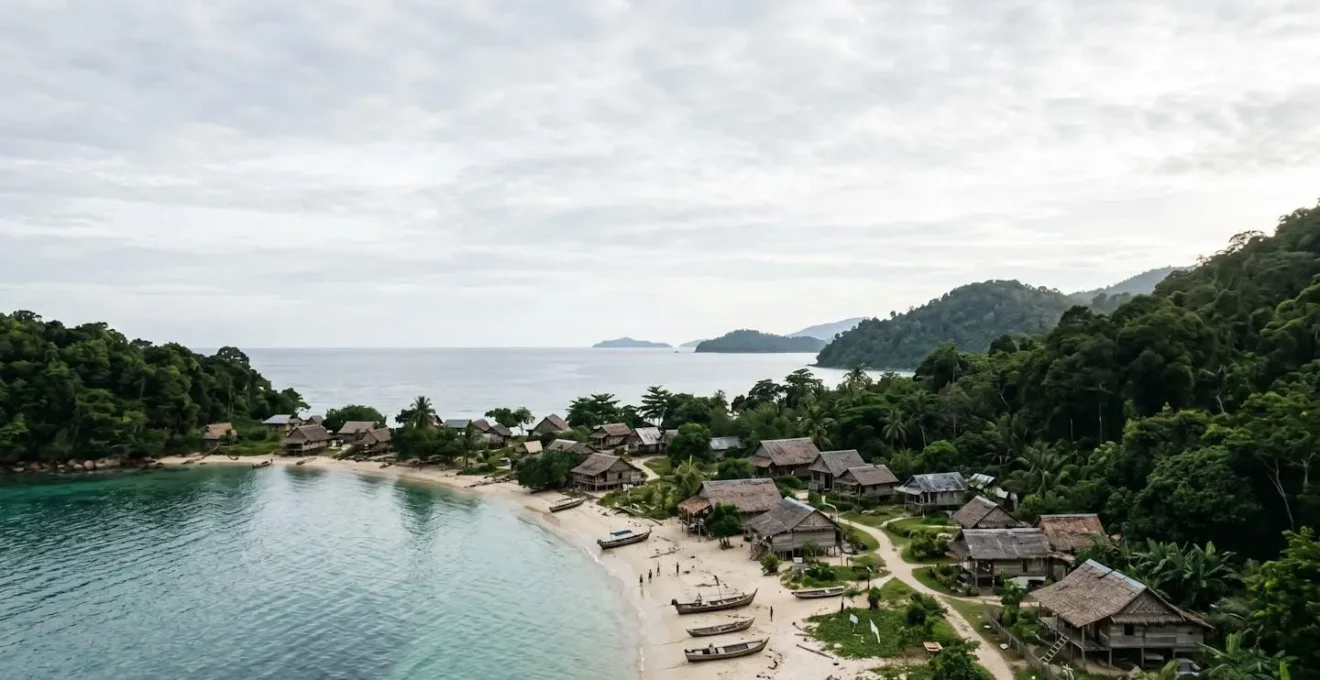
Visiting a remote village to ‘experience its authenticity’ is a paradox that often destroys the very culture you seek.
- The traveller’s gaze can turn daily life into a performance, a concept known as « staged authenticity. »
- True support comes from shifting from a consumer to an observer, prioritizing community-owned initiatives over commercial tours.
Recommendation: Focus on minimizing your cultural footprint by observing from a distance, seeking genuine consent, and ensuring your money directly benefits the community.
The desire to connect with a way of life untouched by modernity is a powerful lure for many travellers. We dream of remote island villages, of witnessing ancient traditions and experiencing a culture in its « purest » form. Yet, this very pursuit contains a destructive paradox. The moment a culture becomes an attraction, it begins to change, often catering to the expectations of the visitor. The authenticity we seek can wither under the tourist gaze, replaced by a performance for our benefit. The challenge for the culturally sensitive traveller is not to find untouched cultures, but to learn how to engage with living communities in a way that honours their reality rather than transforming it into a commodity.
Many guides offer simple advice: learn a few local words, buy handicrafts, or smile often. While well-intentioned, these actions barely scratch the surface of the complex power dynamics at play. They fail to address the fundamental issue: our presence itself is a catalyst for change. True ethical travel requires a deeper shift in mindset, moving away from being a consumer of experiences and towards becoming a quiet, respectful observer. It demands that we question our motives, understand our impact, and actively seek ways to ensure our visit is, at worst, neutral and, at best, a small, positive force for the community on its own terms.
This guide moves beyond the platitudes. It explores the ethical frameworks necessary to navigate these fragile encounters. It is not a checklist of dos and don’ts, but a philosophical and practical compass for minimizing your « observer’s footprint » and ensuring that your journey respects the dignity, autonomy, and continuity of the communities you are privileged to visit. By understanding the mechanisms of cultural commodification, we can learn to travel not as protagonists in our own adventure story, but as humble guests in someone else’s home.
To navigate this complex topic, this article will explore the core issues and provide concrete strategies. The following sections break down the paradox of authenticity, offer guidance on respectful engagement, and equip you with the tools to make truly ethical choices on your travels.
Summary: A Conscious Traveller’s Guide to Remote Village Visits
- Why Does Tourism to Remote Villages Paradoxically Destroy the Authenticity It Celebrates?
- How to Engage Respectfully With Remote Island Village Residents as a Day Visitor?
- Village Homestay Immersion or Day Visit: Which Approach Is More Culturally Respectful?
- The Village Photography Mistake That Treats Residents as Museum Exhibits
- When Do Remote Villages Welcome Tourism Versus When Does It Cause Community Resentment?
- Why Do Some Island Cultures Consider Direct Eye Contact Rude or Aggressive?
- Visit Artisan Workshops or Buy From Craft Shops: Which Ensures Authentic Island Crafts?
- How to Find Authentic Island Artisans Making Traditional Crafts Worth Supporting?
Why Does Tourism to Remote Villages Paradoxically Destroy the Authenticity It Celebrates?
The core of the issue lies in a phenomenon the sociologist Dean MacCannell termed « staged authenticity. » It describes the process where local life is converted into a performance for tourist consumption. As soon as a cultural practice—a ceremony, a craft, a daily routine—is identified as interesting to outsiders, it risks being disconnected from its original context. It is polished, scheduled, and packaged for sale. The authentic backstage of community life is replaced by a contrived front stage, designed to meet the visitor’s preconceived notions of what « authentic » should look like. This process, driven by economic incentives, inadvertently erodes the very traditions the traveller came to see.
MacCannell introduces the notion of ‘staged authenticity’. This refers to the way in which local people and local tourist entrepreneurs construct ‘tourist spaces’, contrived and artificial backstages which are intended to give the impression of authentic local life but which have been set up, in advance, for tourists.
– Dean MacCannell, The Tourist: A New Theory on the Leisure Class (1973)
The scale of modern tourism exacerbates this. When visitor numbers overwhelm local capacity, the balance is irrevocably broken. The pressure to cater to mass demand accelerates cultural commodification and can physically strain the community and its resources. For instance, the sheer volume of visitors can transform a quiet village into a crowded marketplace, where every interaction is transactional. This is starkly evident in destinations like Santorini, where 18,000 cruise passengers can descend daily upon an island with only 15,000 residents, overwhelming infrastructure and turning public spaces into commercial zones. The search for a quiet, authentic Greek island experience ironically contributes to its disappearance.
The paradox is that our presence, motivated by appreciation, becomes a force for commercialisation. We seek the real, but our quest creates a market for the fake. Recognizing this dynamic is the first step toward mitigating our impact. It requires us to abandon the romantic notion of discovering an « untouched » paradise and instead focus on how to engage with a living, evolving culture in the most respectful and least intrusive way possible.
How to Engage Respectfully With Remote Island Village Residents as a Day Visitor?
Respectful engagement as a day visitor begins long before you arrive; it starts with a fundamental shift in mindset from « viewer » to « guest. » Your primary role is to observe, not to interact unless invited. The goal is to minimize your observer’s footprint—the subtle but significant impact your presence has on the rhythm of daily life. This means maintaining a physical and psychological distance, allowing the community’s activities to unfold naturally without feeling watched or pressured to perform. Think of yourself as being present in the background, not the centre of attention.
This approach manifests in your body language and spatial awareness. Instead of walking into the centre of a communal area, stay on the periphery. Avoid pointing your camera or even your gaze directly at individuals for prolonged periods. A quiet, unassuming presence is far more respectful than an overtly friendly but intrusive one. Small gestures, learned in advance from a local guide, can signal respect. A simple nod, a soft smile without direct eye contact, or a hand gesture can convey goodwill without demanding a response or interrupting a person’s work.
As the image above illustrates, true respect can be shown by observing daily life from a distance, without intrusion. The visitor is a part of the scene but not its focus, allowing village life to continue undisturbed. Ultimately, the most respectful form of engagement is often the most passive. It involves moving slowly, speaking softly, and dressing modestly according to local customs. It means accepting that you may not understand everything you see and resisting the urge to ask for explanations. Your visit is a brief window into another world, not an entitlement to its secrets.
Village Homestay Immersion or Day Visit: Which Approach Is More Culturally Respectful?
On the surface, a homestay seems like the pinnacle of authentic travel, promising deep immersion into a local family’s life. A day visit, by contrast, can feel superficial and transactional. However, the question of which is more « culturally respectful » is not straightforward; the answer depends entirely on the structure, ownership, and management of the experience. An improperly managed homestay can be far more intrusive and damaging than a well-organized, respectful day visit.
A homestay places you directly into a family’s private space. This can create immense pressure on the hosts to perform hospitality, alter their routines, and provide a curated « authentic experience » for their guest. It can blur the lines between private life and commercial enterprise, turning a home into a 24/7 workplace. If not managed by the community for the community, a homestay network can lead to jealousy and inequality, with benefits flowing to only a few families chosen by an outside operator. The intimacy it promises can become a burden.
A day visit, when structured ethically, can be less disruptive. If organized through a community-owned cooperative, it allows the village to control the terms of engagement. They can designate specific areas for visitors, schedule activities that don’t interfere with essential daily life, and distribute the economic benefits widely. This model respects boundaries and allows residents to participate in tourism without sacrificing their privacy. The key is that the community holds the power. Conversely, a day trip organized by a large, external tour operator can be highly exploitative, bussing in large groups for a staged show with little benefit returning to the village.
Ultimately, community-based tourism (CBT) is the gold standard for both models. A CBT homestay, where the family has opted in through a collective agreement and receives fair compensation and support, can be a wonderful exchange. Research indicates that when done right, these experiences build powerful connections; a 2024 study on sustainable rural tourism found that 66.4% of respondents were willing to return to the same community-based homestay. The most respectful choice is not the format (homestay vs. day visit), but the underlying model of ownership and control. Always choose the option that is led and managed by the community itself.
The Village Photography Mistake That Treats Residents as Museum Exhibits
One of the most significant ethical missteps a traveller can make is in their approach to photography. The desire to capture a « National Geographic » style portrait of a local person, while often stemming from admiration, can reduce a human being to an exotic object. It frames them as a static exhibit in a living museum, there for our aesthetic consumption. This act ignores their agency, their context, and their right to privacy. The core mistake is viewing photography as a right of the traveller rather than a privilege granted by the subject.
The common advice to « ask for permission » is insufficient. In many contexts, a power imbalance exists. A resident may feel pressured to agree due to politeness, social deference to a foreigner, or an implied economic expectation. This is acquiescence, not informed consent. As an analysis from Indigenous Peoples’ Rights experts points out, genuine consent is far more complex. It must be freely given, without coercion, and with a full understanding of how the image might be used. A simple nod is not enough.
A technically signed agreement may still be suspect if consent is not genuine when communities face poverty, land insecurity, or political marginalization. Ethical compliance therefore demands more than signature collection.
– Indigenous Peoples’ Rights Analysis, Indigenous Peoples’ Rights in Tourism
A more ethical approach is to de-emphasize portraiture altogether. Instead, focus your lens on the details that tell a story without objectifying a person: the intricate pattern of a textile, the weathered tools of a craftsman, or the architecture of a home. This is the practice of cultural-detail photography. It honours the culture by celebrating its artistry and heritage, rather than its people as exotic subjects. It shifts the focus from « who » to « how, » from a face to a process.
By capturing the hands at work, as shown in this image, the photograph celebrates skill, tradition, and the tactile beauty of the craft itself. If you do wish to take a portrait, it should be the result of a genuine connection, not a fleeting transaction. Spend time, engage in conversation (perhaps through a guide), and let the photo be a shared memento of a real interaction, not a trophy of your travels.
When Do Remote Villages Welcome Tourism Versus When Does It Cause Community Resentment?
The line between a community that welcomes tourism and one that resents it is often invisible to the casual visitor, yet it is the most critical factor in ethical travel. Welcome is not about forced smiles or staged ceremonies; it is about genuine agency and positive impact. Resentment builds when a community feels that tourism is something happening *to* them, rather than something they control *for* themselves. The key indicators are ownership, benefit distribution, and respect for their way of life.
A community is more likely to welcome tourism when it is the primary decision-maker. This means the village council or a cooperative has the power to set limits on visitor numbers, dictate which areas are accessible, and determine the nature of the activities. When tourism is community-led, the economic benefits are more likely to be distributed equitably, funding communal projects like schools, clinics, or infrastructure. In this scenario, visitors are seen as partners who contribute to the well-being of the community. The welcome is authentic because the exchange is mutually beneficial.
Resentment, conversely, festers when tourism is imposed from the outside. This often happens when large, non-local tour companies or cruise lines create itineraries without meaningful consultation. In such cases, recent analyses of overtourism confirm that the influx of visitors often commodifies local culture, with traditions being commercialized to cater to tourists, diluting their authenticity. This creates what is known as economic leakage, where the vast majority of tourist money flows out to international corporations, leaving the community with the social and environmental costs but few of the rewards. Residents are left feeling like unpaid attractions in their own homes, leading to frustration and hostility.
As a traveller, you can look for signs. Are your guides from the community itself? Does the tour operator explicitly state how benefits are shared? Is the experience small-scale and intimate, or a mass-produced show? As Paula Vlamings of Tourism Cares notes, the industry must be more proactive in creating sustainable models. Your choice of operator is a vote for the kind of tourism you support: one that empowers or one that exploits.
The whole industry needs to be a lot more proactive. How do we conduct business? How do we market these destinations, and how do we serve the local communities that are being impacted? All that really needs a sustainable strategy going into the future.
– Paula Vlamings, Chief Impact Officer, Tourism Cares, CNN Travel Interview
Why Do Some Island Cultures Consider Direct Eye Contact Rude or Aggressive?
In many Western cultures, direct eye contact is a sign of honesty, confidence, and engagement. We are taught to « look someone in the eye » to show we are listening and trustworthy. However, imposing this cultural norm in a different context can lead to serious miscommunication. In numerous island cultures, particularly in parts of the South Pacific, Asia, and among certain Indigenous groups, prolonged or intense eye contact can be interpreted as rude, confrontational, or even a sign of aggression. It can be seen as a challenge to authority or an invasion of personal space.
This difference in non-verbal communication stems from deeply ingrained cultural values. In societies that place a high premium on social harmony, respect for elders, and indirect communication, avoiding direct eye contact is a way of showing deference and politeness. Looking down or averting one’s gaze, especially when speaking to someone of a higher social status, is not a sign of dishonesty or shyness; it is a deliberate act of respect. A visitor who insists on making and holding eye contact may be perceived as arrogant and disrespectful, inadvertently creating tension and discomfort.
The key for a traveller is to move from a position of « doing » to one of « observing and mirroring. » Instead of defaulting to your own cultural habits, pay close attention to how local people interact with each other. Notice their gaze. Do they hold eye contact, or are their interactions characterized by softer, more fleeting glances? Mirroring this behaviour is a powerful, non-verbal way to show that you are adaptable and respectful of their customs. It signals that you are willing to step outside your own cultural framework.
This principle extends beyond eye contact to all forms of non-verbal communication, including gestures, personal space, and physical contact. The overarching lesson is one of humility. It requires acknowledging that our ways are not universal and that true respect lies in adapting to the host culture’s norms, not expecting them to adapt to ours. As responsible tourism advocates emphasize, building trust is paramount, and it begins with listening and observing, not assuming.
Visit Artisan Workshops or Buy From Craft Shops: Which Ensures Authentic Island Crafts?
For the conscious traveller, purchasing a souvenir is an act of economic support. The choice of where to buy is therefore an ethical decision. The typical tourist path leads to a colourful craft shop, filled with an abundance of items. The alternative, often more difficult to find, is the artisan’s own workshop. While both may offer beautiful objects, they represent vastly different economic and cultural models. Choosing a workshop over a shop is almost always the more direct and impactful way to support authentic craftsmanship.
Souvenir shops, especially in high-traffic tourist areas, often function as middlemen. They may purchase items in bulk from artisans at a low price to sell at a significant markup. In worse cases, the items sold are not locally made at all, but are mass-produced imports designed to look « traditional. » This model contributes to economic leakage, where a large portion of the profit leaves the community and the artisan receives only a fraction of the item’s value. The shop’s primary incentive is volume and profit, not the preservation of cultural heritage.
Visiting an artisan’s workshop, or a community-owned cooperative, fundamentally changes this dynamic. Buying directly from the creator ensures that 100% of the money you spend goes to them and their family. This direct transaction honours their skill and provides a fair wage for their labour. More importantly, it fosters a connection. You can see the process, understand the materials, and hear the story behind the craft. This is not just a purchase; it is a form of cultural exchange that validates and encourages the continuation of traditional skills.
Case Study: The Fijian Cooperative Model
In Fiji, responsible tourism practices highlight the importance of community ownership. As village elders explain, access to authentic experiences and crafts should be managed through locally owned enterprises built on trust. This cooperative approach ensures that tourism revenue flows directly into the community to support collective needs, rather than being siphoned off by external corporations. This model directly addresses the problem of economic leakage and empowers the community to preserve its heritage on its own terms.
The ideal scenario is often an artisan cooperative, as symbolically represented above. These ventures pool resources, share skills, and allow creators to collectively manage their own sales and marketing. Supporting such a cooperative ensures your purchase contributes to the economic resilience of the entire community, not just one individual. When you choose to buy from the source, you are not just acquiring a craft; you are investing in the sustainability of a culture.
Key Takeaways
- The pursuit of « authenticity » can paradoxically lead to « staged authenticity, » where culture becomes a performance for tourists.
- Ethical engagement means minimizing your « observer’s footprint » by being a quiet, respectful guest rather than an active consumer of experiences.
- True support for artisans comes from buying directly from workshops or community-owned cooperatives, which ensures money stays local and honours the craft.
How to Find Authentic Island Artisans Making Traditional Crafts Worth Supporting?
Finding authentic artisans requires moving off the beaten path and away from the main tourist thoroughfares. The most genuine crafts are rarely found in the brightly lit souvenir shops lining the port or town square. Instead, they are in the quiet backstreets, the village workshops, and the community-run cooperatives. The search is an active process of inquiry and observation, guided by a desire to connect with the source of the craft.
The first step is to leverage local knowledge. Rather than asking a hotel concierge (who may have commission-based relationships with certain shops), hire a truly local, independent guide. Explain that you are not interested in souvenir shopping, but in meeting artisans and seeing them at work. A good guide, who is part of the community, will understand the distinction and can facilitate respectful introductions. Another strategy is to visit local food markets. These are often hubs of community life where you might find artisans selling their wares directly to their neighbours, a strong sign of authenticity.
It is also crucial to be able to distinguish between an ethical, community-benefitting experience and an exploitative one. Look for red flags: tours run by non-Indigenous operators, large groups watching staged shows, or any situation where you feel pressured to buy or take photos. A green flag is always community ownership and control. When the experience is created and led by the community itself, it is a powerful indicator that your presence and your money are contributing positively. The following audit can help you assess any potential tour or artisan visit.
Your Action Plan: Auditing an ‘Authentic’ Tourism Experience
- Points of Contact: List all channels where the experience is promoted. Is it on a massive international booking site, or is it advertised through a local community board or a small, locally-owned tour company?
- Collecte: Inventory the specific elements being offered. Does the tour promise access to private homes, staged daily performances, or photo opportunities with residents in traditional attire?
- Coherence: Confront the offering with ethical principles. Does the operator clearly state that the community has ownership and control? Is there transparency on how the economic benefits are distributed?
- Memorability & Emotion: Assess the nature of the experience. Is it a generic, repeatable show for large groups, or does it offer a genuine, small-scale interaction that respects the daily life of the community?
- Plan for Integration: Make your decision. Prioritize experiences that are clearly community-led and controlled. If you encounter an exploitative situation, do not participate, and consider providing feedback to a local tourism authority if appropriate.
Ultimately, supporting authentic artisans is about valuing their skill, time, and cultural heritage. Be prepared to pay a fair price, which will be higher than the mass-produced items in a souvenir shop. That price reflects not just the material object, but the story, the tradition, and the direct, sustainable support you are providing to a person and their community.
The journey to becoming a culturally sensitive traveller is a continuous process of learning and self-reflection. It requires moving beyond a simple desire for « authentic » experiences and embracing a deeper commitment to minimizing harm and maximizing respect. The next time you set foot in a remote village, the goal is not to capture its essence for yourself, but to leave it as untouched by your presence as possible.