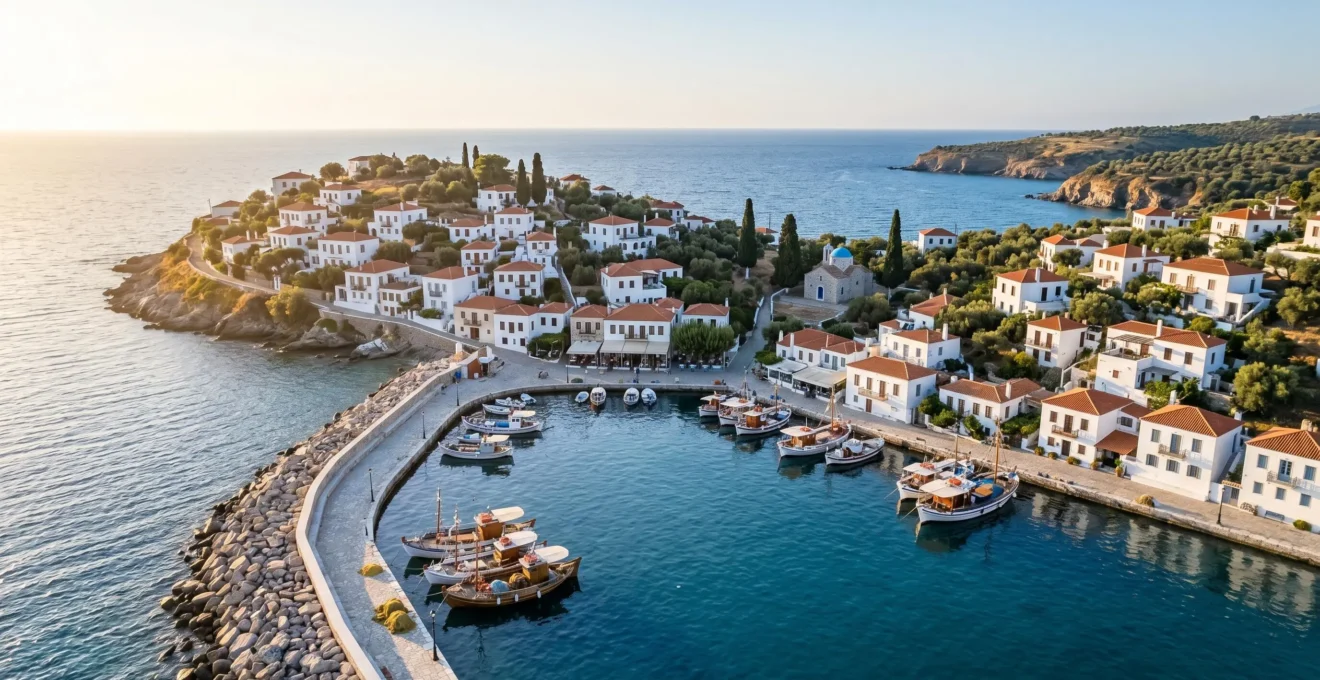
The key to choosing the right first Mediterranean island is not picking from a list, but matching the island’s underlying ‘DNA’ to your travel priorities.
- An island’s character is shaped by deliberate tourism strategies, not just geography.
- Timing is critical: Autumn offers warm seas and fewer crowds than Spring.
- Route planning and ferry choice (slow vs. fast) define the experience as much as the destination itself.
Recommendation: Prioritise the early autumn shoulder season (September) and choose a ‘balanced’ island like Naxos or Paros as a base for your first island-hopping adventure.
The sheer number of Mediterranean islands can feel paralyzing for a first-time visitor. You’re faced with a mosaic of over a thousand specks of land, each promising sun-drenched beaches, ancient history, and mouth-watering cuisine. The typical advice involves scrolling through endless « Top 10 » lists comparing Santorini’s sunsets to Majorca’s coves or Sicily’s culture. While helpful, this approach often overlooks the most crucial element: the island’s fundamental character, or its ‘DNA’. Why does one Greek island feel like a non-stop party, while its neighbour just 50 kilometres away is a haven of quiet authenticity?
Most guides focus on what you see—the white-washed villages and turquoise waters—but fail to explain the invisible forces that shape your experience. These forces include historical development, geological origins, and, most importantly, the strategic tourism decisions made over decades. Understanding this ‘Island DNA’ is the real secret to avoiding disappointment and finding the destination that truly resonates with you. It’s not about finding the « best » island, but the best island *for you*.
This guide moves beyond generic lists. We’ll provide a strategic framework for your decision. We will decode why nearby islands have such different personalities, show you how to architect a smart island-hopping route, and offer a clear comparison for major choices like Spain versus Greece. By understanding the ‘why’ behind an island’s character, you can confidently plan a first trip that delivers the perfect balance of culture, relaxation, and accessibility.
This article provides a complete framework for making your choice. You will find a detailed exploration of the key factors that define an island’s character, practical advice on logistics, and strategic tools to plan the perfect itinerary.
Summary: A Strategic Guide to Your First Mediterranean Island Holiday
- Why Do Greek Islands 50km Apart Have Completely Different Characters and Tourist Profiles?
- How to Plan a Mediterranean Island-Hopping Route Using Regional Ferry Connections?
- Spanish Balearic Islands or Greek Cyclades: Which for Richer Cultural Immersion?
- The Mediterranean Island Timing Mistake: Visiting During Oppressive August Heat Waves
- When Can You Visit Mediterranean Islands With 25°C Weather and 60% Fewer Tourists?
- How to Navigate Île de Ré’s 100km Cycling Network: Route Planning for First-Time Visitors?
- High-Speed Catamaran or Conventional Ferry: Which for Island Hopping?
- How to Plan an Archipelago Exploration Route That Maximises Island Diversity?
Why Do Greek Islands 50km Apart Have Completely Different Characters and Tourist Profiles?
The answer lies in what we call an island’s « DNA »—a unique code determined not by chance, but by decades of deliberate strategic choices. Two islands can share the same sea and sun, but their tourism philosophies create vastly different worlds for a visitor. The Cyclades offer a perfect example of this. Santorini and Tinos are neighbours, yet they attract completely different crowds for very specific reasons. This divergence is not accidental; it is the result of conscious branding and infrastructure development.
Santorini has masterfully leveraged its dramatic volcanic caldera and iconic sunsets to build a global brand centred on romance and luxury. This strategy is supported by heavy infrastructure, including an international airport and strict regulations like a cap of 8,000 cruise visitors per day to manage flow. In contrast, nearby islands have chosen a different path. As research analyzing three Cycladic islands demonstrates, islands like Tinos have built their identity around religious pilgrimage and agricultural heritage. They attract visitors seeking cultural authenticity and quiet contemplation, a world away from Santorini’s bustling cliffside hotels.
This strategic differentiation is the core of an island’s DNA. It encompasses everything from the types of hotels that are built to the historical narratives that are promoted. One island invests in beach clubs and nightlife infrastructure, cultivating a party-centric profile like Mykonos. Another, like Folegandros, enforces strict building codes to preserve its rugged, untouched landscape, attracting hikers and those seeking solitude. When choosing your first island, you are not just picking a location; you are selecting a carefully curated experience. Understanding this helps you look past the surface-level photos and find the island whose strategic identity truly matches your travel style.
How to Plan a Mediterranean Island-Hopping Route Using Regional Ferry Connections?
Once you understand the concept of ‘Island DNA’, the next step is building your journey. Effective island hopping is an exercise in what can be called « route architecture »—it’s less about drawing lines on a map and more about strategically using the existing ferry network. For a first-timer, trying to connect obscure, remote islands is a recipe for stress and delays. The key is to build your itinerary around the major ferry « highways. »
There are two primary models for route architecture. The first is the « Hub-and-Spoke » model. This involves basing yourself on a large, well-connected island with excellent ferry links (like Naxos or Paros in the Cyclades) and taking day trips to smaller, nearby islands (like Koufonisia or Antiparos). This approach offers stability, requires less packing and unpacking, and minimizes logistical complexity. The second is the linear « A-to-B-to-C » model, where you travel sequentially from one island to the next. This offers more variety but demands more careful planning, especially regarding ferry schedules and accommodation bookings on each island.
As the image above metaphorically suggests, ferry routes form a complex web. Your job is to find the most efficient and enjoyable path through it. A crucial rule for first-timers is the « Rule of Three Nights »: allocate a minimum of three nights for each island you intend to stay on. This accounts for the reality that your arrival and departure days are largely consumed by travel, check-ins, and check-outs, leaving you with two full days for exploration. Anything less, and your trip will feel like a constant state of transit. Finally, be realistic about distances. A « short hop » between Mykonos and Paros can be under an hour, but a longer leg like Santorini back to Athens is an 8-hour journey on a conventional ferry.
Spanish Balearic Islands or Greek Cyclades: Which for Richer Cultural Immersion?
This is a classic dilemma for first-time visitors to the Mediterranean. Both archipelagos offer stunning beauty, but they provide vastly different types of cultural immersion. The choice depends on what you define as « culture »: are you seeking the monumental weight of ancient history or a vibrant, living contemporary culture? The Greek Cyclades are, without a doubt, the winners for ancient historical depth. Home to UNESCO World Heritage sites like Delos (the mythical birthplace of Apollo) and the Bronze Age settlement of Akrotiri on Santorini, the Cyclades offer a direct connection to the foundations of Western civilization.
However, if your interest lies more in living culture, fine art, and complex culinary traditions, the Spanish Balearic Islands present a compelling case. While the Cyclades’ local culture can sometimes feel diluted by a tourism-focused economy where English is the lingua franca, the Balearics retain a robust fusion of Spanish and Catalan identity. Knowledge of Spanish or Catalan acts as a « cultural filter, » unlocking deeper interactions and experiences, especially in the inland towns of Mallorca and Menorca. This is where you’ll find a rich tradition of art, music, and literature that continues today, influenced by figures like Miró and Dalí.
The following table breaks down the key differences to help you decide which archipelago aligns best with your cultural interests. As a comparative analysis shows, the culinary identity is another major differentiator, with the Balearics’ complex ‘mar i muntanya’ (sea and mountain) tradition offering a contrast to the fresh, simple focus of Greek taverna fare.
| Cultural Dimension | Greek Cyclades | Spanish Balearic Islands |
|---|---|---|
| Historical Depth | Ancient ruins (Delos, Akrotiri Minoan settlement), archaeological sites dating to Bronze Age, UNESCO World Heritage sites focused on classical antiquity | Phoenician archaeological sites (Sa Caleta), medieval fortifications, Roman influence, but primary heritage is medieval-to-modern (last 2000 years) |
| Living Culture | Tourism-driven economy has diluted traditional practices; English widely spoken; restaurant culture caters to international visitors | Fusion of Spanish/Catalan culture remains vibrant; inland areas preserve traditional lifestyles; strong culinary identity with Moorish influences (sobrasada, ensaïmada) |
| Art & Modern Culture | Limited contemporary art scene; focus remains on ancient/classical heritage; museums primarily archaeological | Rich tradition of fine art, literature, music continuing today; influences from Miró, Dalí; year-round concerts, operas, literary cycles, theatre performances |
| Language Barrier | English as tourist lingua franca; minimal Greek language needed for visitor experience | Spanish/Catalan knowledge unlocks deeper local experiences, especially inland Mallorca and Menorca; language acts as cultural filter |
| Culinary Identity | Simple, fresh-focused: grilled fish, local vegetables, Greek cheeses, olive oil; taverna culture | Complex ‘mar i muntanya’ (land and sea) tradition; pork, almonds, seafood integration; deep Moorish spice influences; distinct island-specific dishes |
The Mediterranean Island Timing Mistake: Visiting During Oppressive August Heat Waves
The single biggest mistake a first-time visitor can make is underestimating the intensity of August in the Mediterranean. It’s not just about crowds; it’s about the oppressive, and sometimes dangerous, heat. Data shows the scale of the problem: 40% of all Mediterranean tourist arrivals occur in just three months—July, August, and September—with August being the absolute peak. This concentration leads not only to inflated prices and packed beaches but also to significant thermal stress that can disrupt, or even ruin, a holiday.
Recent years have seen this issue escalate from an inconvenience to a genuine travel risk. As one tourism analysis highlights, the impacts are becoming impossible to ignore:
During 2024, several Mediterranean regions recorded temperatures exceeding 40°C, triggering heat advisories, temporary attraction closures and wildfire emergencies. Popular tourist sites including the Acropolis in Athens faced operational disruptions as authorities attempted to protect visitors and staff from dangerous daytime conditions.
– Travel And Tour World Tourism Analysis, Climate Impact on Mediterranean Tourism 2024 Report
Instead of avoiding the Mediterranean in summer, the strategic traveler should seek « thermal refuge. » This means making conscious choices to mitigate the heat. Rather than abandoning your trip, consider these strategies:
- Choose Wind-Mitigated Islands: Opt for islands famous for the strong summer ‘Meltemi’ winds, such as Naxos, Karpathos, or Paros. These winds can reduce the perceived temperature by 5-8°C, making 35°C feel far more tolerable.
- Target High-Altitude Interiors: Select islands with significant mountains, like Crete or Corsica. Escaping to higher elevations provides a natural and effective refuge from the oppressive heat on the coast.
- Embrace the Siesta Lifestyle: Structure your days around early morning (6-10 am) and late evening (post-7 pm) activities. Treat the afternoon siesta not as a quaint cultural habit but as a critical thermal survival mechanism.
- Book Smart Accommodation: Prioritize hotels or rentals with proven air conditioning, shaded outdoor spaces, and easy access to the sea for quick cool-downs. In August, these functional features are more important than aesthetics.
When Can You Visit Mediterranean Islands With 25°C Weather and 60% Fewer Tourists?
The answer is the « shoulder season »—the periods of late spring (May to mid-June) and early autumn (mid-September to mid-October). These months offer the holy grail for Mediterranean travel: pleasant weather, manageable crowds, and lower prices. However, not all shoulder season months are created equal. For a first-timer, especially one who wants to enjoy the sea, early autumn is demonstrably superior to late spring. Booking data confirms this preference, with September drawing nearly 50% of all bookings for shoulder season island-hopping trips, making it the clear « sweet spot. »
The single biggest differentiating factor is the sea temperature. In May and early June, the sea is still brisk after the winter, often hovering between 16-20°C (61-68°F), which is too cold for comfortable swimming for most people. In contrast, by September, the sea has absorbed an entire summer’s worth of heat, resulting in deliciously warm waters of 22-25°C (72-77°F). This makes autumn the undisputed champion for beach lovers.
While spring offers the advantage of lush, green landscapes and blooming wildflowers, autumn brings its own charm with wine harvest festivals and a more golden, mellow light. Furthermore, the reduction in tourist numbers is often more dramatic in the autumn, with crowds dropping by up to 65% from their August peak, compared to a 30-40% reduction in late spring. The following decision matrix breaks down the pros and cons of each period, helping you choose the timing that best suits your priorities.
| Decision Factor | Late Spring (May to Mid-June) | Early Autumn (Mid-Sept to Mid-Oct) |
|---|---|---|
| Sea Temperature | 16-20°C (61-68°F) – cold for most swimmers, wetsuit advisable | 22-25°C (72-77°F) – warm and comfortable, retained summer heat |
| Air Temperature | 22-26°C (72-79°F) average, ideal for hiking and outdoor activities | 23-27°C (73-81°F) average, gradually cooling through October |
| Landscape & Scenery | Lush green hills, wildflowers in full bloom, verdant olive groves – peak photographic appeal | Golden/brown landscapes, harvested fields, more arid aesthetic – less vibrant but still appealing |
| Daylight Hours | 13-15 hours of daylight, longer evenings for dining and exploring | 11-12 hours of daylight, earlier sunsets (around 7pm by October) |
| Pricing | Moderate shoulder pricing; increases approaching June | Steeper discounts as season winds down; best deals in October |
| Cultural Events | Spring festivals, Easter celebrations (varies by date), fewer harvest-related events | Wine harvest festivals, olive pressing traditions, food-focused celebrations |
| Wind Conditions | Cyclades experience strong Meltemi winds (especially late May-June), can disrupt ferries | Calmer seas, more reliable ferry schedules, better for sailing |
| Tourist Density | 30-40% below peak season levels | 50-65% below peak season levels (more dramatic reduction) |
How to Navigate Île de Ré’s 100km Cycling Network: Route Planning for First-Time Visitors?
While our focus is the Mediterranean, the principles of strategic island exploration are universal. To illustrate how micro-planning works in a different context, let’s take a look at France’s Île de Ré on the Atlantic coast. This island is a paradise for cyclists, but navigating its 100km network of dedicated paths requires the same « hub-and-spoke » thinking we apply to ferry routes. Instead of trying to conquer the entire network, the key is to choose a strategic base village that aligns with your interests—culture, nature, or beaches—and explore from there.
The experience of cycling on Île de Ré is defined by two powerful natural forces: the wind and the tides. A common rookie mistake is to ignore them. The prevailing westerly winds mean that an easy morning ride eastward can turn into a grueling battle on the return journey. Similarly, certain coastal paths become completely impassable at high tide. Therefore, successful route planning here is as much about checking wind forecasts and tide tables as it is about choosing a destination. A 30km day with a tailwind and scenic stops is far more enjoyable than a 50km struggle against a headwind.
Action Plan: Île de Ré Hub-and-Spoke Cycling Strategy
- Choose Your Cultural Hub (Saint-Martin-de-Ré): Base here for UNESCO fortifications, shops, and restaurants. Plan a 15km eastern loop to the Loix salt marshes or a 20km western route to La Couarde’s beaches. This is ideal for first-timers wanting a mix of culture and activity.
- Select a Nature Hub (Ars-en-Ré): Position yourself here for direct access to the Fier d’Ars nature reserve and oyster farms. Plan a 12km bird-watching loop or an 18km northern beach circuit. Best for visitors prioritizing wildlife over nightlife.
- Opt for a Beach Hub (La Flotte-en-Ré): Perfect for families, this central base allows for short rides to multiple beaches. Plan a 10km family-friendly coastal loop or a more ambitious 25km circuit of the western peninsula.
- Apply the Wind and Tide Tactical Rule: Always check the forecast. Plan your outbound rides with the prevailing westerly winds at your back in the morning (heading east), which ensures an easier return trip. Check tide tables before attempting beach routes.
- Perform a Distance Reality Check: Do not attempt the full 100km network in one day. A pace of 25-35km per day is optimal for most visitors, allowing for enjoyment, exploration, and energy preservation against the wind.
High-Speed Catamaran or Conventional Ferry: Which for Island Hopping?
Choosing your ferry is one of the most consequential decisions in island hopping, directly impacting your budget, comfort, and even the reliability of your itinerary. The primary trade-off is between time and experience. High-speed catamarans are significantly faster; on a major route like Athens to Mykonos, they can complete the journey in under three hours. Conventional ferries take closer to five hours, a saving of 2 hours and 10 minutes which can be very appealing on a tight schedule.
However, this speed comes at a cost, and not just a financial one (high-speed tickets are typically 30-60% more expensive). The onboard experience is completely different. High-speed ferries are fully enclosed, with airplane-style seating and limited or no access to outside decks. You are a passenger watching the sea go by through a window. A conventional ferry, on the other hand, is a destination in itself. You can stand on the open deck, feel the sea spray, and watch your destination grow on the horizon—an iconic part of the Greek island experience. For photographers and those who believe the journey is part of the adventure, the conventional ferry is unmatched.
More importantly, high-speed ferries are far more sensitive to weather. The strong ‘Meltemi’ winds common in the Cyclades can lead to frequent cancellations for catamarans, while the larger, heavier conventional ferries can operate in much rougher conditions. For a first-timer with a tightly planned itinerary, the reliability of a conventional ferry often outweighs the time savings of a high-speed one. The table below provides a comprehensive matrix for making your decision.
| Factor | High-Speed Catamaran | Conventional Ferry |
|---|---|---|
| Travel Time | 40-50% faster on most routes (e.g., 2h50m Athens-Mykonos) | Significantly slower (e.g., 5h Athens-Mykonos) but more predictable |
| Onboard Experience | Sealed, airplane-like cabin; limited deck access; no open-air sea experience | Open decks, sea air, ability to move around; iconic arrival photos from bow |
| Weather Sensitivity | Significantly more susceptible to cancellation in winds above 6-7 Beaufort (common Mediterranean condition) | Larger, heavier vessels operate in rougher conditions; more reliable schedule adherence |
| Motion Comfort | In choppy seas, catamaran motion can be extremely uncomfortable; bouncing/jarring sensation; higher seasickness risk | Larger hull dampens wave motion; generally more stable ride; lower nausea incidence |
| Cost | Premium pricing (typically 30-60% higher than conventional) | Budget-friendly; better value for price-conscious travelers |
| Luggage & Vehicle | Limited luggage space; no vehicle transport on most high-speed routes | Generous luggage allowance; can transport cars, motorcycles, bicycles |
| Onboard Amenities | Basic seating, small café; minimal facilities | Restaurants, cabins (on overnight routes), lounges, shops, children’s play areas on larger vessels |
| Recommended For | Time-constrained travelers, calm weather only, those prone to boredom but NOT motion sickness | First-time island hoppers, tight itineraries (reliability matters), photographers, those wanting ‘journey as experience,’ travelers with motion sensitivity |
Key Takeaways
- An island’s personality is a result of deliberate tourism strategy, not just geography. Look for the ‘why’ behind its reputation.
- Early Autumn (September/October) is superior to Spring for first-timers due to warmer sea temperatures and calmer weather.
- For island hopping, use a ‘Hub-and-Spoke’ model from a well-connected island and always choose reliable conventional ferries over weather-sensitive high-speed ones unless time is your absolute priority.
How to Plan an Archipelago Exploration Route That Maximises Island Diversity?
By now, you understand an island’s ‘DNA’, you know when to go, and you’ve chosen your mode of transport. The final piece of the puzzle is to craft an itinerary that delivers the maximum possible diversity of experience. The biggest mistake is visiting three similar islands back-to-back, which leads to « island fatigue. » The goal is to create contrast and a sense of discovery. This can be achieved through several advanced ‘route architecture’ strategies.
One of the most effective methods is the « Geological Pairing » strategy. The geology of an island dictates its entire landscape, from its beaches to its agriculture. By intentionally combining islands of different origins, you can create a journey of dramatic contrasts. For example, a route that pairs volcanic Santorini (dramatic cliffs, black sand beaches) with limestone-based Naxos (fertile green valleys, long blonde sand beaches) feels like visiting two different worlds within a single trip.
Beyond geology, you can plan for diversity using other strategic models:
- The Capital & Outlier Model: Balance convenience with adventure by pairing a large, well-serviced « capital » island (like Crete or Rhodes) with a trip to a tiny, remote « outlier » (like Gavdos or Symi). This gives you the safety net of major infrastructure while satisfying a desire for authentic, off-the-beaten-path discovery.
- Cultural « Time Travel » Routing: Plan a route that moves through different historical layers. An Ionian Sea route could start in Corfu (heavy Venetian and British influence), move to Kefalonia (classic Greek aesthetic), and then to Zakynthos (mostly modern resort development after an earthquake), creating a journey through distinct architectural and cultural eras.
- The Size Variation Principle: Never visit three similarly-sized islands in a row. Consciously alternate between large (e.g., Crete), medium (e.g., Naxos), and small (e.g., Koufonisia) islands. This varies your pace of exploration, transportation needs, and the psychological feeling of « islandness. »
Ultimately, a successful first-time itinerary is one that starts with an accessible, well-serviced island to build your confidence and then progressively moves toward more unique or remote options as you become more comfortable with the rhythm of Mediterranean travel.
Now that you have the complete strategic framework, the next step is to start mapping out your personal itinerary based on the island DNA and route architecture that best fit your travel style.