Travel by Theme
Island destinations offer vastly different experiences depending on how you approach them. Two travellers visiting the same archipelago can return with entirely different stories: one may recall sunrise swims in crystalline waters and vibrant coral gardens, whilst the other remembers ancient temple ceremonies and meals at family-run coastal restaurants. The difference lies not in the destination itself, but in the thematic lens through which each traveller chose to experience it.
Thematic travel transforms islands from simple beach holidays into purposeful journeys. Whether your passion centres on marine ecosystems, architectural photography, spiritual heritage, or culinary authenticity, organising your island exploration around specific interests creates deeper engagement with local environments and cultures. This approach also solves a common travel dilemma: when faced with dozens of beautiful islands, how do you choose? By selecting destinations that excel in your themes of interest, you build itineraries with genuine personal meaning rather than ticking off popular locations that may not align with what truly captivates you.
This comprehensive resource introduces the major thematic approaches to island travel, explaining what each entails, how to pursue it responsibly, and how these themes can combine to create richer, more memorable island experiences.
Beach and Marine Experiences: Beyond the Shoreline
The classic island experience centres on coastal environments, yet this theme encompasses far more complexity than simply finding sand and sea. Meaningful beach and marine exploration requires understanding ecosystems, timing, and responsible interaction with fragile environments.
Pristine Beach Discovery
Truly unspoiled beaches haven’t disappeared—they’ve simply become harder to find as coastal development accelerates. The search requires specific strategies: using topographic maps to identify unmarked coastlines accessible only by hiking trails, arriving before 8am when even popular beaches remain empty, and understanding that « pristine » exists on a spectrum. Some travellers prefer completely wild shorelines without facilities, accepting the trade-off of carrying all supplies. Others seek beaches with basic infrastructure that maintains environmental integrity whilst offering essential amenities like waste bins and emergency access.
The preservation of these environments depends entirely on visitor behaviour. Removing even a single shell disrupts beach ecosystems in ways that compound across thousands of visitors, whilst staying on marked paths prevents dune erosion that takes decades to recover.
Crystal-Clear Waters for Snorkelling
Water clarity varies dramatically between islands and even between beaches on the same island. Caribbean waters generally offer superior visibility compared to the Mediterranean despite similar temperatures, primarily due to differences in coastal geography, sediment levels, and nutrient concentrations. Yet visibility isn’t static—weather patterns, moon phases affecting tides, and seasonal plankton blooms all influence underwater clarity.
Experienced snorkellers predict conditions by tracking recent rainfall (which introduces sediment), understanding that morning hours typically offer calmer, clearer waters, and learning proper fin techniques that prevent stirring bottom sediment. The difference between 10-metre visibility and 30-metre visibility transforms the entire underwater experience, making timing knowledge essential.
Responsible Coral Reef Exploration
Healthy coral reefs represent the pinnacle of marine biodiversity, yet they’re also extraordinarily fragile. A single touch can damage coral polyps in ways that require 50 years to recover, making buoyancy control the most critical snorkelling skill. Fringing reefs close to shore offer easier access than barrier reefs further from land, but reef health matters more than convenience—degraded reefs accessible from beach resorts provide disappointing experiences compared to thriving reefs requiring boat access.
Reef-safe sunscreen eliminates chemicals that accelerate coral bleaching, whilst understanding spawning events and peak fish activity periods allows witnessing extraordinary natural phenomena. The reef snorkelling theme demands patience, proper equipment, and genuine commitment to marine conservation principles.
Architectural Discovery Across Islands
Island architecture tells stories of climate adaptation, cultural identity, colonial history, and aesthetic philosophy. Approaching islands through architectural interest reveals layers of meaning invisible to casual observers.
Greek Cycladic islands maintain their iconic whitewashed buildings not from tradition alone but from functional brilliance—white surfaces reflect intense summer heat whilst the thick stone construction maintains interior coolness. Colonial architecture in Caribbean and Southeast Asian islands documents historical power dynamics and cultural exchange, whilst indigenous design reflects centuries of climate-specific building knowledge. The choice between these architectural styles as a travel focus shapes which islands you’ll prioritise and how you’ll interpret what you observe.
Photographing island architecture presents unique challenges: timing golden hour light to showcase building details, navigating narrow streets where crowds obscure iconic facades, and balancing the desire to document structures with respecting private residences and sacred spaces. Certain photography behaviours—touching fragile surfaces, ignoring restricted areas, using flash in painted interiors—directly accelerate architectural decay. The architectural travel theme succeeds when appreciation translates into preservation awareness rather than consumption.
Cultural and Spiritual Heritage Sites
Islands often preserve cultural traditions and spiritual practices with unusual intensity, creating destinations of profound heritage significance.
Sacred Temples and Religious Sites
Temple visits offer architectural beauty alongside spiritual atmosphere, yet require cultural sensitivity that goes beyond simple tourism. Balinese temples mandate sarongs and sashes for all visitors regardless of religious affiliation, whilst other island temples restrict access during active ceremonies or require removal of shoes and modest clothing. Understanding whether your presence as a non-religious visitor respects or intrudes upon sacred space depends on researching specific site protocols and recognising that photography, whilst often permitted, should never take priority over religious respect.
Buddhist temples across Sri Lankan islands offer different architectural and spiritual experiences than Hindu temples in Indonesian islands, with each tradition creating distinct atmospheres and visitor expectations. The timing question—whether to visit during ceremonies or quiet hours—has no universal answer; it depends on individual temples’ openness to observers and your own comfort with participating versus witnessing.
Archaeological and Historic Locations
UNESCO World Heritage island sites attract heavy tourist traffic yet justify visits through exceptional cultural significance. The challenge lies in experiencing these locations meaningfully rather than superficially. Arriving at opening time eliminates tour group crowds, whilst choosing between heavily restored sites and authentic ruins depends on whether you prioritise visual completeness or historical authenticity. Restored sites offer easier interpretation, whilst preserved ruins provide more genuine connection to original contexts.
Visitor behaviour that accelerates deterioration—touching ancient surfaces, climbing restricted structures, littering—threatens these irreplaceable locations. The cultural heritage theme demands recognising yourself as a temporary guest in spaces belonging to local communities and future generations.
Authentic Culinary Experiences
Island cuisine reflects geography, climate, cultural history, and ingredient availability in ways that create distinct regional identities. Yet tourist-focused restaurants often dilute these characteristics, reducing complex flavour profiles to bland approximations assumed to suit foreign palates.
Finding authentic island cuisine requires specific observation skills: identifying restaurants where local residents actually eat rather than tourist-only establishments, seeking market food stalls that serve workers and families, and recognising that unfamiliar ingredients and cooking techniques define regional authenticity rather than diminish it. The culinary mistake of avoiding dishes containing ingredients you don’t recognise guarantees missing the flavours that make island cuisine distinctive.
Restaurant proximity to major tourist sites inversely correlates with culinary authenticity—the closer to cruise terminals or resort concentrations, the more likely menus have been simplified and sweetened for foreign expectations. Traditional restaurants in residential neighbourhoods and market areas maintain techniques and recipes that tourist-zone establishments have abandoned. Visiting during food festivals celebrating regional culinary traditions provides both exceptional meals and cultural context explaining why certain ingredients and preparations matter to island communities.
Traditional Festivals and Celebrations
Island festivals range from sacred religious observances to cultural celebrations of harvest, seasonal change, or historical events. As an outside visitor, understanding which role you can appropriately occupy—active participant, respectful observer, or excluded outsider—requires cultural research before attending.
Some festivals explicitly welcome tourist participation, viewing outside interest as cultural validation and economic opportunity. Others permit respectful observation from designated areas whilst reserving certain activities for community members. Still others prohibit outside attendance entirely, recognising that tourist presence would fundamentally alter sacred or intimate community experiences. Learning festival cultural meanings before attending transforms you from accidental intruder into informed guest who appreciates significance beyond surface spectacle.
The festival mistake of treating sacred celebrations as personal photo opportunities violates the very cultural respect that should motivate attendance. Photography may be permitted, restricted to certain areas, or completely prohibited depending on specific festival protocols. When observation is welcome, positioning yourself unobtrusively, following local behavioural cues, and prioritising experience over documentation demonstrates genuine cultural interest rather than extractive tourism.
Strategic Island Planning and Exclusive Access
Thematic travel requires different planning approaches than conventional island holidays, particularly when exploring archipelagos or pursuing exclusive locations.
Archipelago Route Optimisation
Island chains offer opportunities to experience multiple destinations within a single region, yet poor route planning wastes time on redundant travel. The fundamental principle: exploring 3-4 islands deeply creates more memorable experiences than superficially visiting 7 islands. Choosing islands with different characters—perhaps one known for diving, another for architecture, a third for hiking—ensures each destination contributes distinct value rather than repeating similar experiences.
Linear routes versus circular loops each offer advantages depending on ferry schedules and island positions. The critical planning mistake is failing to verify ferry frequency between chosen islands before committing to an itinerary, which can leave you stranded waiting days for connections or forcing expensive private boat charters. Timing archipelago visits for consistent weather across the island chain prevents situations where monsoon affects some islands whilst others remain sunny.
Exclusive Locations and Access
Certain island locations restrict access through guided tour requirements, daily visitor limits, or private ownership. These restrictions sometimes reflect genuine conservation needs or cultural protection, whilst other « exclusive » locations simply charge premiums for access anyone willing to pay can obtain. Understanding which exclusivity justifies costs requires researching whether limitations serve protective purposes or purely commercial ones.
Securing bookings for locations with strict daily limits demands advance planning, often months ahead for popular sites. Private island access and protected reserve tours offer different types of exclusivity—the former emphasises luxury and privacy, the latter focuses on pristine environments with expert interpretation. Evaluating whether exclusive location tours justify premium prices depends on whether they provide genuinely unique access or simply repackage publicly accessible locations with inflated costs.
Thematic island travel represents a fundamental shift from passive beach holidays to purposeful exploration aligned with your genuine interests. Whether you pursue a single theme intensively or combine complementary themes—perhaps marine exploration with culinary discovery, or architectural photography with cultural heritage—this approach creates island experiences with personal resonance that generic destination-based planning rarely achieves. The themes introduced here provide frameworks for deeper engagement, more responsible travel, and ultimately more meaningful memories of the island worlds you explore.
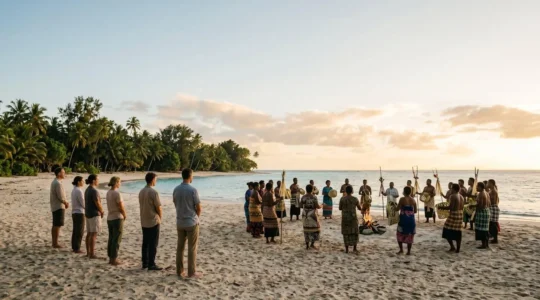
How to Attend Island Traditional Festivals Respectfully as an Outside Observer?
The key to respectfully attending a traditional island festival is to shift your role from an active participant to a passive, humble witness, understanding that your very presence is an intervention. Most conflicts arise when visitors treat sacred ceremonies as…
Lire la suite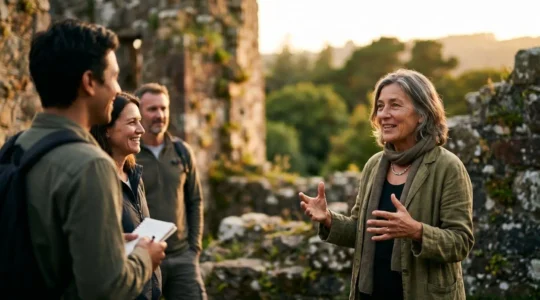
Beyond the Plaque: How to Truly Experience an Island’s History
The most memorable historical encounters don’t come from guided tours or audio guides, but from learning how to read the silent stories a place is already telling. True engagement is created by actively investigating a site’s material and untold histories,…
Lire la suite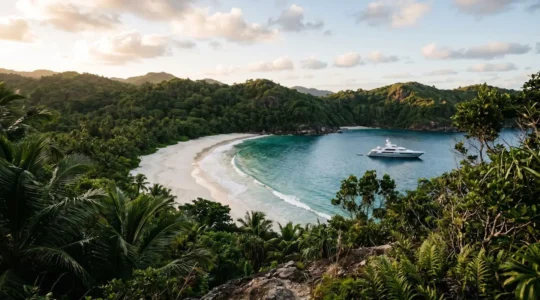
Which Exclusive Island Locations Are Accessible Only Through Premium Tour Packages?
True island exclusivity is dictated not by price, but by access architecture—the non-negotiable legal, conservation, and logistical barriers that premium tours are designed to navigate. This involves understanding permit-based entry systems and distinguishing them from superficial ‘VIP’ marketing. It also…
Lire la suite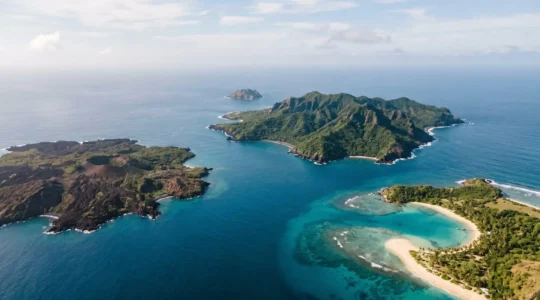
How to Plan an Archipelago Exploration Route That Maximises Island Diversity?
The best archipelago trips aren’t about visiting more islands, but about maximising ‘Experiential Return on Investment’ (eROI) by treating your route as a strategic portfolio. True travel time includes ‘logistical friction’—packing, transfers, and waiting—which can consume up to 40% of…
Lire la suite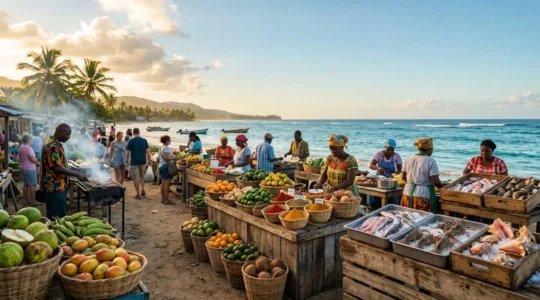
How to Find Authentic Island Cuisine Beyond Tourist Menus
The key to finding authentic island food isn’t a map, but a mindset: you must learn to think and see like a culinary anthropologist. Tourist-centric restaurants often intentionally dilute traditional flavours to cater to a broader, less adventurous palate. Genuine…
Lire la suite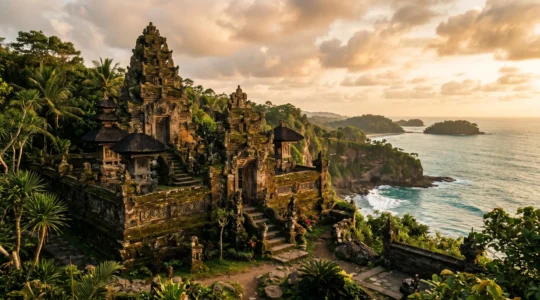
Which Island Cultural Sites Offer Genuine Heritage Beyond Tourist-Focused Attractions?
Contrary to popular travel advice, finding authentic heritage is not about discovering a secret, untouched location; it’s about developing the skill to « read » the profound story any cultural site tells, even the most famous ones. Analyse restoration ethics (like anastylosis)…
Lire la suite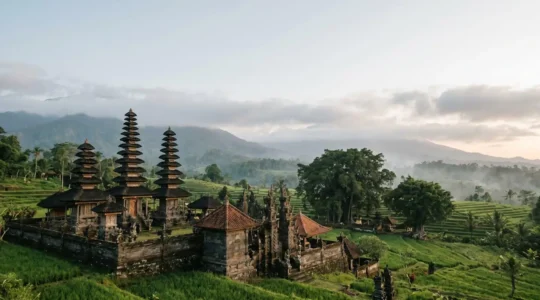
Which Islands Have Sacred Temples Worth Visiting for Architecture and Spiritual Atmosphere?
A meaningful temple visit isn’t about ticking off sights; it’s about understanding the invisible architecture of respect that gives them life. Respectful dress codes, like Bali’s sarong and sash, are based on a « sacred logic » of spiritual purity, not arbitrary…
Lire la suite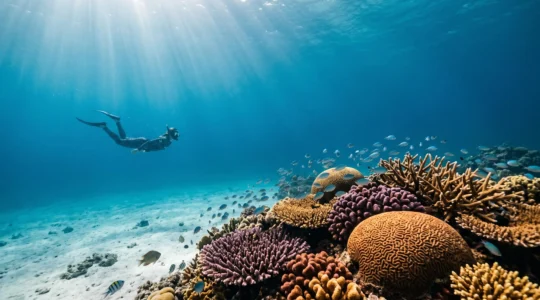
How to Find Healthy Coral Reefs That Welcome Responsible Snorkellers
Becoming a truly responsible snorkeler isn’t about memorizing rules; it’s about understanding the fragile science that makes a reef thrive. Coral is a delicate animal, and a single touch can destroy a protective mucus layer, causing damage that takes decades…
Lire la suite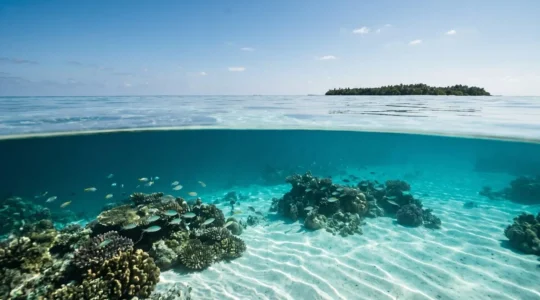
Which Islands Have the Clearest Waters for Snorkelling: Visibility Beyond 30 Metres?
Exceptional water clarity isn’t a matter of luck or location; it’s a predictable science based on geology, ocean dynamics, and your own technique. The world’s clearest waters are found over limestone seabeds (like the Caribbean) which act as natural filters,…
Lire la suite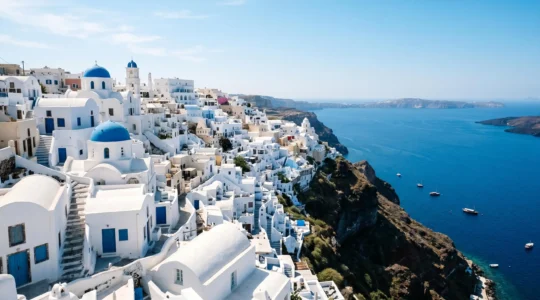
Elegant Island Architecture: A Photographer’s Guide to Heritage and Light
Photographing island architecture isn’t about finding famous spots; it’s about understanding the story written in stone, plaster, and light. The iconic whitewashed walls of the Cyclades are a direct result of early 20th-century public health mandates, a functional history now…
Lire la suite