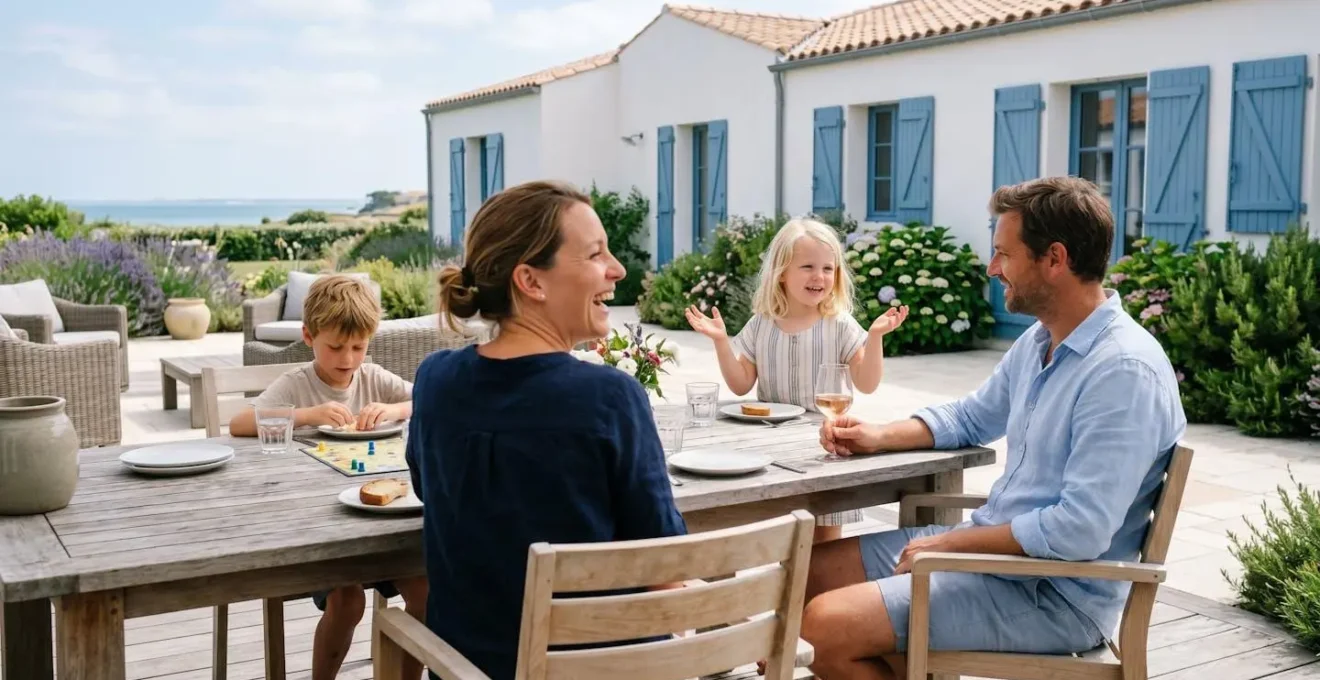
Île de Ré – the sunlit Atlantic island connected to La Rochelle by bridge – captures everything international travelers seek: pristine beaches, UNESCO-heritage port towns, cycling routes through salt marshes, and a relaxed maritime atmosphere. Yet choosing the right accommodation transforms a pleasant visit into an unforgettable summer experience.
Holiday homes on Île de Ré offer families distinct advantages over hotel stays, from spatial freedom and privacy to cost savings and authentic local living. Properties range from intimate two-bedroom cottages to expansive ten-bedroom estates, with weekly rates spanning €1,400to €8,995 depending on size, amenities, and location during peak summer season.
This guide examines five compelling reasons why renting a villa fundamentally improves your Île de Ré summer holiday, backed by market data, practical scenarios, and location insights to help you make an informed accommodation decision.
Your 5 Holiday Home Advantages in 30 Seconds:
- Space and privacy that hotels cannot match for family groups
- Cost-effectiveness when traveling with four or more people
- Premium amenities including private pools, gardens, and terraces
- Strategic locations across the island’s most desirable communes
- Flexibility to cook, set schedules, and live like a local resident
Unmatched Space and Privacy for Families and Groups
Hotel accommodation forces families into uncomfortable spatial compromise. A family of six typically requires three separate rooms scattered across different corridors, fragmenting the group throughout the stay. Parents lose visual contact with children, teenagers claim distant rooms, and coordinating morning departures or evening plans becomes a logistical exercise involving mobile phones and hallway conversations.
Holiday villas eliminate this fragmentation entirely. Properties featuring four to six bedrooms provide dedicated sleeping spaces whilst maintaining shared living areas where families naturally congregate. Open-plan kitchens flow into lounges, which open onto terraces or gardens – creating a cohesive environment rather than disconnected hotel boxes. Platforms specializing in exclusive villas on Île de Ré showcase properties offering 200 to 400 square metres of usable area, compared to 45 square metres of three standard hotel rooms.
Privacy represents the second critical advantage. Demand for Île de Ré holiday rentals remained robust through summer 2025, with occupancy rates rising 3.8 percent in July and 2.1 percent in August compared to 2024, as measured by the Destination Île de Ré seasonal survey. This sustained demand reflects travelers’ preference for private accommodation where children play without disturbing neighbors and adults enjoy late terrace conversations.
Multi-generational groups find that large villas with outdoor dining areas enable proper family gatherings – preparing meals together, hosting celebration dinners, accommodating grandparents in ground-floor bedrooms whilst teenagers claim upstairs spaces. Hotels cannot replicate this residential flow.
Cost-Effectiveness When Traveling with Multiple People
The economics of holiday accommodation shift dramatically once your group exceeds four people. Hotel pricing operates per-room, meaning a family of six requires minimum two rooms (often three for comfort), with each commanding peak-season rates during July and August. When factoring nightly charges, tourist taxes, breakfast fees, and parking costs, totals quickly escalate.
Villa rentals operate on a per-property weekly basis regardless of guest count within stated capacity. A four-bedroom property accommodating eight costs the same whether six or eight occupy it. Weekly rates of €1,400 to €8,995 reflect property size, amenities, and location rather than guest numbers. Per-person, per-night calculations reveal compelling value for larger groups where marginal costs drop to zero.
Consider a family of six seeking accommodation for two weeks in August. Three hotel rooms including breakfast charges, parking, and resort fees typically cost €8,000 to €12,000. A comparable four-bedroom villa with pool and terrace rents for €3,500 to €6,000 for the same fortnight, delivering superior space and privacy whilst saving €2,000 to €6,000 on accommodation alone.
Self-catering capability amplifies these savings substantially. Hotel guests face restaurant meals three times daily. Families with young children find dining out every evening both expensive and exhausting. A villa kitchen allows you to shop at local markets, prepare leisurely breakfasts, pack beach picnics, and cook evening meals when it suits your rhythm – reducing dining costs by an estimated 40 to 60 percent whilst introducing children to French market culture.
Premium Amenities That Transform Your Island Experience
Hotels on Île de Ré typically offer shared pools, breakfast rooms, and standard amenities. Holiday villas provide private facilities that fundamentally enhance daily island living, particularly during summer heat when temperatures exceed 28°C and afternoon shade becomes essential.
Private swimming pools represent the most sought-after amenity across the premium rental market. Rather than competing for sun loungers at crowded hotel pools or navigating peak-hour schedules, villa guests enjoy exclusive pool access from morning until night. Many properties feature heated pools extending the comfortable swimming season beyond July and August, whilst safety features including alarms, covers, and fenced enclosures address concerns for families with young children.
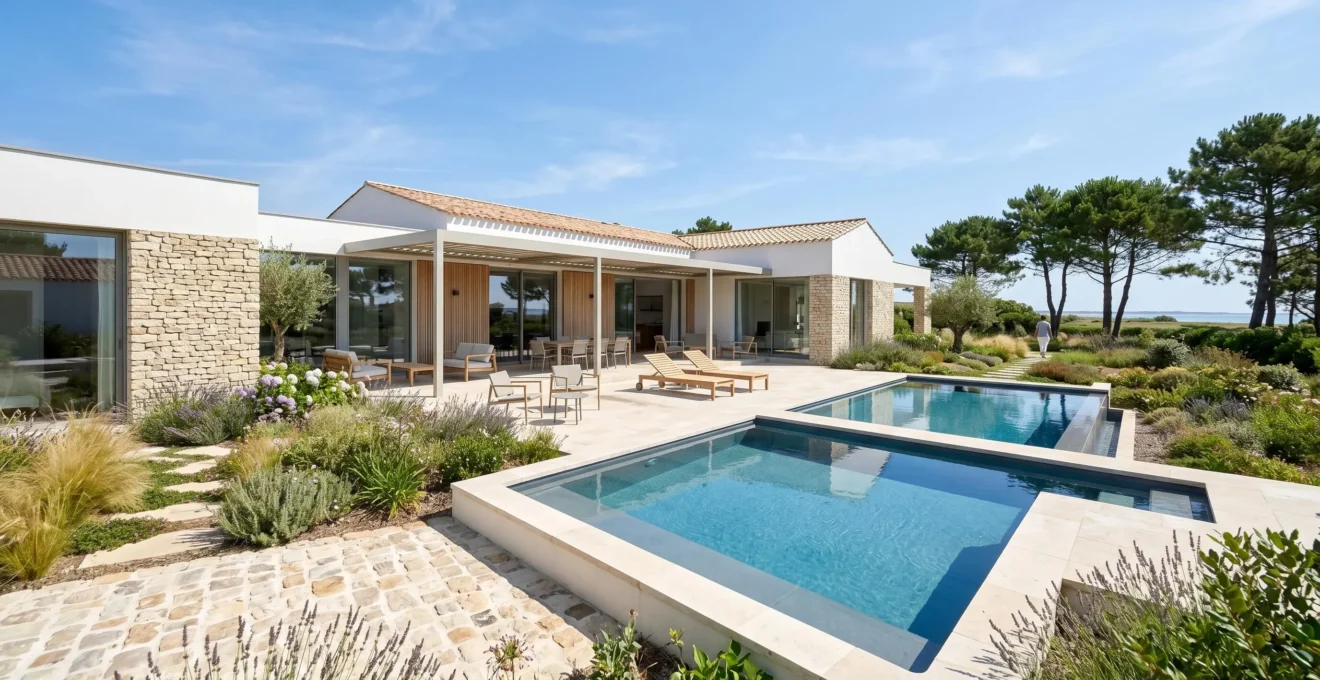
Outdoor living spaces merit equal consideration. Île de Ré’s maritime climate makes alfresco dining pleasant throughout summer, yet hotel guests remain confined to balconies barely large enough for two chairs. Villas provide expansive terraces with outdoor furniture, shade structures, and often outdoor kitchens or barbecue facilities. These spaces become your primary living area from June through September – morning coffee watching sunrise, afternoon reading in garden shade, evening aperitifs as Atlantic light softens. The complete Île de Ré island experience extends beyond beaches to embrace this outdoor-focused lifestyle.
Essential Amenities Checklist: Air conditioning proves crucial during July-August heatwaves when rooms can exceed 30°C. Enclosed gardens matter for families with young children or pets. Outdoor dining capacity should match your group size – verify terrace furniture accommodates everyone simultaneously. Garage or covered parking protects vehicles during storms and provides bicycle storage.
Equipment levels distinguish villa rentals from hotel standardization. Full kitchens include dishwashers, washing machines, and quality cookware. Many properties provide beach equipment including parasols and children’s toys, whilst some feature games rooms or boules courts for midday entertainment.
Strategic Locations Across Île de Ré’s Most Desirable Communes
Île de Ré spans roughly 30 kilometers from the bridge connection to the Phare des Baleines lighthouse, comprising ten distinct communes each offering different atmospheres, beach characteristics, and practical advantages. Hotels concentrate in larger towns, particularly Saint-Martin-de-Ré and La Flotte, limiting location choices. Holiday home inventory spreads across the entire island, allowing you to select a commune matching your priorities.
Le Bois-Plage-en-Ré occupies the island’s geographic center with excellent sandy beaches along the southern coast, sheltered from Atlantic swells and suitable for young children. Village amenities include supermarkets, bakeries, restaurants, and the island’s cinema. Cycling enthusiasts appreciate the central position, with flat routes radiating toward western and eastern destinations.
Saint-Martin-de-Ré appeals to travelers prioritizing historic charm and dining sophistication. The fortified port town (UNESCO World Heritage status since 2008) features a harbor lined with seafood restaurants, art galleries, and extensive shopping. Properties trade beach proximity for walkable cultural attractions. Wednesday and Saturday markets showcase regional produce and oysters.
Sainte-Marie-de-Ré delivers peaceful, village-focused family holidays. Smaller and quieter than Saint-Martin, it offers sandy beaches without crowds, reliable amenities, and a relaxed atmosphere valued by families with young children. Properties often feature larger gardens and residential settings compared to denser Saint-Martin development.
- If beach proximity and child-safe swimming matter most:
Le Bois-Plage-en-Ré or La Couarde-sur-Mer offer extensive south-facing beaches with gentle slopes and warm, sheltered waters ideal for young families.
- If historic atmosphere and dining variety drive your choice:
Saint-Martin-de-Ré provides the island’s most sophisticated restaurant scene, boutique shopping, and evening harbor-side entertainment within walking distance of accommodation.
- If peaceful family environment away from tourist intensity appeals:
Sainte-Marie-de-Ré, Ars-en-Ré, or Les Portes-en-Ré deliver authentic village life with essential amenities but fewer crowds and a slower pace.
- If cycling access to the entire island matters:
Le Bois-Plage-en-Ré’s central location minimizes distances to both eastern and western extremes, whilst also connecting directly to the island’s comprehensive cycle path network.
Location strategy should consider wind patterns and beach orientation. Southern communes benefit from Atlantic swell protection, whilst northern beaches face stronger winds that water sports enthusiasts appreciate. Western communes like Saint-Clément-des-Baleines offer dramatic coastal scenery and lighthouse proximity, though requiring longer drives to Saint-Martin’s amenities.
Flexibility to Live Like a Local During Your Summer Stay
Hotels impose rigid structures on your daily rhythm regardless of how relaxed you intend your holiday to be. Breakfast service operates within fixed hours, forcing families to coordinate morning schedules around the kitchen timetable rather than natural wake-up patterns. Housekeeping arrives on predetermined schedules. Check-out times demand you vacate rooms by 11:00 even when your ferry departs late afternoon. These operational necessities suit business travelers yet conflict with the relaxed island living that Île de Ré encourages.
Holiday homes eliminate these external impositions entirely. Children wake naturally rather than being rushed to breakfast before service closes. Adults enjoy morning coffee on the terrace whilst browsing market schedules and weather forecasts, making spontaneous decisions about the day’s activities. If afternoon heat encourages a siesta, you retreat to your villa. Evening meals occur when hunger dictates, and dinner can stretch late into the evening with multiple courses and local wine.

Self-catering introduces you to Île de Ré’s exceptional local food culture. Village markets reveal seasonal produce alongside regional specialties including Ré potatoes (protected designation of origin), fresh oysters, and artisan cheeses from Charente-Maritime. Preparing meals with these ingredients creates richer cultural engagement than restaurant dining whilst accommodating dietary requirements and budget considerations.
Pet owners discover that villa rentals transform previously complicated travel logistics. Many Île de Ré properties welcome dogs, often without additional fees, providing enclosed gardens where animals roam safely. This eliminates the daily challenge of finding pet-friendly restaurants or leaving animals confined in hotel rooms. Families traveling with pets save substantially by avoiding kennel fees whilst including beloved animals in holidays.
Extended stays become genuinely feasible in ways hotels discourage. Whilst French regulations now cap primary residence short-term rentals at 90 nights annually (down from 120 nights pre-2025, according to the 2025 French short-term rental regulatory framework), holiday-specific properties remain available for bookings spanning two, three, or four weeks. These longer durations allow you to settle into genuine island rhythms – establishing favorite beaches and regular cycling routes – rather than rushing through condensed itineraries.
For remote workers extending summer holidays, reliable WiFi, dedicated desk spaces, and quiet environments prove essential. Many contemporary Île de Ré properties cater to this blended work-holiday model with home office setups. Guidance for celebration gatherings can be found through resources on booking luxury island vacation homes.
How far in advance should I book for summer?
Popular properties featuring pools, premium locations, and larger capacities book three to six months ahead for July and August. Families constrained by school dates should secure accommodation by March or April to access the best inventory, whilst flexible travelers may find availability in May or June.
Are linens and towels included in the rental price?
Inclusion varies by property and rental platform. Many Île de Ré villas include bed linens as standard whilst charging optional fees for towel packages. Always verify specific inclusions during booking to avoid unexpected charges upon arrival.
Can I bring my dog to Île de Ré holiday homes?
A significant proportion of properties accept pets, though policies vary regarding size limits and supplement fees. Search filters on rental platforms identify pet-friendly options. Properties with enclosed gardens provide practical arrangements for dogs, whilst some luxury villas exclude animals to maintain pristine interiors.
What’s the typical check-in and check-out process?
Saturday-to-Saturday bookings dominate during peak season, with check-in between 16:00 and 18:00 and check-out by 10:00. Some properties offer flexibility outside July-August. Key handover occurs through property manager meetings or secure lockbox codes, with arrival instructions sent days beforehand.
Do I need a car on Île de Ré?
Not essential, though convenient. The island’s 110-kilometer cycle path network connects all communes, making bicycles preferred for beach access and village exploration. However, cars simplify supermarket shopping, beach equipment transport, and poor weather exploration. Many families hire bicycles whilst keeping a car for provisioning trips.
Understanding common concerns represents the first step toward confident booking, yet translating that knowledge into concrete verification actions determines whether you secure the ideal property or discover unwelcome surprises upon arrival. The difference between a seamless villa experience and a disappointing one often hinges on asking the right questions before committing your deposit.
Experienced travelers approach Île de Ré villa bookings with systematic diligence, verifying specific details that marketing photos and property descriptions frequently gloss over. The following checks ensure you’ve addressed every critical consideration before finalizing your reservation.
- Verify minimum stay requirements during July and August peak weeks
- Clarify cleaning fees and damage deposits appearing separate from rental rates
- Understand cancellation policy and refund terms for family emergency protection
- Check air conditioning availability crucial for July-August comfort in older properties
- Examine pool safety features if traveling with young children for peace of mind
- Assess parking and garage access for bicycles, beach equipment, and vehicle protection
Properties offering ideal location, sufficient bedrooms, private pool, and premium amenities book rapidly once spring arrives. Families locked into specific school holiday weeks face the tightest inventory constraints, whilst those able to travel in late June or early September discover better availability and reduced rates compared to peak fortnight surrounding 15th August.
Start by filtering available inventory according to your non-negotiable requirements: precise dates, minimum bedrooms, pool availability, pet policies. Then evaluate remaining options based on commune location aligned with your holiday priorities. Verify all costs before finalizing booking, and confirm cancellation terms provide adequate protection.
Île de Ré’s enduring appeal lies in its ability to deliver authentic French island living without sacrificing modern comfort. Holiday homes unlock this experience far more effectively than hotel accommodation, transforming a conventional beach holiday into something genuinely memorable for every family member.