Blog
Island destinations hold a unique allure in our collective imagination—pristine beaches, vibrant coral reefs, remote villages frozen in time, and ecosystems found nowhere else on Earth. Yet this very magnetism threatens the qualities that make islands special. As travellers increasingly seek authentic experiences away from crowded resorts, a critical question emerges: how do we explore islands responsibly without destroying the seclusion, authenticity, and ecological integrity we came to experience?
The answers aren’t simple. They require balancing competing ethics—open access versus protection, sharing discoveries versus gatekeeping, independent exploration versus guided expertise. This resource introduces the core principles of conscious island travel, connecting the dots between ecological fragility, cultural respect, and the psychology of meaningful exploration. Whether you’re planning your first island adventure or reconsidering habits from dozens of trips, understanding these interconnected themes will fundamentally reshape how you travel.
The following sections explore the tensions, trade-offs, and practical strategies that define responsible island tourism in an era where a single Instagram post can transform a hidden cove within months.
The Overtourism Paradox: Why Islands Need a Different Approach
Islands face tourism pressures unlike continental destinations. Their geographic isolation creates ecosystems with species found nowhere else—making them simultaneously irreplaceable and extraordinarily vulnerable. Limited land area means infrastructure strain becomes visible faster: water shortages, waste management crises, and habitat destruction compressed into spaces where consequences cannot be hidden.
The overtourism era has fundamentally changed island travel dynamics. A beach that remained relatively unknown for decades can see visitor numbers increase by 300-400% within a single year after viral social media exposure. This acceleration leaves no time for communities to adapt, for ecosystems to develop resilience, or for authorities to implement protective measures. The romantic notion of « discovering » a hidden paradise now carries genuine ethical weight—your discovery might trigger its degradation.
Conscious island travel begins with recognizing this fragility. It means understanding that your individual choices accumulate with thousands of other travellers making similar decisions. Stepping off a marked trail to photograph a rare plant, purchasing a seashell souvenir, or posting precise location coordinates—each action seems trivial in isolation but becomes devastating at scale. The challenge isn’t avoiding islands entirely; it’s travelling with heightened awareness and intentional restraint.
Secluded Locations: The Ethics of Discovery and Disclosure
Why Seclusion Matters More Than Ever
In an age where resort social environments dominate mainstream tourism, secluded island coves and hidden beaches offer something psychologically precious: coastal solitude that measurably reduces travel stress and creates space for genuine restoration. Research in environmental psychology consistently shows that natural spaces experienced in solitude produce stronger positive effects on mental wellbeing than crowded attractions—even when the natural environment is objectively similar.
But seclusion is a non-renewable resource. Unlike a museum that can limit daily visitors, a « hidden » beach loses its defining characteristic once it becomes widely known. The challenge for responsible travellers is finding these spaces through genuine exploration rather than social media coordinates, and visiting during windows when your presence doesn’t compromise the solitude others seek. Early mornings on weekdays, shoulder seasons, and intentionally choosing lesser-known islands over viral hotspots all help preserve seclusion as a shared resource.
The Social Media Dilemma: To Share or Protect?
Perhaps no question divides the island travel community more sharply than whether to share secluded locations online. The arguments for transparency seem compelling: hidden beaches might receive better protection through visibility, public access is a democratic principle, and gatekeeping by those « in the know » feels elitist. Yet the evidence is sobering—geotagged Instagram posts have repeatedly demonstrated the power to destroy secluded locations within 6-12 months through sheer visitor volume.
Thoughtful travellers are developing compromise approaches. Sharing images without revealing precise locations allows you to inspire others while protecting specific sites. Using regional tags rather than exact coordinates, waiting months before posting, and describing general areas rather than GPS points all reduce the likelihood of triggering destructive tourism spikes. Some situations justify full disclosure—when a location needs official recognition to receive environmental protection, or when keeping it « secret » merely reserves it for privileged insiders while locals receive no tourism economic benefit.
The principle worth considering: don’t share what you haven’t earned through effort. If you found a location through someone else’s coordinates, you haven’t discovered it—you’ve consumed someone else’s exploration work. Locations you reach through genuine navigation, local relationships, or physical effort create different ethical obligations than those you found via a 30-second Instagram search.
Independent Exploration: Building Confidence Beyond Guided Tours
Why Independent Travel Creates Stronger Memories
Organised island tours serve important purposes—they provide access to sensitive areas with expert interpretation, support local employment, and reduce environmental impact through visitor management. Yet independent exploration creates qualitatively different travel memories, grounded in personal agency, problem-solving, and the mild uncertainty that makes experiences emotionally significant.
Psychological research on memory formation shows that we remember challenges and novel situations more vividly than passive experiences. Navigating to a remote beach using a hand-drawn map from a local fisherman, managing anxiety when a trail becomes unclear, or having unscripted conversations with village residents all create richer memory encoding than following a guide’s narration. This isn’t about superiority—it’s about understanding what kind of experience you’re seeking and matching your approach accordingly.
The irony many independent travellers encounter is the over-planning paradox: researching so exhaustively that your « independent » trip becomes as structured as an organised tour, just without the guide. True independent exploration requires accepting some uncertainty, building tolerance for improvisation, and recognizing that wrong turns and unexpected situations often become your most treasured memories.
Developing Exploration Confidence Responsibly
If you’re accustomed to organised tours, transitioning to independent island exploration requires building specific skills without compromising safety or environmental responsibility. Start with these progressive steps:
- Hybrid experiences: Book accommodation independently but join organised activities for challenging elements like boat access to offshore islands or night-time wildlife observation
- Well-documented destinations first: Build confidence on islands with established infrastructure, clear trail markings, and good mobile coverage before attempting truly remote locations
- Local knowledge investment: Spend your first day seeking advice from accommodation hosts, tourism offices, or conservation centres rather than relying solely on online research
- Conservative time estimates: Double the time you think you’ll need for any journey, accounting for getting slightly lost, weather changes, or spontaneous detours
Managing anxiety during independent exploration often comes down to preparation in three areas: navigation tools that work offline, communication plans for areas without mobile coverage, and realistic self-assessment of your physical capabilities and risk tolerance. The goal isn’t eliminating all uncertainty—that defeats the purpose—but ensuring uncertainty stays within your psychological comfort zone.
Respecting Island Communities and Cultural Authenticity
The Village Tourism Paradox
Remote island villages attract travellers seeking « authentic » cultural experiences untainted by mass tourism. The cruel paradox is that tourism itself destroys the authenticity it celebrates—visitor presence gradually transforms economic structures, social dynamics, and even architectural styles to accommodate tourist expectations. A village that earns more from day visitors than traditional fishing or farming inevitably evolves to optimize that income, becoming less « authentic » with each adaptation.
This doesn’t mean avoiding remote villages entirely, but it demands honesty about your impact and intentions. Ask yourself: Are you visiting to learn respectfully from a different way of life, or are you treating residents as museum exhibits? The photography mistake that most clearly reveals this distinction is taking candid photos of villagers going about daily life without permission—behaviour you’d never tolerate in your own community but somehow feels acceptable when residents « look exotic. »
The choice between village homestays and day visits involves trade-offs. Homestays create deeper cultural exchange and direct economic benefit to families, but they also accelerate cultural transformation by bringing outside influence directly into homes. Day visits minimize disruption but can create « human zoo » dynamics. Neither approach is inherently superior; what matters is entering with humility, following local guidance on appropriate behaviour, and contributing economically in ways the community actually wants—which requires asking, not assuming.
Supporting Authentic Artisan Traditions
Island artisan crafts—hand-woven textiles, traditional pottery, carved wooden objects—represent cultural knowledge accumulated over generations. Yet the pressure to produce affordable souvenirs for tourists threatens these traditions more than it preserves them. Authentic artisan work costs 5-10 times more than factory imitations for legitimate reasons: rare materials, weeks or months of skilled labour, and techniques that cannot be mechanized without fundamentally changing the object.
Learning to distinguish handmade crafts from factory versions requires attention to irregularities that indicate human creation: slight variations in pattern repetition, visible tool marks, natural material imperfections, and construction methods that would be inefficient to automate. Visiting artisan workshops rather than buying from tourist shops ensures your money reaches creators and lets you understand the skill and time investment that justifies higher prices.
Perhaps the most counterproductive tourist behaviour is aggressive bargaining on already-fair artisan prices. While negotiation is culturally appropriate in many island markets, there’s an ethical difference between good-natured haggling over inflated tourist prices and demanding discounts that devalue skilled labour. If a hand-carved item costs less than you’d pay for a meal at home, the price is almost certainly already fair or undervalued.
Understanding and Protecting Fragile Island Ecosystems
Why Islands Are Uniquely Vulnerable
Continental ecosystems develop with constant pressure from predators, diseases, and competition, creating resilience through evolutionary selection. Island ecosystems evolve in isolation, often with fewer predators and competitors, producing species that invest energy in specialization rather than defense mechanisms. This makes islands extraordinary hotspots of biodiversity—home to species found nowhere else on Earth—and simultaneously leaves them devastatingly vulnerable to outside threats.
When you walk off a trail to get closer to nesting seabirds, you’re not just disturbing that moment—you may trigger nest abandonment that affects population numbers across the entire island. When you introduce seeds on muddy hiking boots or feed « cute » wildlife, you’re potentially unleashing invasive species or disrupting foraging behaviours that evolved over millennia. The visibility of your impact is inverse to its severity; the damage you can see (litter, graffiti) is often less consequential than invisible ecological disruption.
Both land and marine island ecosystems suffer from tourism, but marine environments often experience greater impact because damage occurs underwater, out of sight. Sunscreen chemicals that enter the water during swimming, anchors dropped on coral reefs, and fish feeding to attract wildlife for photos all cause cumulative harm that manifests slowly, becoming obvious only after ecosystems cross collapse thresholds.
Practical Steps to Minimize Your Impact
Understanding ecological vulnerability is meaningless without translating it into changed behaviour. These actions make measurable differences:
- Pre-trip education: Spend at least an hour learning about the specific island ecosystem you’ll visit—endemic species, current conservation challenges, and seasonal sensitivities
- Accommodation verification: Look beyond « eco-friendly » marketing to verify actual environmental practices: waste management systems, water conservation, renewable energy, and contributions to local conservation programs
- Timing awareness: Avoid visiting during sensitive periods like breeding seasons for endemic species unless you’re joining monitored conservation tourism that directly funds protection
- Souvenir scrutiny: Never purchase items made from coral, shells from living species, or products from endemic plants—these purchases fund illegal harvesting from fragile ecosystems regardless of seller assurances about « sustainable collection »
The carbon offset versus travel frequency question deserves honest consideration. Flying to remote islands generates substantial emissions; offsetting through tree-planting programs or renewable energy investments helps but doesn’t eliminate atmospheric impact. Traveling less frequently but staying longer reduces your per-day carbon footprint while allowing deeper engagement with destinations. A single two-week island trip creates less total impact than three separate five-day trips requiring three round-trip flights.
Individual tourist behaviour genuinely determines island ecosystem survival. There’s no regulatory body monitoring whether you stay on trails, no enforcement of proper waste disposal in remote areas, and no penalties for disturbing wildlife. The accumulation of thousands of individual choices—to follow guidelines or ignore them—literally determines whether endemic species and fragile habitats survive the tourism era.
Conscious island travel isn’t about guilt or self-denial; it’s about making informed choices that align your actions with your values. Most travellers don’t want to contribute to ecological degradation or cultural erosion—they simply haven’t connected their individual behaviours to cumulative outcomes. By understanding the unique vulnerabilities of island destinations and adopting practices that respect both ecological limits and community autonomy, you transform from a passive consumer of paradise into an active participant in its preservation. The islands you visit consciously today remain available—ecologically intact and culturally vibrant—for travellers a generation from now.
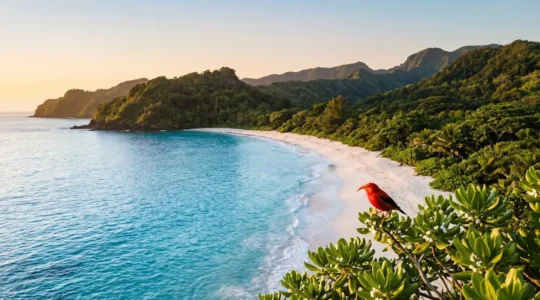
How Your Visit Can Protect, Not Harm, Fragile Island Ecosystems
Your trip to paradise could be its undoing—or its salvation. The difference lies not in simple checklists, but in a profound shift of mindset from extractive tourist to regenerative guardian. Understand the science of island fragility: high endemism and low…
Lire la suite
How to Find Authentic Island Artisans Making Traditional Crafts Worth Supporting
To truly support island artisans, you must shift from being a ‘souvenir hunter’ to an ‘ecosystem supporter’, understanding that the price, place, and interaction are all part of preserving a culture. The higher price of an authentic craft is not…
Lire la suite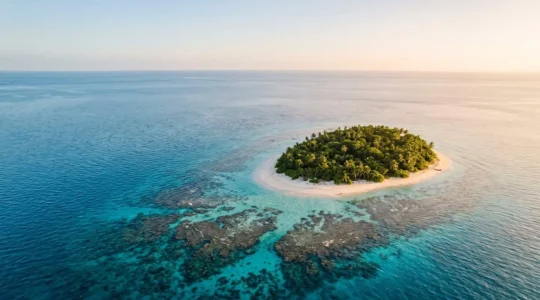
How to Understand Island Ecosystems and Travel More Consciously
In summary: Island ecosystems are uniquely vulnerable due to evolutionary isolation, making them hotspots of biodiversity but also extinction. Conscious travel goes beyond « don’t touch »; it requires understanding the invisible, interconnected systems linking land activities to marine health. Individual actions,…
Lire la suite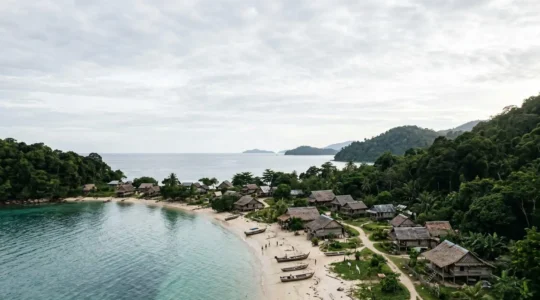
How to Visit Remote Island Villages Without Accelerating Their Tourist Transformation?
Visiting a remote village to ‘experience its authenticity’ is a paradox that often destroys the very culture you seek. The traveller’s gaze can turn daily life into a performance, a concept known as « staged authenticity. » True support comes from shifting…
Lire la suite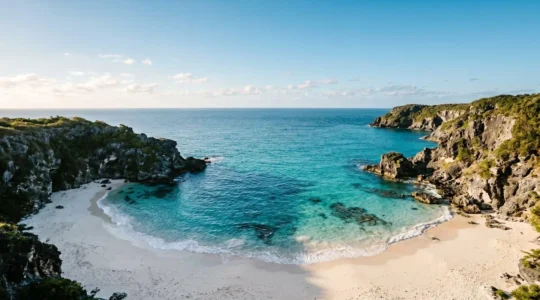
Should You Share Hidden Beach Locations Online or Protect Their Secrecy?
Sharing a hidden beach photo is no longer just a post; it’s a vote that determines the future of a fragile ecosystem. The « discovery-to-post » pipeline, fueled by geotagging, can overwhelm and degrade a pristine location within 6-12 months. True influence…
Lire la suite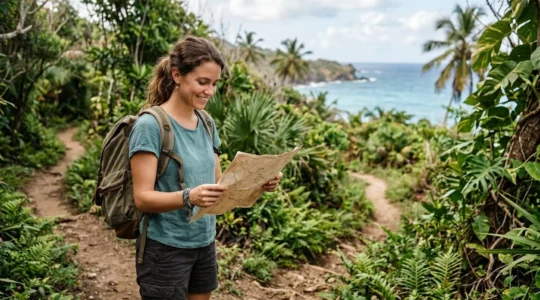
How to Develop Independent Exploration Confidence Beyond Organised Tour Packages?
The secret to confident independent travel isn’t a perfect itinerary; it’s mastering the art of intentional discovery. Anxiety transforms from a barrier into a tool for building resilience when managed with simple, grounding techniques. True freedom comes from minimal planning—a…
Lire la suite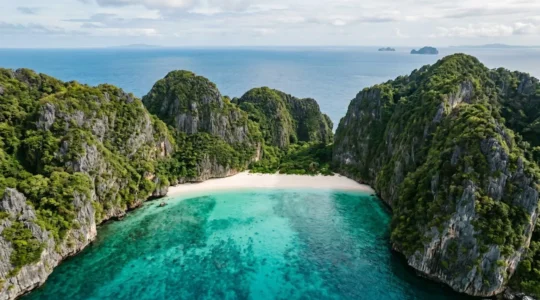
Why Do Secluded Island Coves Matter More Than Ever in the Overtourism Era?
In an era of performative travel, the pursuit of a secluded cove has evolved from a simple desire for quiet into a profound act of cognitive and ecological preservation. True coastal solitude triggers a scientifically-proven relaxation response that crowded social…
Lire la suite