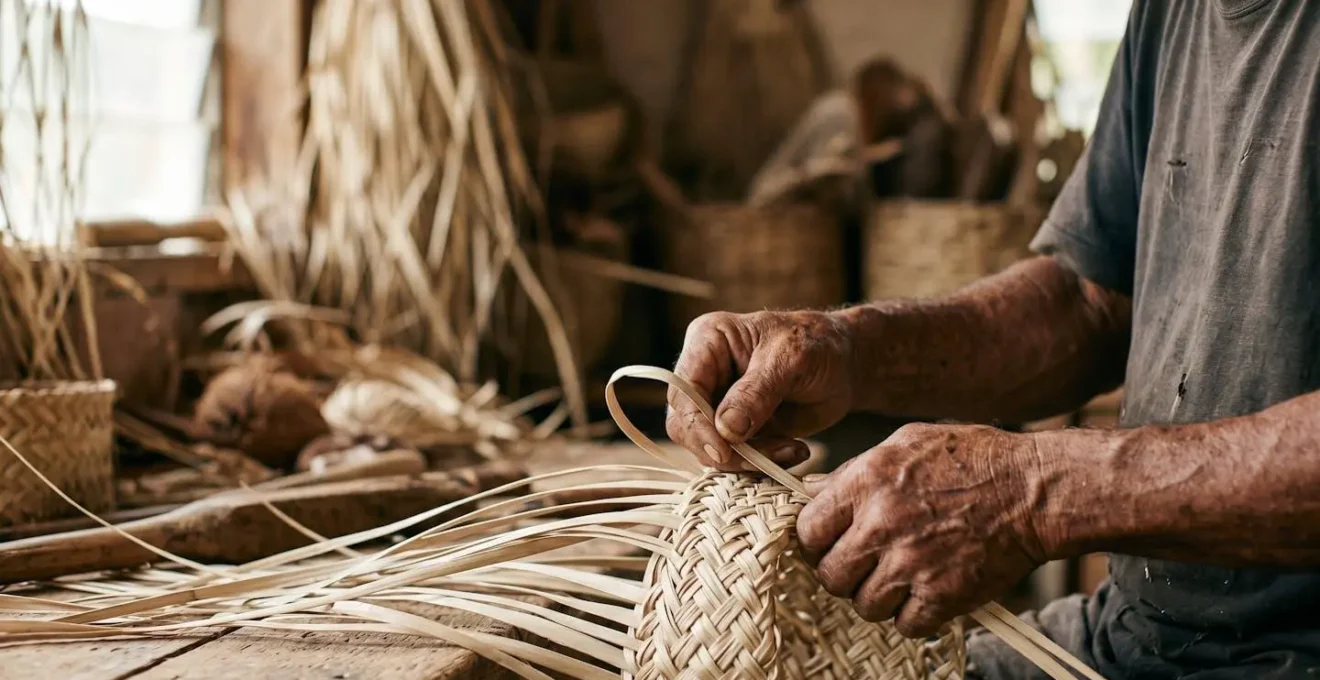
To truly support island artisans, you must shift from being a ‘souvenir hunter’ to an ‘ecosystem supporter’, understanding that the price, place, and interaction are all part of preserving a culture.
- The higher price of an authentic craft is not a markup; it’s an investment in materials, decades of skill, and the cultural preservation of a dying art form.
- Authenticity is revealed through all senses—touch, smell, and weight—and confirmed by the story behind the piece, not just visual imperfections.
- Supporting a vetted craft cooperative often provides more stable and widespread support to a community of artisans than a single, direct workshop visit.
Recommendation: On your next trip, engage with the craft, not just the object. Ask about the artisan and the tradition, accept the price as a fair valuation of heritage, and choose to support the systems that empower the entire craft community.
The desire is universal: to bring home a piece of your journey, a tangible memory that’s more than just a mass-produced trinket. You’re walking through a vibrant island market, wanting to find something truly special. Yet, you’re faced with a dizzying array of items, many of which look suspiciously uniform. The common advice— »look for imperfections » or « buy directly from the maker »—feels inadequate. It barely scratches the surface of a complex world where artisans are often disconnected from buyers and the line between authentic craft and factory imitation is deliberately blurred.
This guide moves beyond those platitudes. We will not just show you how to spot a genuine hand-carved bowl from a machine-molded replica. We will delve into the economic and cultural systems that underpin island craftsmanship. What if the real key to ethical support isn’t just about identifying the authentic object, but about understanding and investing in the entire craft ecosystem? This means appreciating the true cost of cultural preservation, knowing when a cooperative is more impactful than a direct visit, and engaging with a respect that goes far beyond haggling over a few dollars.
By adopting this mindset, you transform a simple purchase into a powerful act of support. You become a patron of tangible heritage, ensuring these beautiful traditions—and the master craftspeople who are their stewards—can thrive for generations to come. We will explore the real value behind the price tag, provide a multi-sensory method for authentication, compare the benefits of different purchasing channels, and offer clear principles for respectful engagement, ensuring your travel dollars make a positive, lasting impact.
This article provides a complete framework for becoming a more conscious and effective supporter of island artisans. To help you navigate this journey, the following sections will break down every aspect of the process, from understanding price to engaging respectfully.
Contents: A Guide to Supporting Island Artisans
- Why Do Authentic Island Artisan Crafts Cost 5-10 Times More Than Tourist Shop Versions?
- How to Tell the Difference Between Handmade Island Crafts and Factory Imitations?
- Visit Artisan Workshops or Buy From Craft Shops: Which Ensures Authentic Island Crafts?
- The Craft Buying Mistake: Aggressively Bargaining on Already-Fair Artisan Prices
- When Can You Visit Islands to See Artisans Practising Traditional Crafts Actively?
- How to Engage Respectfully With Remote Island Village Residents as a Day Visitor?
- Pacific Island Gift Etiquette or Caribbean: Which Cultures Expect Visitor Gifts?
- How to Visit Remote Island Villages Without Accelerating Their Tourist Transformation?
Why Do Authentic Island Artisan Crafts Cost 5-10 Times More Than Tourist Shop Versions?
The sticker shock is real. You see a beautifully woven basket in an artisan’s stall for $80, then find a visually similar one in a tourist shop for $10. The price difference isn’t a scam; it’s a clear signal of value, time, and sustainability. The $10 item is a product. The $80 item is a piece of cultural heritage. Its price accounts for a complex formula that tourist trinkets completely ignore, and which many artisans struggle to calculate. In fact, craft industry research shows that 78% of crafters significantly underprice their work in their first two years, often by a staggering 40-60%.
A master artisan’s price must factor in far more than raw materials. It includes the labor valuation for a skilled individual who has spent decades perfecting their craft—this isn’t minimum wage work. It reflects the investment in skill acquisition, encompassing years of training, failed prototypes, and the inefficiencies inherent in low-volume, high-quality production. Then there are the overheads: workshop space, the maintenance of traditional tools, and packaging that preserves the item’s integrity.
Most importantly, the price includes a « cultural preservation premium. » In many island economies, the time a master weaver or carver spends on their art is time they are not spending on subsistence farming, fishing, or other essential survival activities. The higher price you pay is a direct investment that allows this knowledge to be practiced and passed on. It compensates for the opportunity cost of keeping a tradition alive. The $10 factory version, by contrast, only accounts for cheap labor and cheaper materials, often at a great environmental and human cost.
How to Tell the Difference Between Handmade Island Crafts and Factory Imitations?
Moving beyond price, your own senses are the most powerful tool for authentication. Factory-made imitations are designed for visual appeal from a distance, but they fall apart under closer scrutiny. True handmade items tell a story of their creation through texture, scent, and subtle, human variation. Forget looking for major « flaws »; instead, search for positive authenticity signals—the unique signature of the human hand.
The most immediate test is touch. An authentic hand-carved wooden bowl will have a warm, organic feel, with tiny variations in its grain and smoothness. A factory-molded one will feel cold, unnaturally perfect, and might have a tell-tale seam from the mold. The same applies to textiles. Handwoven fabric has a substantive weight and texture that a machine-made synthetic simply cannot replicate.
As this image reveals, the beauty of a handwoven piece lies in its subtle life. Notice the slight variations in the tightness of the weave and the organic gradations in the natural dyes. These are not defects; they are the hallmarks of a process guided by a human hand, not a machine’s unfeeling precision. This principle of seeking out subtle inconsistencies in symmetry, color, and texture is a reliable method for authentication.
Your 5-Point Craft Authentication Checklist
- Touch Test: Does the item feel organic and warm, with natural grain or texture variations? Or is it cold, unnaturally smooth, and uniform? Factory items lack the tiny ridges and life of hand-worked materials.
- Smell Test: Take a moment to smell the object. Natural woods, fibers, and dyes have a subtle, earthy scent. A chemical, lacquer, or plasticky odor is a red flag for mass production.
- Visual Imperfection Test: Look for the artist’s « hand. » Seek out subtle inconsistencies in pattern, symmetry, or color saturation. These are authenticating hallmarks, not flaws.
- Weight Assessment: Judge the item’s weight. Real, solid wood feels substantively different from a hollowed-out or composite imitation. Hand-spun, densely woven fibers have a heft that synthetics lack.
- Story Verification: Ask the seller: « Who is the artisan who made this? » or « Can you tell me the story behind this design? » A genuine seller or cooperative representative will have answers. A reseller of factory goods will not.
Visit Artisan Workshops or Buy From Craft Shops: Which Ensures Authentic Island Crafts?
The romantic ideal for an ethical shopper is to buy directly from the artisan, watching them at their craft and placing money right into their hands. While this can be a wonderful experience, it’s a surprisingly complex and not always superior method of support. The assumption that « direct is always best » overlooks the reality that many of the most skilled artisans are brilliant creators but not necessarily skilled businesspeople, marketers, or retailers. They may live in remote areas inaccessible to tourists or lack the language skills for direct sales.
This is where reputable craft cooperatives and curated shops play a vital role in the craft ecosystem. These organizations act as a crucial cultural and economic bridge. They provide market access to a wide network of artisans—often dozens at a time—including elderly masters or village-bound women who would otherwise have no outlet for their work. They handle the marketing, sales, and logistics, allowing artisans to focus on what they do best: create.
Case Study: The Power of Fair Trade Cooperatives
In India, fair trade textile cooperatives have proven to be a lifeline for preserving traditional crafts. These organizations have successfully empowered women artisans who lack individual storefronts or marketing skills. By providing them with a steady income and access to international markets, the cooperative model ensures that both the artisans’ livelihoods and their cultural heritage are protected, demonstrating that brilliant creators often thrive when freed from the burdens of business infrastructure.
The choice between visiting a workshop and buying from a shop isn’t a simple one. As an analysis of craft-based tourism models shows, each has distinct advantages and disadvantages depending on your goals as a conscious buyer.
| Factor | Direct Artisan Workshop Visit | Reputable Craft Shop/Cooperative |
|---|---|---|
| Authenticity Assurance | Highest – witness creation process firsthand | High – when shop provides detailed artisan profiles and transparent sourcing |
| Accessibility | Challenging – requires local knowledge, transport, language skills, appointments | Convenient – centralized location, regular hours, multi-lingual staff |
| Artisan Support Breadth | Supports 1 artisan directly | Supports network of 10-50+ artisans including remote/elderly makers without storefronts |
| Cultural Intrusion Risk | Higher – entering private workspace, potential disruption to workflow | Lower – curated retail environment designed for visitors |
| Product Variety | Limited to one artisan’s specialty | Wide range across multiple traditional craft forms |
| Price Transparency | Direct negotiation (can be culturally complex) | Fixed pricing with visible artisan share (in ethical cooperatives) |
| Quality Vetting | Buyer must assess independently | Pre-vetted by cooperative quality standards |
The Craft Buying Mistake: Aggressively Bargaining on Already-Fair Artisan Prices
In many tourist markets around the world, bargaining is part of the game. However, when you are standing in front of a master artisan or in a fair-trade cooperative, applying an aggressive haggling mindset is one of the most damaging mistakes a well-intentioned traveler can make. It fundamentally misunderstands the nature of the transaction. You are not buying a commodity; you are acquiring a piece of art and supporting a livelihood. To ask an artisan to lower an already-fair price is to ask them to devalue their time, their skill, and their cultural heritage.
Remember the hidden costs discussed earlier: decades of training, sustainable material sourcing, and the cultural preservation premium. The price tag on an authentic craft is rarely inflated. In fact, it is often under-priced. According to artisan business standards, a healthy retail profit margin for handmade crafts is 50-65%. This means if an item’s total material and labor cost is $20, a fair selling price is between $50 and $57. When you demand a 20% discount, you are not just cutting into profit; you are likely forcing the artisan to sell at a loss or for less than a living wage.
Instead of bargaining, reframe the interaction. If the price is higher than your budget, it is perfectly acceptable and respectful to say, « That is a beautiful piece, but it is a little beyond my budget today. Thank you for showing me. » You can also ask questions that affirm the item’s value: « How long did this take to make? » or « What do these symbols mean? » This shows respect for the work and opens a door for connection, rather than creating an uncomfortable and often insulting negotiation. In a genuine artisan encounter, your respect is worth more than a « good deal. »
When Can You Visit Islands to See Artisans Practising Traditional Crafts Actively?
Timing your visit to witness artisans actively practicing their craft requires looking beyond the standard tourist seasons. Authentic craft production is not a performance put on for visitors; it’s a process deeply intertwined with natural cycles, agricultural calendars, and cultural events. Planning your trip around these rhythms can lead to much richer and more meaningful encounters.
Many crafts are dependent on the seasonal availability of raw materials. To see the full process, you need to align your visit with these natural schedules. This approach requires some research but offers an unparalleled glimpse into the living tradition of the craft.
Case Study: Following Hawaii’s Natural Craft Rhythms
In Hawaii, the most active periods for traditional crafts follow the island’s resource cycles, not the tourist high season. For example, the art of lauhala weaving reaches its peak after the harvest season for leaves from the Hala tree. Similarly, the carving of precious Koa wood is most active during the dry seasons, which is essential for the wood to cure properly. By following the calendars of organizations like Hawaii Craftsmen, visitors can find authentic craft fairs and cultural events that align with these natural production rhythms, offering a chance to meet artisans when they are most productive and engaged in their work.
To strategically time your visit, consider the entire lifecycle of the craft. Attending a local farmers market in the off-season or contacting a cultural center for their event schedule are often more effective strategies than simply hoping to stumble upon a working artisan during peak tourist months. When artisans have fewer tourists to contend with, they often have more time and willingness to share their process.
Here are some key strategies for finding artisans at work:
- Research harvest calendars: Many crafts are tied to specific harvests. Palm frond weaving happens after the harvest, shell craft is dependent on seasonal beach conditions, and the creation of natural dyes aligns with the flowering cycles of local plants.
- Target off-season months: The tourist low season is often the artisan’s high season for production. With fewer crowds, makers have more time for creation, conversation, and are more likely to offer demonstrations or workshops.
- Seek ‘made for use’ ceremonies: If you have the opportunity to respectfully observe a community’s religious or cultural event from a distance, you may see crafts being used for their original, intended purpose—a powerful context that is absent in a retail setting.
- Visit local farmers markets: These regular community gatherings are not just for produce. They are often a primary outlet for local artisans to sell their work and a place where you can see them demonstrating their skills.
- Contact cultural centers directly: Museums and heritage centers are invaluable resources. They can provide detailed calendars of when specific traditional crafts, such as weaving or pottery, are actively being practiced on-site by resident artists.
How to Engage Respectfully With Remote Island Village Residents as a Day Visitor?
Entering a remote island village is a privilege, not a right. As a visitor, you are stepping into someone’s home, community, and living culture. The goal is to be a welcome guest, not an intruder, which requires a conscious shift from a tourist mindset to that of a respectful observer. This begins with your physical presence and non-verbal communication, long before a single word is spoken.
The key is to cultivate a « soft presence. » This means moving slowly and deliberately, keeping a respectful distance, and avoiding loud conversations. Instead of staring, use a soft gaze. An open posture and a genuine, gentle smile are universally understood signals of peaceful intent. Mastering a single local word for « hello » or « thank you » can also go a long way in showing your respect and willingness to connect on their terms.
The most crucial investment you can make for a respectful visit is hiring a local guide from the community. This person is not just a navigator; they are a cultural bridge. They provide proper introductions, translate nuances, and ensure you do not unwittingly trespass on sacred sites or break important cultural protocols. Their presence signals to the community that you have taken the correct steps to be there respectfully.
Photography is a particularly sensitive area. Always ask for consent before taking a picture of a person, and understand that this consent should extend to their homes, their children, and their work. Be aware that in some cultures, there is a belief that photography can be spiritually invasive, a concept often described as « soul stealing. » This requires a level of sensitivity that goes beyond a simple nod of permission. Observe the community’s rhythm and interactions from a distance before inserting yourself, and always prioritize human connection over capturing the perfect shot.
Pacific Island Gift Etiquette or Caribbean: Which Cultures Expect Visitor Gifts?
The question of whether to bring gifts when visiting a remote community is a common source of anxiety for conscientious travelers. The impulse is a good one: you want to show appreciation and gratitude. However, the practice can be fraught with unintended consequences. The question should not be « Which culture expects a gift? » but rather « What is the most respectful and least disruptive way to show my gratitude? »
Trying to create a simple rule—like « bring school supplies to Pacific islands but not the Caribbean »—is a dangerous oversimplification. Every village, and indeed every family, has its own unique customs. Bringing unsolicited gifts, even with the best intentions, can create a culture of dependency, foster jealousy within the community, or encourage children to see visitors as walking ATMs. It can transform a relationship of mutual respect into a transactional one.
The most meaningful gift you can offer is almost never a physical object you brought from home. It is your respect, your attentiveness, and your economic support channeled through the proper structures. The best way to give is to hire a local guide, buy a handmade craft at its fair price, purchase a meal from a community-run food stall, or pay for a legitimate homestay. These actions inject money into the local economy in a dignified way that empowers residents rather than creating a dynamic of charity. As UNESCO eloquently states in its principles for ethical tourism:
Cultures are living, dynamic, and belong to the people who practice them—not commodities for consumption. Communities should control how their cultures are represented and shared.
– UNESCO Universal Declaration on Cultural Diversity, UN Global Code of Ethics for Tourism, Article 4
If you feel compelled to give something, the most appropriate gifts are often those that can be shared among the community and are purchased locally upon arrival, based on the advice of your local guide. This ensures the gift is culturally appropriate and needed, and it supports another local business owner. But ultimately, the true gift is your respectful presence and your conscious decision to support their economy on their own terms.
Key Takeaways
- Price as Value: The price of an authentic craft reflects materials, decades of skill, and a direct investment in cultural preservation, not an arbitrary markup.
- Multi-Sensory Verification: Use all your senses—touch, smell, weight—and the artisan’s story to verify authenticity, moving beyond the simple search for visual « imperfections. »
- The Power of the Collective: Supporting vetted craft cooperatives can be a more impactful and sustainable way to support a broad community of artisans than a single direct-to-maker purchase.
How to Visit Remote Island Villages Without Accelerating Their Tourist Transformation?
The paradox of the modern, conscientious traveler is the desire to experience an « untouched » culture, while the very act of visiting risks transforming that culture forever. We seek authenticity, but our presence can inadvertently commercialize it, turning sacred rituals into scheduled performances and community spaces into souvenir stands. The negative impacts of unchecked tourism are well-documented; studies on cultural tourism show how places like Venice saw its resident population plummet as the city was reshaped to serve tourists over locals. So, how do we visit without becoming part of the problem?
The solution lies in adopting a strict « leave no cultural trace » philosophy. This begins with shifting from an « explorer » or « discoverer » mindset to that of a humble observer. Your goal is to witness and appreciate, not to « put a place on the map. » This means avoiding the geotagging of fragile, remote locations on social media, an act that can quickly lead to overwhelming and unprepared-for crowds.
The single most effective strategy is to exclusively support community-owned tourism. When you choose tour operators, homestays, and guides that are 100% owned and operated by the village itself, you are ensuring that the community retains control over the pace and scale of tourism’s development. This model allows them to draw on indigenous knowledge to build a sustainable industry that adapts to their culture, not the other way around. It’s about respecting their values as the foundation of the experience and being willing to adapt your expectations to their reality.
Ultimately, you must « pack in your assumptions and pack out your behaviors. » Do not leave behind disruptive habits, a demand for inauthentic cultural « shows, » or displays of wealth that can distort the local economy. Your visit should be a quiet, respectful exchange, not a transaction that alters the fabric of the community you came to admire.
To ensure your visit is a positive force, follow these core principles:
- Adopt an observer mindset: Witness and appreciate without needing to « discover » and broadcast. Resist the urge to geotag fragile remote locations on social media.
- Support community-owned tourism exclusively: Choose tour operators, homestays, and guides that are 100% owned and operated by the village itself. This ensures the community controls the pace and scale of development.
- Pack in assumptions, pack out behaviors: Do not leave behind disruptive behaviors, a demand for inauthentic performances, or ostentatious displays of wealth that can alter the local economy and create division.
- Prioritize community involvement in planning: True sustainable tourism requires involving local communities in every stage, from design through management, ensuring that it is built upon their indigenous knowledge and values.
- Respect cultural values as the foundation: Recognize that cultural practices are the bedrock of the community. Tourism must always adapt to the culture, not the other way around.
Now that you are equipped with this new framework, the next step is to consciously apply these principles on your next journey. Choose to be an advocate for cultural preservation, not just a consumer of souvenirs, and transform your travels into a force for good.