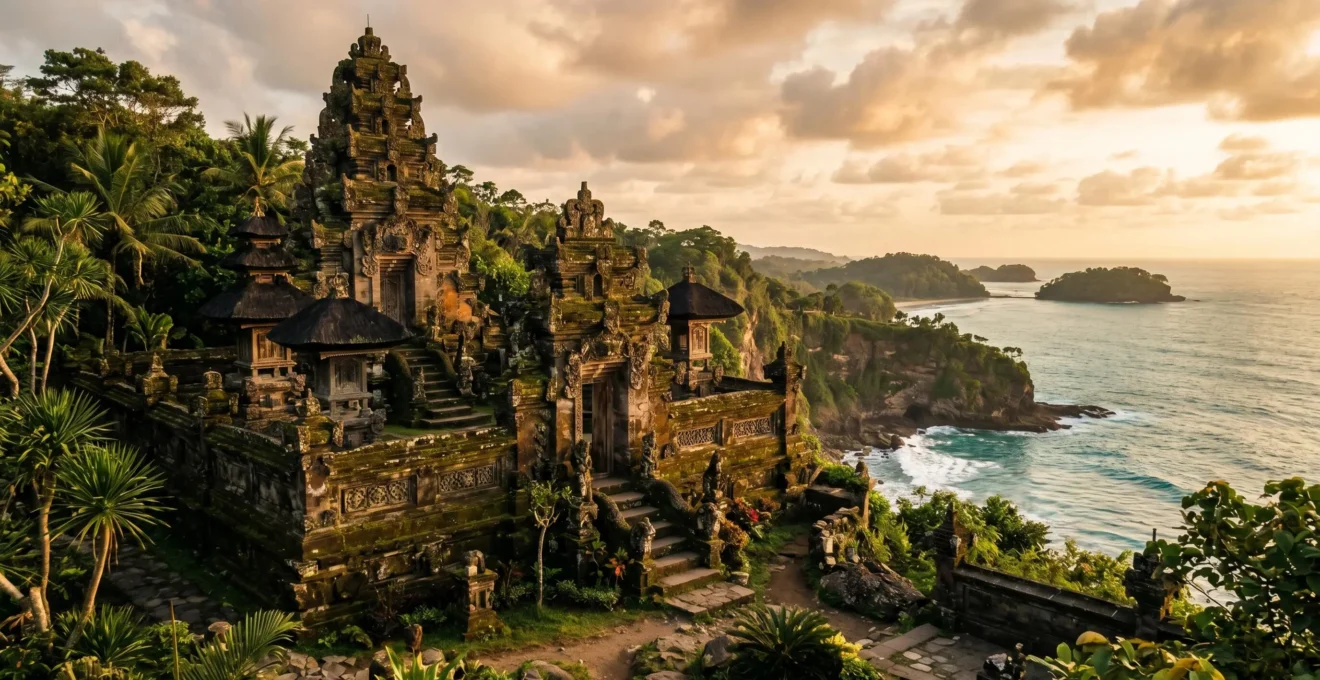
Contrary to popular travel advice, finding authentic heritage is not about discovering a secret, untouched location; it’s about developing the skill to « read » the profound story any cultural site tells, even the most famous ones.
- Analyse restoration ethics (like anastylosis) and visible visitor impact to understand a site’s layered history beyond the surface.
- Prioritize the living narratives from community storytellers over static information plaques to forge a deeper, more human connection.
Recommendation: Instead of hunting for the « perfect » non-touristy site, prepare for your next visit by researching its foundational myths and oral histories to unlock a truly meaningful experience.
For the discerning heritage enthusiast, the modern travel landscape presents a paradox. There is a deep-seated desire to connect with the past, to stand in a place of genuine cultural significance and feel the weight of its history. Yet, this very desire often leads us to destinations so polished for tourism that they feel more like theme parks than sacred grounds. The conventional wisdom is to simply « go off the beaten path, » but this advice is both simplistic and often impractical. The most significant sites are popular for a reason, and abandoning them means missing out on cornerstones of human history.
Many guides suggest focusing on logistics: visit in the off-season, arrive at dawn, talk to locals. While helpful, these are tactics, not a strategy. They address the symptoms of overtourism but fail to cure the underlying feeling of disconnection. The real challenge is not avoiding other people, but finding a way to look past the crowds and the commercial veneer to engage with the soul of a place. This requires a shift in mindset—from a consumer of sights to an interpreter of history.
What if the key to an authentic experience wasn’t in discovering a secret ruin, but in developing ‘heritage literacy’? This is the ability to read the stories embedded in any location, whether it’s a bustling UNESCO landmark or a quiet temple. It’s about understanding the silent language of stone, the ethics of a restoration project, and the living narratives that animate an ancient landscape. This is not about finding a different place, but about learning to see any place differently.
This guide will provide an interpretive framework to do just that. We will explore how to appreciate world-renowned sites despite the traffic, how to read the difference between authentic ruins and heavy-handed restoration, and how to connect with the intangible heritage of stories and traditions that plaques and audio guides can never capture. The goal is to transform your travel from a passive sightseeing tour into an active, intellectual, and deeply rewarding historical inquiry.
To help you navigate these complex but rewarding concepts, this article is structured to build your ‘heritage literacy’ step by step. Below is a summary of the key areas we will explore to help you see beyond the tourist trail.
Summary: A Guide to Experiencing Authentic Island Heritage
- Why Do UNESCO World Heritage Island Sites Justify Visits Despite Heavy Tourist Traffic?
- How to Visit Island Archaeological Sites at Opening Time to Avoid Tour Group Crowds?
- Heavily Restored Cultural Sites or Authentic Ruins: Which Offer Better Historical Understanding?
- The Visitor Behaviour That Accelerates Island Cultural Site Deterioration
- When Can You Visit Island Cultural Sites During Traditional Festivals and Celebrations?
- Buddhist Temples in Sri Lanka or Hindu Temples in Bali: Which Offer Greater Architectural Diversity?
- Why Do Storytelling Historic Site Tours Create Deeper Engagement Than Audio Guides?
- How to Experience Island Historic Sites Through Stories Rather Than Plaques?
Why Do UNESCO World Heritage Island Sites Justify Visits Despite Heavy Tourist Traffic?
It’s a common dilemma for the serious traveller: the UNESCO World Heritage designation that flags a site’s « outstanding universal value » also acts as a powerful magnet for mass tourism. It’s easy to dismiss these locations as « ruined » by their own popularity. However, to do so is to miss the point. These sites are designated not just for their physical remains (tangible heritage) but often for the traditions, knowledge, and artistic expressions they represent (intangible heritage). The key is not to avoid them, but to understand what their status truly signifies.
UNESCO status often brings crucial funding for conservation, scientific research, and protection against uncontrolled development. A visit, when managed correctly, contributes to this preservation ecosystem. Furthermore, the rigorous designation process ensures these sites are judged by global standards of significance. While crowds are an undeniable reality—research published in 2024 demonstrates that each additional UNESCO site can lead to a 0.22% increase in tourist numbers in EU nations—the interpretive resources and level of archaeological integrity are often unparalleled. An educated visitor can use this infrastructure to their advantage, learning to see beyond the selfie sticks to the very reasons the site earned its place on the list.
Case Study: The Marquesas Islands’ Integrated Heritage Model
Te Henua Enata (The Marquesas Islands) in French Polynesia, designated a UNESCO World Heritage Site in 2024, exemplifies a modern approach. This « mixed » cultural and natural site celebrates ancient Polynesian heritage within a fragile volcanic ecosystem. Instead of focusing on a single monument, the designation protects the entire island system. This approach safeguards not only the archaeological sites but also the intangible heritage of the indigenous communities, whose practices are interwoven with the landscape. The model demonstrates that UNESCO recognition can be a tool for holistic protection, allowing for controlled, respectful visitor access that supports rather than supplants the local culture.
Therefore, the challenge is one of perspective. Rather than viewing a UNESCO site as a compromised attraction, see it as a complex, living entity. It is a place where the pressures of modern tourism meet the deep-seated needs of global preservation. For the heritage-literate visitor, it offers a frontline view of conservation in action.
How to Visit Island Archaeological Sites at Opening Time to Avoid Tour Group Crowds?
The « arrive at opening » advice is common, but it’s more effective when you understand the underlying principles of visitor management. Archaeological sites are not just static attractions; they are managed spaces with specific strategies to handle human flow. Understanding these strategies allows you to anticipate crowd movements and find pockets of solitude that others miss. It’s not just about being early; it’s about being smart.
Most large heritage sites employ a three-stage visitor management framework. First, they restrict overall numbers through timed tickets or daily caps. Second, they attempt to redistribute visitor flow by promoting off-peak hours and highlighting secondary points of interest to draw people away from the main attractions. Finally, they design interpretation—signage, pathways, viewing platforms—to accommodate large groups. By recognising this framework, you can work with it. For example, instead of heading straight for the main temple at 8 AM with everyone else, consider visiting a well-publicised « secondary » structure first, then returning to the main attraction when the initial rush has moved on.
As the image above illustrates, the low-angle light of early morning or late afternoon doesn’t just offer solitude; it reveals textures and details on carved surfaces that are flattened by harsh midday sun. This is a practical benefit of strategic timing. The goal is to cultivate a « counter-flow » mindset: when the tour buses arrive and turn right, you turn left. Seek out the designated dispersal routes. This approach transforms the generic advice of « avoiding crowds » into an active, intellectual game of navigating the site’s own management system for a more profound and personal experience.
Heavily Restored Cultural Sites or Authentic Ruins: Which Offer Better Historical Understanding?
The debate between a « romantic » ruin and a heavily restored monument is central to heritage tourism. Many travellers instinctively prefer the untouched ruin, seeing it as more authentic. However, this preference overlooks the deep historical and ethical considerations behind reconstruction. A well-executed restoration is not a « fake » version of the past; it is a meticulously researched interpretation that can offer profound insights, provided you know how to read its language. The key is understanding the guiding principle of modern conservation: anastylosis.
This term refers to the practice of reassembling a fallen monument using its original fragments. It is a scientific, not an artistic, process. As conservation scholars note in a study on classical monuments, « Anastylosis is the only permissible conservation action that can be implemented on archaeological ruins by international doctrine. » This method requires that the original position of each element is known for certain, and any new material used for support must be discreet and clearly distinguishable from the ancient parts. When you encounter a restored site, your task is not to judge its « authenticity » but to identify the anastylosis. Look for the differences in colour and texture between original stones and modern fills. This act of identification turns the site into a lesson in both ancient architecture and modern conservation science.
Case Study: The Parthenon’s Scientific Anastylosis
The ongoing restoration of the Parthenon in Athens is a masterclass in scientific anastylosis. Archaeologists painstakingly document and re-place each original marble fragment. New marble, sourced for structural support, is intentionally left less weathered so it is clearly distinguishable from the ancient, honey-coloured stones. This transparency allows visitors to critically assess the work. You can simultaneously appreciate the monument’s original form while understanding its authentic, multi-millennial history of decay and damage. It offers a dual understanding that a pure ruin cannot provide.
Ultimately, both authentic ruins and scientifically restored sites offer immense value. A ruin speaks to the power of time and nature, inviting contemplation. A restored monument, however, speaks to human ingenuity—both ancient and modern. It allows us to comprehend architectural scale and detail that have been lost to time, offering a different, but no less valid, form of historical understanding.
The Visitor Behaviour That Accelerates Island Cultural Site Deterioration
As heritage enthusiasts, our presence has an unavoidable impact. Understanding the specific behaviours that cause damage is the first step toward responsible visitation. The most obvious forms of harm—vandalism, touching fragile surfaces, or leaving litter—are well-known. However, some of the most significant deterioration is caused by unintentional actions, often driven by the desire to capture the perfect photograph. This is the « Instagram effect, » where the pursuit of a shareable image leads to cumulative damage.
One of the most insidious modern impacts is digital: geotagging. As according to sustainable tourism research, the simple act of geotagging exposes remote or fragile sites to vast online audiences, leading to sudden overcrowding and degradation. On a physical level, the most common damage comes from foot traffic. Visitors deviating from marked paths trample sensitive vegetation, compact archaeological soil layers, and erode ancient stones. The simple act of leaning against a centuries-old wall or standing on a delicate mosaic for a photo contributes to a slow, irreversible process of decay. The mantra for any responsible visitor should be « take only pictures, leave only footprints »—and leave those footprints only on designated paths.
The image above powerfully visualises this cumulative effect. The centre of the ancient stone path is worn smooth and polished by millions of footsteps over time, while the protected edges retain their original, rougher texture. This visual contrast is a stark reminder that every single visitor contributes to the site’s ongoing story—and its physical erosion. Being a responsible tourist means being acutely aware of your own physical presence and making conscious choices to minimise your impact, ensuring the site can be appreciated by future generations of historians and enthusiasts.
A core tenet of heritage literacy is recognising that we are not just observers but active participants in a site’s life cycle. Our choices directly influence its preservation or decay. Minimising our footprint is a fundamental responsibility.
When Can You Visit Island Cultural Sites During Traditional Festivals and Celebrations?
Visiting a cultural site during a traditional festival can be the pinnacle of a heritage journey, transforming a static monument into a vibrant, living stage. However, it also presents a significant challenge: distinguishing between an authentic community ritual and a performance staged for tourists. The line can be blurry, but developing an interpretive framework allows you to assess the nature of an event and participate in a way that is respectful and meaningful.
Authentic rituals are not organised for the visitor’s convenience. They are expressions of a community’s spiritual or cultural life, and the tourist is, at best, a peripheral observer. The key is to look for indicators that the event’s primary audience is local. Does the timing follow a fixed, tourist-friendly schedule, or is it fluid, tied to a lunar calendar, harvest cycle, or religious observance? Is the space arranged for optimal spectating with designated tourist areas, or are community members and elders occupying the most significant positions? An authentic event is one that would happen whether tourists were present or not.
The most respectful way to approach these events is with humility and a desire to learn, not to consume. This means refraining from intrusive photography, dressing modestly according to local customs, and accepting that you may not understand everything that is happening. The goal is not to be the centre of attention but to witness a living expression of the intangible heritage connected to the site. This approach ensures your presence is not disruptive and enriches your understanding far more than a staged performance ever could.
Action Plan: How to Differentiate Authentic Rituals from Tourist Shows
- Assess the timing: Investigate if the event follows organic schedules like lunar calendars or agricultural cycles, which are hallmarks of authentic rituals, rather than fixed timetables designed for tourists.
- Observe the participants: Check if community members, including elders and families, significantly outnumber tourists and are actively participating, not just performing for an audience.
- Analyse the access: Determine if entry is through commercial ticketing with set prices or by community invitation and informal participation, a sign of a genuine local event.
- Gauge the focus: Note whether the event centres on collective spiritual practice where observers are peripheral, or if it’s designed around photo opportunities for spectators.
- Examine the layout: Look for the absence of designated tourist viewing areas; in authentic rituals, community members naturally occupy the most culturally significant spaces.
Buddhist Temples in Sri Lanka or Hindu Temples in Bali: Which Offer Greater Architectural Diversity?
When comparing rich architectural traditions like those of Sri Lanka and Bali, the question should not be which is « better, » but how their diversity manifests differently. Both islands offer a stunning array of religious structures, but their unique histories, theologies, and geographies have shaped their temples in profoundly distinct ways. An analysis of their architectural diversity reveals fascinating stories of syncretism and environmental adaptation.
Sri Lankan Buddhist architecture showcases a monumental and enduring quality, often focused on the stupa (dagoba) and rock-cut cave temples. Sites like Dambulla demonstrate an incredible integration with geology, carving sacred spaces directly from living rock. The tradition is marked by massive brick stupas built on open plains and sprawling monastic complexes with stone pillars, all designed to convey a sense of permanence and grandeur. In contrast, Balinese Hindu architecture is more ephemeral and topographically integrated, organised along a sacred mountain-to-sea axis.
This difference is beautifully captured in a comparative analysis. The following table highlights how each tradition integrates geology, incorporates local pre-existing beliefs (syncretism), and utilises both permanent and temporary architectural forms.
| Dimension | Sri Lanka Buddhist Temples | Bali Hindu Temples |
|---|---|---|
| Geological Integration | Rock-cut cave temples (Dambulla), massive stupas on plains, forest monasteries integrated with boulders | Volcanic mountain-to-sea axis orientation (Pura Besakih to Tanah Lot), terraced structures following rice paddy topography |
| Syncretic Elements | Integration of pre-Buddhist local deities as protective figures, indigenous Yaksha spirits in temple compounds | Unique animist elements not found in Indian Hinduism, ancestral worship spaces within Hindu temple precincts |
| Permanent Architecture | Monumental stone dagobas, image houses with murals, monastic complexes with stone pillars | Multi-tiered meru towers, split gates (candi bentar), pavilions (bale) with thatched roofs |
| Ephemeral Architecture | Temporary pandals for festivals, simple offerings of clay lamps and lotus flowers, white cloth decorations | Intricate daily canang sari offerings with woven palm leaf bases, elaborate penjor bamboo poles during ceremonies, colorful ceremonial fabrics |
| Living Practices | Daily puja rituals, Vesak illuminations, perahera processions with drummers | Multiple daily offerings at household shrines, elaborate cremation tower constructions, frequent temple anniversary celebrations |
Ultimately, Bali may offer a greater diversity of *ephemeral* and *topographically integrated* architecture, with its daily offerings and temples that follow the contours of rice terraces. Sri Lanka, on the other hand, presents a powerful diversity of *monumental forms*, from colossal stupas to entire monasteries carved from rock. For the heritage enthusiast, both offer a rich field of study into how faith shapes landscapes.
Why Do Storytelling Historic Site Tours Create Deeper Engagement Than Audio Guides?
In the quest for historical understanding, we often rely on information delivered through plaques or pre-recorded audio guides. While factually useful, these methods present history as a static, closed subject. A storytelling tour led by a knowledgeable local guide, particularly a descendant of the community connected to the site, offers something profoundly different: a living, breathing connection to the past. This approach transforms a monologue of facts into a dialogue of meaning.
Audio guides provide a curated, uniform experience. Every visitor hears the same information in the same order. A human storyteller, however, can tailor the narrative to the group’s interests, answer questions, and respond to the specific atmosphere of the day. They bring an emotional layer that technology cannot replicate. Their gestures, tone of voice, and personal anecdotes create a powerful sense of presence and connection. As cultural heritage tourism researchers point out, « Many reputable tour operators collaborate with local residents to provide authentic insights into daily life, customs, and practices. » This collaboration is key to moving beyond academic history into the realm of lived experience.
The true power of this approach lies in what can be called ‘narrative archaeology’—excavating the stories, myths, and oral histories that give a site its soul. A guide who can point to a carving and share a family story associated with it creates a bridge across centuries that no information plaque can build.
Case Study: Easter Island’s Living Cultural Landscape
Rapa Nui (Easter Island) is a prime example of how indigenous storytelling creates transformative experiences. The island’s heritage is interpreted not just by archaeologists, but by the roughly 3,500 Rapa Nui descendants who maintain their language and traditions. When a Rapa Nui guide shares oral histories and explains their family’s connection to a specific moai, the stone statue ceases to be just an archaeological object. It becomes an ancestor. This approach reframes tourism as a form of cultural exchange, where visitors understand the site’s meaning through an indigenous perspective, fostering deep emotional resonance and supporting community self-determination.
Key Takeaways
- True heritage engagement comes from developing ‘heritage literacy’—the skill to interpret a site—rather than just finding « non-touristy » spots.
- Understanding a site’s visitor management, restoration ethics (anastylosis), and your own physical impact are crucial for a deeper, more responsible experience.
- Prioritizing living narratives from community storytellers and preparing with pre-visit research offers a more profound connection than any static plaque or audio guide.
How to Experience Island Historic Sites Through Stories Rather Than Plaques?
The ultimate goal for a heritage enthusiast is to move beyond passive observation and actively engage with a site’s narrative soul. While hiring a skilled storyteller guide is an excellent method, you can also cultivate this experience yourself. By preparing before your visit with a « DIY storytelling toolkit, » you can arrive at a site already equipped with the characters, myths, and contexts needed to see the landscape come alive. This proactive approach puts you in the role of the historian, piecing together the narrative yourself.
This self-guided immersion begins with pre-visit research that focuses on narrative rather than just facts. Instead of only reading about architectural styles and dates, delve into the foundational myths of the culture. Study the local creation stories or epic poems associated with the site. For example, understanding the Ramayana epic profoundly enriches a visit to many Balinese temples. This populates the landscape with divine and heroic figures, giving meaning to the carvings and structures you will see. As of 2024, UNESCO recognizes 1,223 total World Heritage Sites globally, each with its own deep well of stories waiting to be discovered.
Further enrich your toolkit by exploring etymology—learn what the site’s name and surrounding place names mean in the indigenous language. Download historical maps or sketches from early explorers to see how the site was perceived and interpreted in different eras. Even researching the region’s traditional food heritage can provide clues about the site’s connection to agriculture and daily life. By building these layers of knowledge beforehand, you transform your visit from a sightseeing trip into the culminating chapter of your own research journey.
Your DIY Storytelling Toolkit for Pre-Visit Immersion
- Research foundational myths: Before you go, study local creation stories, epic poems, and origin legends to understand the site’s spiritual significance and why it was built.
- Read historical fiction: Find novels or memoirs set in the location and time period to populate the landscape with characters and human narratives before you arrive.
- Study etymology: Learn the meaning of the site’s name in the indigenous language and uncover the stories behind the names of surrounding geographical features.
- Explore visual archives: Download historical maps, sketches by early explorers, and archaeological site plans to understand how the site’s interpretation has evolved over time.
- Connect with food heritage: Research traditional ingredients and dishes associated with the region to understand the site’s connection to daily life, agriculture, and trade.
Ultimately, experiencing a site through its stories means recognizing that history is not a collection of static objects but a dynamic, ongoing conversation. By preparing to participate in that conversation, you achieve the most authentic form of engagement possible.
Applying this interpretive framework—from understanding visitor flow to embracing living stories—is the key to unlocking genuine heritage experiences. The next logical step is to begin building your own « storytelling toolkit » for your next planned journey, transforming how you prepare for and engage with the world’s incredible cultural legacy.