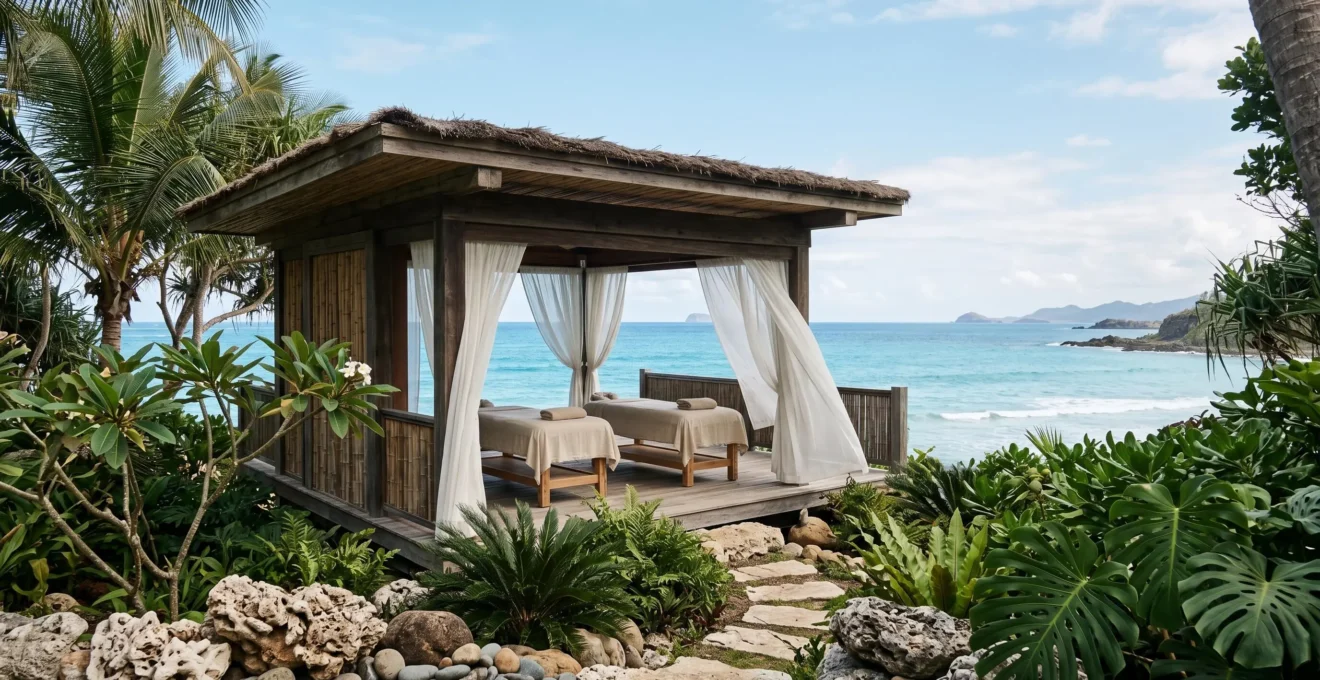
A retreat’s success is not measured by temporary relaxation, but by its ability to create lasting physiological and habitual change.
- True wellness programs have a defined, science-backed architecture, not just a menu of services.
- The ideal duration is 5-7 days, a timeframe proven to enable genuine neuroplasticity and habit formation.
Recommendation: Assess retreats based on their program’s structure, expert credentials, and personalization—not on marketing promises or facility aesthetics alone.
The allure of an island spa retreat is powerful: images of serene beaches, luxurious treatments, and the promise of a complete reset. Yet, many wellness seekers return home to find the blissful calm evaporates within days, their old habits and stress levels creeping back. The reason is that most retreats are structured as relaxing holidays, not as transformational wellness experiences. The focus is often on fleeting indulgence rather than fundamental, sustainable change.
We are often told to look at the spa menu, the beauty of the location, or the number of yoga classes. But this approach mistakes features for outcomes. It’s like judging a book by its cover. The real challenge is to look past the glossy marketing and assess the underlying ‘program architecture’—the very framework designed to rewire your physical and mental patterns for the long term. A truly effective retreat doesn’t just pamper you; it equips you.
The key shift in perspective is from being a passive recipient of services to an active assessor of a program’s efficacy. Is the retreat built on scientific principles that promote real physiological change? Are its experts qualified to guide a transformation, not just administer a massage? This is not about finding a perfect destination, but about identifying a structured pathway to a healthier, more resilient self.
This guide will provide you with an outcome-focused framework to do just that. We will explore the science behind effective retreats, how to distinguish authentic programs from superficial marketing, and how to structure your experience to ensure the benefits last long after you’ve returned home. You will learn to evaluate a retreat as a strategic investment in your long-term health.
Contents: Your Guide to Choosing a Transformational Retreat
- Why Do 5-7 Day Spa Retreats Deliver More Lasting Wellness Than Single-Day Treatments?
- How to Distinguish Authentic Wellness Programmes From Resort Spa Marketing?
- Detox Spa Retreat or Stress-Relief Programme: Which Island Wellness Approach for You?
- The Spa Retreat Mistake: Over-Scheduling Treatments That Cause Exhaustion Not Relaxation
- When Can You Book Island Spa Retreats for 40% Less During Off-Peak Promotions?
- How to Assess if Hotel Spa Facilities Justify a 35% Nightly Rate Premium?
- Group Yoga Sessions or Private Instruction: Which for Your Island Retreat Experience?
- How to Incorporate Yoga Into Island Travel Without It Feeling Like Tourist Gimmick?
Why Do 5-7 Day Spa Retreats Deliver More Lasting Wellness Than Single-Day Treatments?
A single spa day provides temporary relief, but a 5-to-7-day retreat offers the potential for genuine transformation. The difference lies in the principle of immersion and its effect on your brain’s neuroplasticity. Lasting change isn’t a switch you can flip in an afternoon; it’s a process of unwiring old patterns and building new neural pathways. This requires sustained practice, a controlled environment, and time—typically, more than three days to begin seeing significant shifts.
The science backing longer retreats is compelling. It’s not just about feeling relaxed; it’s about measurable biological changes. Research shows that immersive, multi-day programs can trigger profound shifts in the body and brain. For example, a groundbreaking study revealed that blood plasma from participants after a 7-day retreat made brain cells grow longer branches and form new connections. This is the physical manifestation of building new habits and thought patterns.
Furthermore, a study by Thomas Jefferson University Hospital tracked participants in a week-long program that included dietary changes, meditation, and yoga. As documented in their findings on the physiological improvements from a week-long spa retreat, researchers observed marked enhancements in both physical and emotional well-being. The extended duration allowed the body to detoxify, the nervous system to regulate, and new, healthier routines to begin taking hold. A single day can’t replicate this deep, systemic reset required for habit integration.
How to Distinguish Authentic Wellness Programmes From Resort Spa Marketing?
Many hotels and resorts use the « wellness » label as a marketing tool, offering little more than a standard spa menu in a beautiful setting. An authentic wellness program, however, is fundamentally different. Its primary goal is your transformation, not your entertainment. The key is to learn how to assess the program architecture itself, looking for signs of a cohesive, purpose-driven experience rather than a collection of unrelated services.
A true wellness retreat operates with a philosophy. The schedule, treatments, meals, and activities are all interconnected, designed to work in synergy to achieve a specific outcome, whether it’s stress reduction, detoxification, or lifestyle change. Marketing language often focuses on luxury and indulgence (« pamper yourself, » « escape it all »). In contrast, the language of an authentic program focuses on outcomes and empowerment (« rebalance your system, » « learn sustainable habits, » « gain new tools for health »).
To help you see past the marketing veneer, here are the key features that define an authentic wellness program:
- Personalization: Programs are customized based on individual health assessments and lifestyle goals, not one-size-fits-all packages.
- Trained Experts: Therapists, nutritionists, and wellness coaches have detailed, verifiable credentials and extensive experience in their fields.
- Nature Immersion: The natural surroundings are actively utilized as part of the healing process, not just as a pretty backdrop for photos.
- Simplicity and Purpose: The environment encourages mindfulness and minimalism, steering you away from distraction and toward introspection.
- Sustainable Wellness: You leave with practical tools, knowledge, and habits that you can apply to your everyday life, often with post-retreat support.
When evaluating a retreat, ask about the qualifications of the staff, the process for personalization, and the intended outcomes of the program. Their answers will quickly reveal whether wellness is their core mission or just a sideline.
Detox Spa Retreat or Stress-Relief Programme: Which Island Wellness Approach for You?
Choosing the right type of program is crucial for success, and the decision between a detox retreat and a stress-relief program should be based on an honest assessment of your current physiological state, not just on what sounds most appealing. A common mistake is choosing an intensive detox program when your body is already depleted by chronic stress. This can further exhaust your system rather than restore it.
A Detox Retreat is best suited for individuals who feel sluggish, bloated, or mentally foggy but have a reasonable baseline of energy. These programs typically involve a restrictive diet (like juice fasting), specific treatments to support elimination pathways (like colonics or lymphatic drainage), and activities that stimulate metabolism. The goal is to cleanse the body of accumulated toxins and reset digestive function. However, this process can be demanding on the body.
A Stress-Relief Programme, on the other hand, is designed for those feeling burnt out, anxious, or suffering from adrenal fatigue. The focus here is on deep rest and nervous system regulation. Activities are gentle and restorative: yin yoga, meditation, breathwork, and soothing spa therapies like aromatherapy massage. The diet is nourishing and supportive, not restrictive. As Healing Holidays advises, for those experiencing exhaustion, a restorative program that allows detoxification to happen gradually through reduced stress and improved sleep is far more effective. The goal is to replenish your energy reserves, not deplete them further.
The Spa Retreat Mistake: Over-Scheduling Treatments That Cause Exhaustion Not Relaxation
When investing in a retreat, the temptation is to fill every available moment with treatments and activities to « get your money’s worth. » This is one of the most common and counterproductive mistakes a wellness seeker can make. A packed schedule turns a restorative experience into a stressful to-do list, replacing one form of exhaustion with another. True transformation doesn’t happen during the massage; it happens in the quiet moments of integration and reflection that follow.
The purpose of a retreat is to create space—space to breathe, to think, and to allow your nervous system to downshift from its chronic state of « fight or flight. » When you rush from a yoga class to a hydrotherapy session to a nutrition lecture, you remain in a state of high alert. The benefits of each treatment are diminished because your body and mind have no time to process them. This is why the most effective wellness programs incorporate significant unscheduled time into their intentional scheduling.
This unscheduled time is not empty; it is purposeful. It’s an opportunity for a mindful walk, journaling, a nap, or simply sitting in nature. These moments of quiet integration are when the real work of habit-rewiring takes place. As the team at Aleenta Hua Hin Resort & Spa wisely notes:
Small acts, repeated over several days, can begin to reshape patterns. The structure of a retreat makes it easier to build new habits. There is time in the morning to sit in silence before the day begins, space to journal in the afternoon, and moments between sessions that offer reflection rather than rush.
– Aleenta Hua Hin Resort & Spa, Benefits of a Wellness Retreat
When reviewing a retreat’s itinerary, look for a balance between structured activities and free time. A program that values reflection as much as treatment is a program that understands the mechanics of lasting change.
When Can You Book Island Spa Retreats for 40% Less During Off-Peak Promotions?
While the value of a transformational retreat is immense, the cost can be a significant barrier. However, with strategic timing, it’s possible to book world-class island retreats for substantially less. The key is to target the « shoulder seasons »—the periods just before or after the high season—when demand is lower, but the weather is often still excellent.
For many island destinations, these periods offer significant savings. In the Caribbean, for example, the high season runs from December to April. Booking in late spring (May-June) or late autumn (October-November) can yield discounts of up to 40% or more. Similarly, in Southeast Asian destinations like Thailand or Bali, the « green season » (the monsoon period) can be a fantastic time to travel. While you may experience short, daily rain showers, the landscape is lush and vibrant, crowds are thinner, and retreat prices are at their lowest.
Booking during these off-peak times offers benefits beyond just financial savings. With fewer guests, you’re likely to receive more personalized attention from staff and wellness experts. The atmosphere is generally quieter and more conducive to introspection. You’re not just getting a discount; you’re getting a potentially more potent and focused wellness experience. To find these deals, sign up for newsletters from your target retreats and monitor their websites for « early bird » or « green season » promotions, which are often announced months in advance.
How to Assess if Hotel Spa Facilities Justify a 35% Nightly Rate Premium?
A hotel advertising « premium spa facilities » often charges a significant nightly premium. As an outcome-focused assessor, your job is to determine if this premium reflects a genuine investment in wellness or simply an inflated price for basic amenities. The difference between a true « destination spa » and a standard « hotel spa » is vast, and the financial data reveals the story.
One of the most powerful indicators of a spa’s importance to a property is its contribution to overall revenue. Industry data from HVS shows that at authentic destination spas, it is common for 30% to 40% of operating revenues to come from their spa and wellness centers. In contrast, at traditional luxury hotels, this figure drops to just 7.4%. This metric tells you everything: when wellness is a core part of the business model, the investment in facilities, staff, and programming is exponentially higher. A hotel charging a premium without this level of commitment is likely overvaluing its amenity.
Beyond the numbers, assess the quality and range of the facilities. Does the spa offer more than a generic sauna and steam room? Look for specialized hydrotherapy circuits, Kneipp pools, salt caves, or Watsu pools. Examine the quality of the materials, the cleanliness, and the design’s ability to create a tranquil environment. A premium is justified when the facilities are not just an add-on but an integral part of a comprehensive wellness journey, managed by expert staff and designed to deliver tangible therapeutic benefits.
Group Yoga Sessions or Private Instruction: Which for Your Island Retreat Experience?
Yoga is a cornerstone of most island wellness retreats, but choosing between group classes and private instruction can significantly impact your experience. The right choice depends entirely on your personal goals, experience level, and what you hope to achieve during your stay. Neither is inherently better; they simply serve different purposes within your overall wellness architecture.
Group sessions are excellent for generating energy, motivation, and a sense of community. Practicing alongside others can be inspiring, and the shared experience fosters connection. If your primary goal is to maintain a consistent practice, enjoy the flow of a class, and connect with like-minded individuals, group sessions are a perfect fit. They provide structure and guidance in a dynamic, shared environment.
Private instruction, however, offers a level of personalization and depth that group classes cannot match. It is the ideal choice if you are a beginner needing to learn foundational alignment, recovering from an injury, or an advanced practitioner looking to break through a plateau. A private session allows the instructor to tailor the practice to your unique body and goals, providing hands-on adjustments and specific cues that can unlock new levels of understanding and progress.
Your Action Plan: Choosing the Right Yoga Instruction
- Assess your primary goal: If it’s community and energy, choose group sessions. If it’s healing, form correction, or deepening a technical practice, prioritize private instruction.
- Consider the hybrid model: Start with one private session to set personalized goals and receive alignment cues, then apply this knowledge in group classes throughout the week for the best of both worlds.
- Match to your experience level: Absolute beginners build confidence with an initial private session. Advanced practitioners use private sessions to overcome specific challenges.
- Evaluate retreat duration: Longer retreats (7+ days) are ideal for a hybrid approach, allowing you to combine both formats for maximum benefit.
Key Takeaways
- Lasting wellness requires a 5-7 day immersive program to facilitate neuroplasticity, not a single spa day.
- Authentic retreats have a clear program architecture and expert staff; they are not just hotels with a spa menu.
- The choice between a detox or stress-relief program should be based on your current energy levels, not just desire.
How to Incorporate Yoga Into Island Travel Without It Feeling Like Tourist Gimmick?
For many, the idea of « island yoga » conjures images of staged photoshoots on a crowded beach—a performance for social media rather than a genuine practice. To avoid this tourist gimmick and foster a truly authentic connection, the focus must shift from the external setting to the internal experience. Authentic yoga is not about where you practice, but *how* you practice: with intention, mindfulness, and a focus on your personal journey.
First, seek out authenticity in instruction. Look for teachers or retreats that emphasize the philosophical and meditative aspects of yoga, not just the physical postures (asanas). A genuine practice integrates breathwork (pranayama) and mindfulness. Second, create a personal practice space. Instead of heading to the most popular beach, find a quiet corner of a garden, a secluded balcony, or a peaceful spot in nature. The goal is to create a sanctuary for introspection, free from distraction and the pressure to perform.
Finally, leverage the natural environment as a partner in your practice, not a prop. There is considerable evidence that being in nature has profound health benefits. As research from a study on wellness tourism published in the Journal of Alternative and Complementary Medicine suggests, exposure to natural environments enhances physical, mental, and spiritual well-being. Feel the breeze on your skin, listen to the sounds of the island, and connect with the earth beneath you. By internalizing the practice and connecting genuinely with your surroundings, you transform yoga from a holiday activity into a meaningful part of your wellness journey.
Now that you are equipped with this assessment framework, you can begin evaluating potential retreats not as a passive tourist, but as a strategic architect of your own long-term health. Start applying these principles to your research to find an experience that delivers true, sustainable transformation.