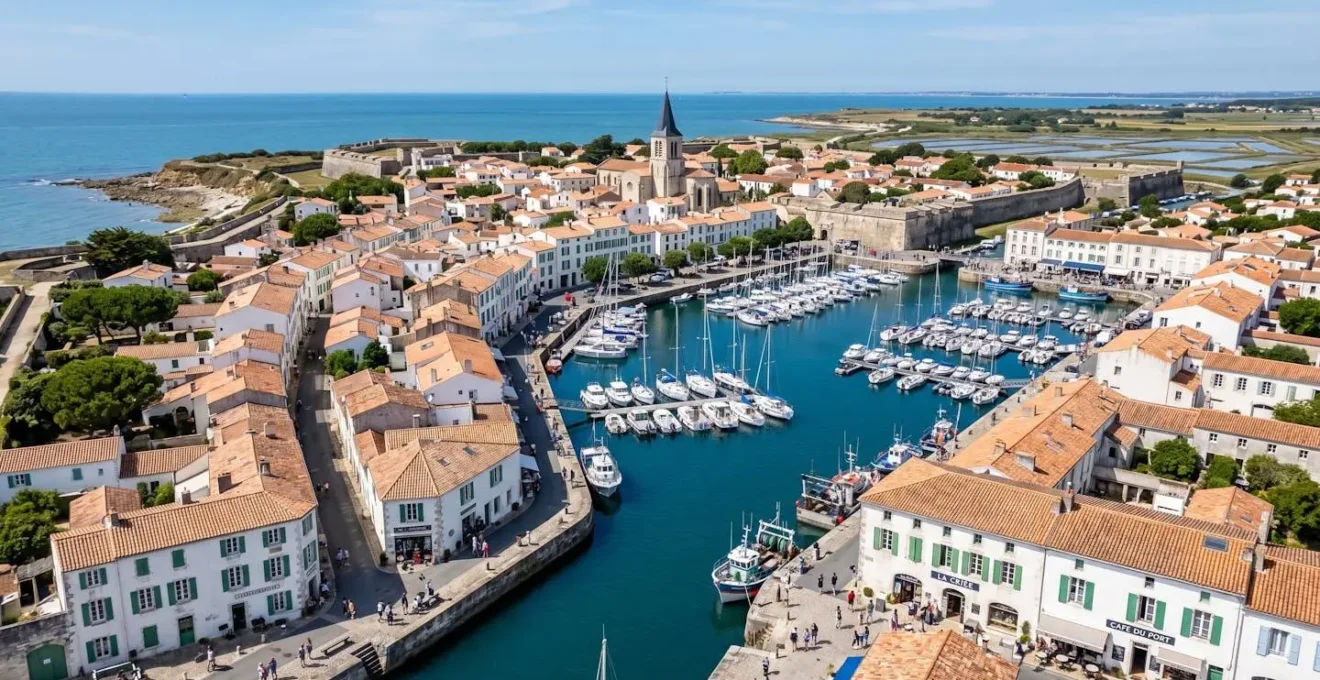
The numbers tell an intriguing story: a slender 30km island off France’s Atlantic coast attracts millions of visitors annually, commanding premium accommodation rates throughout a season that now stretches from May through October. France’s record-breaking 102 million international arrivals in 2025 have benefited coastal destinations particularly, with Atlantic hotspots experiencing sustained demand that shows no sign of plateauing.
What distinguishes Île de Ré from dozens of other French coastal destinations competing for the same holiday budgets? The answer lies not in a single standout feature, but in an unusual combination: rigorous architectural preservation meeting modern cycling infrastructure, a compact geography offering surprising beach diversity, and a self-catering villa market that has largely replaced traditional hotel development. For travellers seeking a more private and immersive experience, holiday villas for rent in Île de Ré have become the accommodation of choice, offering everything from charming two-bedroom cottages nestled in white-shuttered villages to expansive eight-bedroom estates with direct access to the island’s pristine coastline. This intersection creates an experience that resonates powerfully with families seeking authentic French island life without sacrificing contemporary comfort.
The island’s appeal operates on two levels simultaneously. Surface attractions — white villages with green shutters, salt marshes stretching to the horizon, oyster farms accessible by bicycle — provide immediate visual gratification. Underneath runs a more pragmatic infrastructure: 138 kilometres of dedicated cycle paths connecting every village and beach, a villa rental ecosystem catering to every budget and group size, and a gastronomic culture built on hyperlocal terroir rather than imported resort dining.
Five factors explain why Île de Ré commands sustained appeal across UK and European markets:
- Car-free cycling infrastructure spanning 138 kilometres across a flat, 30-kilometre island accessible to all fitness levels
- Beach typology ranging from shallow northern family shores to Atlantic-facing surf spots and secluded coves
- Preserved architectural identity through protected white-and-green village aesthetics maintained across ten distinct communities
- Gastronomy rooted in visible landscape — salt marshes producing fleur de sel, oyster farms offering direct farm-gate sales, salt marsh lamb
- Accommodation market dominated by quality villa rentals enabling residential-style stays versus standard hotel experiences
A Preserved Island Paradise Just 3km from Mainland France
Accessibility paradoxically enhances rather than diminishes Île de Ré’s appeal. A modern bridge connects the island to La Rochelle, eliminating the ferry dependency that once limited visitor numbers whilst simultaneously creating traffic management challenges during peak periods. This tension between access and preservation defines the contemporary island experience. The official tourism strategy has responded by positioning cycling infrastructure as the primary internal transport solution, effectively creating car-restricted zones in village centres throughout summer months.
The island’s compact 30-kilometre length masks remarkable accommodation diversity. Villa rentals dominate the market, with rental platforms showcasing properties distributed across all ten villages, allowing visitors to filter by specific priorities: proximity to family beaches, access to cycling path hubs, village centre charm, or secluded positioning away from high-density areas. This self-catering accommodation model fundamentally shapes the visitor experience, encouraging weekly stays and residential rhythms over brief hotel stopovers.
Consider the case of a London family booking their first Île de Ré holiday. Initial research reveals that peak August weeks require reservations six months in advance, with pricing reflecting this demand. However, data from Charentes Tourisme’s 2025 regional analysis documenting 674,900 tourist beds across the broader Charente-Maritime département demonstrates the scale of Atlantic coast accommodation infrastructure. Within this regional context, Île de Ré represents the premium segment, where quality villa stock consistently outperforms hotels in both occupancy rates and visitor satisfaction metrics.
138km
Total length of dedicated cycling paths connecting all island villages, beaches and natural sites
Seasonal timing dramatically affects both cost and experience quality. Families constrained to UK school holiday periods face premium rates and maximum crowd density. Those with scheduling flexibility discover that late June and early September deliver comparable weather conditions — Atlantic water temperatures peak in September rather than July — whilst shoulder season pricing typically runs thirty to forty per cent below August peaks. The trade-off involves accepting slightly shorter daylight hours and occasional Atlantic weather systems that peak-season visitors also encounter but discuss less frequently in online reviews.
The Cycling Network That Redefined Island Tourism
The transformation of Île de Ré into a cycling destination represents deliberate infrastructure policy rather than organic evolution. Local authorities invested in creating 138 kilometres of dedicated paths specifically to address two challenges: traffic congestion on narrow village streets during summer peaks, and environmental pressure from vehicle emissions in protected salt marsh areas. What began as a practical transport solution became the island’s defining characteristic and primary marketing asset.
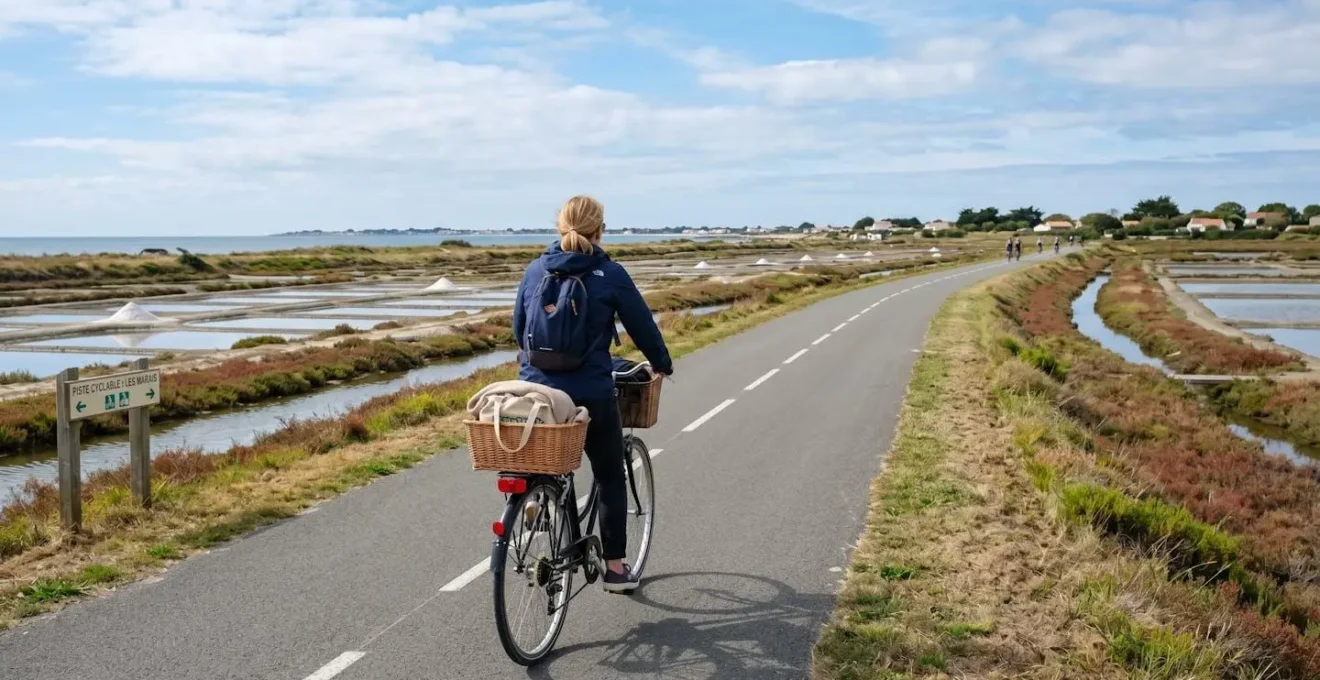
The cycling infrastructure operates on multiple levels simultaneously. Primary routes link major villages using wide, well-surfaced paths suitable for child trailers and cargo bikes carrying beach equipment. Secondary routes penetrate salt marsh zones and coastal areas, often narrower and occasionally shared with pedestrians. Tertiary connections serve individual beaches and smaller hamlets. This hierarchy allows visitors to calibrate daily rides according to group capability and desired scenery, with options ranging from flat five-kilometre village-to-beach loops to ambitious thirty-kilometre island circumnavigations.
First-time visitors often underestimate how thoroughly cycling culture permeates island life. Village centres feature bike parking vastly exceeding car parking capacity. Bakeries install dedicated bicycle racks. Markets assume customers arrive by bike, reflected in bag sizes and carrying solutions vendors offer. Restaurants provide secure parking within sight of dining terraces. This infrastructure normalises car-free days in ways that surprise visitors accustomed to vehicle dependency even for short trips in their home environments.
Practical consideration: Bicycle rental quality varies significantly between providers. Properties managed through established villa platforms typically offer partnership rates with premium rental services delivering bicycles directly to accommodation, complete with child seats, helmets and route maps. Independent booking may require collecting bikes from village centres, consuming half a day of holiday time whilst navigating unfamiliar roads before accessing the dedicated path network.
The network’s strategic success lies in connecting desired destinations rather than simply providing recreational trails. Every beach, market, harbour, oyster farm and village square sits within five hundred metres of a dedicated path. This practical connectivity transforms cycling from optional activity into logical transport choice, fundamentally altering how visitors structure their days and experience the island geography.
Three Beach Categories Matching Different Visitor Needs
Beach diversity across such compact geography creates optionality that larger coastal destinations struggle to match. The island’s orientation produces markedly different conditions between northern and southern shores, whilst western and eastern positions further diversify wave patterns, sand composition and surrounding landscape character. This variation allows families to select beaches matching specific daily priorities: safe paddling for young children, surf conditions for teenagers, or secluded coves for couples seeking quieter environments.
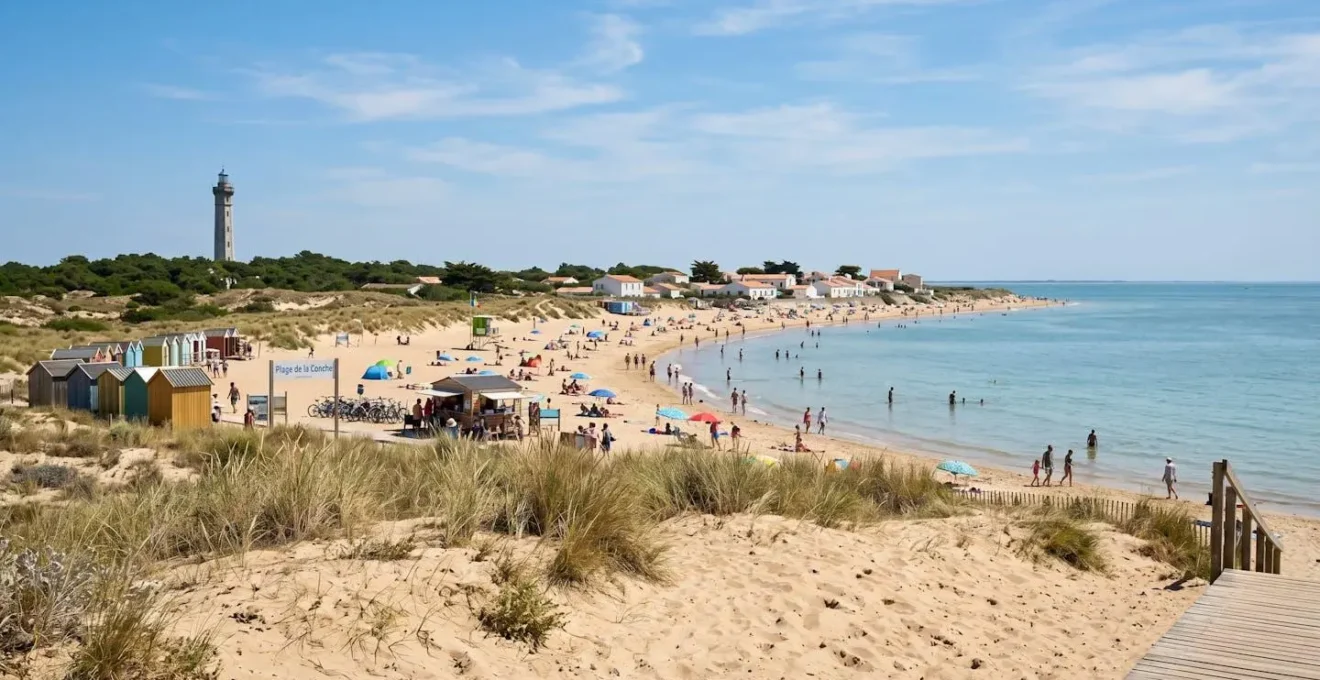
Among islands with diverse coastal scenery packed into compact areas, Île de Ré’s beach typology demonstrates how geography shapes visitor distribution. Understanding these categories helps match daily beach choices to group needs and weather conditions.
Shallow northern beaches protected from Atlantic swells offer extensive shallow zones where children can wade fifty metres from shore in waist-deep water. This topography creates warmer water temperatures through solar heating of shallow areas, typically two to three degrees celsius above southern Atlantic-facing beaches. Plage de la Conche and Plage des Grenettes exemplify this category, with gentle slopes, lifeguard supervision during summer months, and immediate cycling path access allowing families to arrive without vehicle dependency. These beaches attract the highest density of young families, particularly during morning hours when sun angles favour northern exposure.
Atlantic-facing surf and wind spots along the southern coastline deliver consistent wave action and wind conditions attracting surf enthusiasts and windsports participants. Plage du Peu des Hommes and sections of Plage de la Pergola experience wave patterns unsuitable for young swimmers but ideal for bodyboarding and surfing during appropriate swell conditions. The same Atlantic exposure that creates surf conditions also produces dramatic scenery and powerful coastal atmospheres absent from sheltered northern beaches, attracting photography enthusiasts and couples without young children for aesthetic reasons beyond water sports considerations.
Hidden coves for seclusion seekers at eastern and western extremities feature smaller, less accessible beaches requiring longer cycling approaches or walks through dune systems. These locations naturally filter visitor numbers through effort required to reach them, creating quieter environments even during peak season. Plage de Trousse-Chemise at the western tip exemplifies this category — spectacular setting, minimal facilities, rewarding for those willing to pedal the additional kilometres. Experienced island visitors learn to allocate cove visits to mid-week days when even popular beaches see reduced numbers, reserving closer, family-oriented beaches for weekends when convenience outweighs seclusion.
Salt Marshes, Oyster Farms, and Hyperlocal Gastronomy
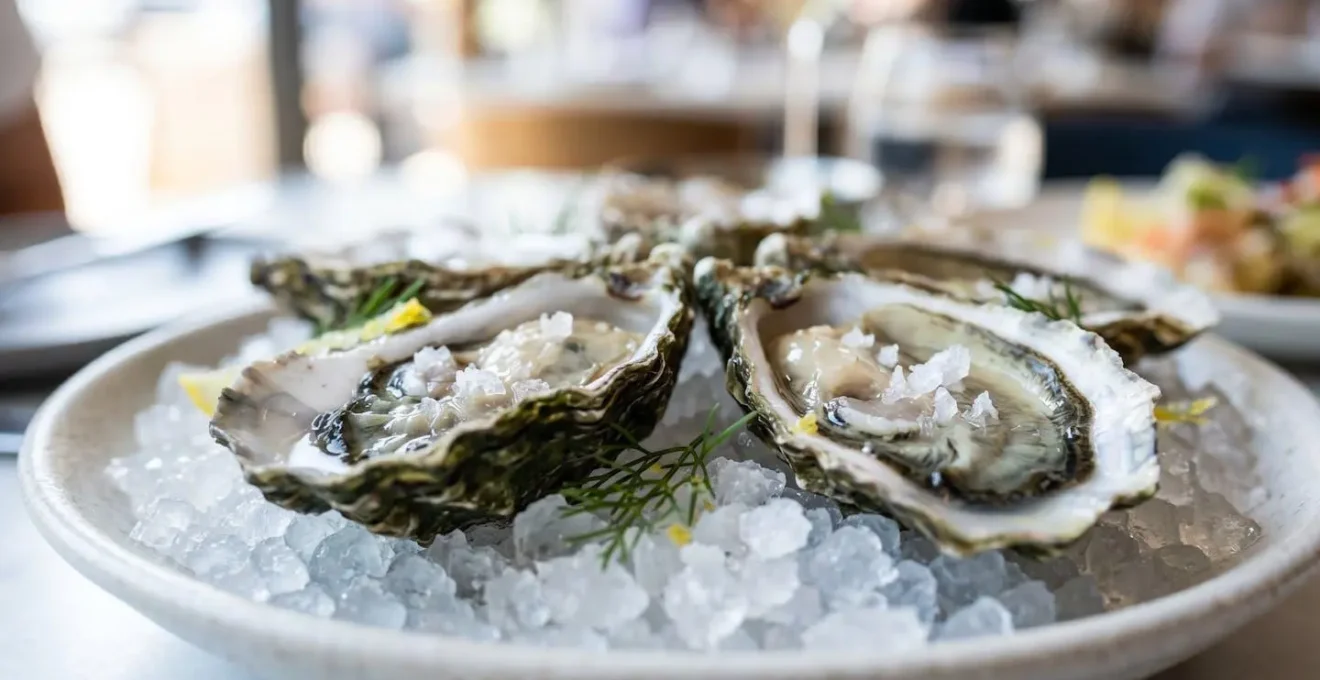
The connection between Île de Ré’s landscape and its gastronomy operates with unusual directness. Salt marshes visible from cycling paths produce the fleur de sel appearing on restaurant tables that same evening. Oyster farms accessible via dedicated path spurs sell directly to visitors who cycle home with dozen-packs in bicycle baskets. This farm-to-table proximity isn’t marketing rhetoric but observable daily reality shaping how visitors provision villa kitchens and choose restaurant experiences.
Salt marsh ecology defines large sections of island interior, particularly between villages. These protected wetlands support traditional salt production methods unchanged for centuries, with workers manually harvesting fleur de sel during specific tidal and weather windows. The resulting product commands premium pricing in gourmet markets globally, yet remains widely available at island markets and farm shops at producer rates significantly below export pricing.
The oyster farm experience most visitors miss: Rather than limiting oyster consumption to restaurant settings, cycling directly to working oyster farms allows observation of cultivation techniques, tidal management and harvesting processes. Producers including Coopérative Aquacole and independent farms around Ars-en-Ré welcome visitors and sell at farm-gate pricing. Purchasing three dozen oysters, cycling to a beach, and consuming them whilst watching Atlantic tides provides authenticity that restaurant settings cannot replicate, at pricing often fifty per cent below dining establishments.