In summary:
- Island ecosystems are uniquely vulnerable due to evolutionary isolation, making them hotspots of biodiversity but also extinction.
- Conscious travel goes beyond « don’t touch »; it requires understanding the invisible, interconnected systems linking land activities to marine health.
- Individual actions, though small, have a cumulative effect that can push fragile environments past a « tipping point » of collapse.
- Developing ecological literacy—learning to observe, question assumptions, and understand your impact—is the key to protecting these places.
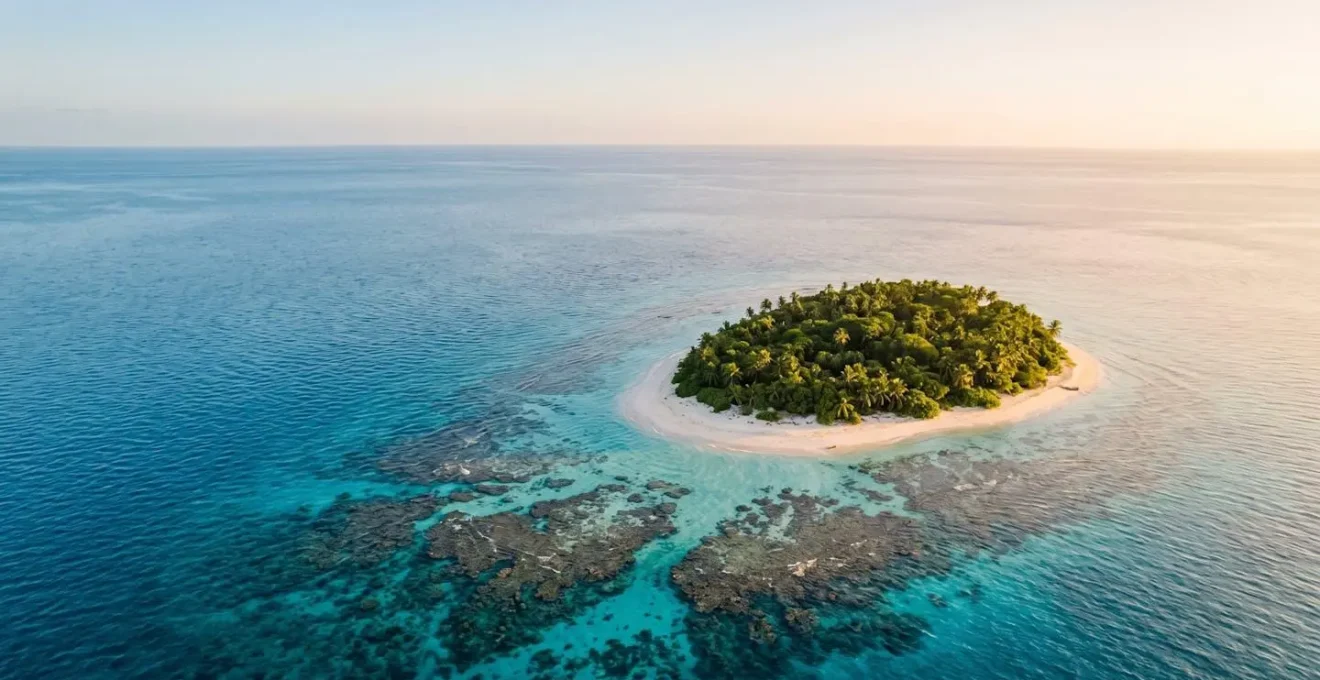
The first glimpse of a tropical island from a plane window is a moment of pure magic: a jewel of green and white fringed by turquoise water. We travel to these places seeking beauty, escape, and a connection with nature. We arrive armed with good intentions, diligently packing our reusable water bottles and promising to leave only footprints. We’ve all heard the standard advice—use reef-safe sunscreen, don’t litter, support local artisans—and these are all important first steps.
But these rules are just the surface. They are the « what » without the « why. » To truly travel consciously, especially in these uniquely fragile environments, we must go deeper. The real key to protecting these paradises lies not in a checklist of prohibitions, but in a genuine understanding of their inner workings. What if the most powerful tool for conservation wasn’t a rule, but a new way of seeing? What if, by learning to read the language of the ecosystem, we could transform our role from passive tourist to informed, respectful guest?
This guide is designed to provide that understanding. We will explore the fundamental principles that make islands so special and so vulnerable. By unpacking the science behind their unique biodiversity, the hidden connections between land and sea, and the profound impact of our collective presence, you will gain the knowledge to not just visit an island, but to appreciate and protect it on a level you never thought possible.
To help you navigate this journey of discovery, this article is structured to build your understanding step by step. From the foundational principles of island vulnerability to practical frameworks for responsible exploration, here is a look at what we will cover.
Summary: A Deep Dive into the Ecology of Conscious Island Travel
- Why Are Island Ecosystems More Vulnerable to Damage Than Continental Environments?
- How to Recognise Endemic Island Species That Exist Nowhere Else on Earth?
- Island Land Ecosystems or Marine Environments: Which Are More Impacted by Tourism?
- The Ecological Mistake: Damaging Island Ecosystems Through Ignorance Not Malice
- When Can You Visit Islands to Observe Wildlife During Peak Breeding and Migration Periods?
- Why Does Touching Coral Cause Reef Damage That Takes 50 Years to Recover?
- Why Does Individual Tourist Behaviour Cumulatively Determine Island Ecosystem Survival?
- How to Travel to Fragile Island Ecosystems Without Contributing to Their Degradation?
Why Are Island Ecosystems More Vulnerable to Damage Than Continental Environments?
The breathtaking beauty of islands hides a deep-seated fragility. Unlike vast continents, islands are isolated, closed systems with finite resources and unique evolutionary histories. This isolation is both a source of incredible biodiversity and profound vulnerability. Species evolve over millennia with limited competition and few, if any, natural predators. While this leads to fascinating and unique creatures, it also means they often lack the defensive instincts necessary to survive new threats, including those introduced by humans. This evolutionary innocence is a primary reason for their vulnerability.
The statistics paint a stark picture of this reality. Despite contributing only 6.7% of the Earth’s land surface area, islands are home to approximately 20% of its biodiversity. However, they also account for a shocking 50% of threatened species and 75% of all known extinctions. This disproportionate impact highlights their status as epicentres of both biodiversity and extinction crises.
This vulnerability extends beneath the surface to resources we cannot see. Many islands rely on a « freshwater lens, » a delicate layer of fresh groundwater that floats atop denser saltwater. This is their primary source of drinking water. Over-extraction for resorts and contamination from inadequate sewage systems can quickly deplete or pollute this finite resource, creating a crisis for both human and animal populations. The very ground beneath a visitor’s feet is part of a fragile system that is easily disrupted.
As this image suggests, the microscopic structure of island soil and its interaction with water is a delicate filtration system. The Island Conservation Organization explains this vulnerability succinctly: « Island species have evolved over thousands of years in isolation, leading to a high proportion of island-endemic species. These animals have often evolved without predators and therefore without defensive mechanisms or instincts to protect themselves. » This lack of defence, combined with limited resources, makes them acutely sensitive to any change in their environment.
How to Recognise Endemic Island Species That Exist Nowhere Else on Earth?
Endemic species are the crown jewels of island biodiversity—organisms found in one specific geographic location and nowhere else on the planet. From the giant tortoises of the Galápagos to the lemurs of Madagascar, these species are living testaments to the power of evolution in isolation. Recognising them is the first step to appreciating what makes an island truly unique. According to UNESCO research, although islands account for just 5% of the world’s landmass, they are home to approximately 17% of the world’s bird and plant species, with many being endemic.
So, how can a traveller learn to spot these unique inhabitants? While every species is different, there are common characteristics to look for. One of the most telling signs is what biologists call « ecological naïveté. » Having evolved without major predators, many endemic island birds and animals show a remarkable lack of fear towards humans. If a bird allows you to get unusually close or a lizard doesn’t immediately scurry away, you may be observing a species that has no evolutionary reason to fear you. This is not an invitation to approach closer, but rather a powerful signal of its unique and vulnerable nature.
Another clue is unusual specialisation. Isolation drives species to adapt to very specific niches. Look for birds with uniquely shaped beaks adapted to a specific local flower, insects with camouflage that perfectly matches a single type of tree bark, or plants with features you’ve never seen before. These are often indicators of a long, isolated evolutionary journey. Before your trip, a simple online search for « [Island Name] endemic species » will provide a list and images. Local field guides, often available at visitor centres or bookstores, are invaluable tools for identification in the field. Hiring a local guide is even better, as they possess generations of knowledge and can point out species you would certainly miss on your own.
Recognising these species is more than a game of « I Spy. » It’s about understanding that you are in the presence of something irreplaceable. The entire global population of that species might live within a few square miles of where you are standing. This realisation fundamentally changes your perspective, transforming a simple walk into an act of custodianship for a globally significant treasure.
Island Land Ecosystems or Marine Environments: Which Are More Impacted by Tourism?
It’s a common question for the conscious traveller: where should I focus my concern? On the fragile coral reefs I snorkel over, or the lush forests I hike through? The answer, rooted in the core principles of island ecology, is that this is a false choice. The most profound insight an island can teach us is that the land and the sea are not two separate systems, but one deeply interconnected entity. What happens on land inevitably impacts the ocean, and the health of the ocean directly affects the stability of the land.
Tourism, by its very nature, concentrates its impact on the coast—the precise interface where these two systems meet. The development of hotels, golf courses, and roads often involves clearing coastal vegetation like mangroves. These plants are not just scenery; they are a critical buffer. They trap sediment, filter pollutants, and absorb wave energy, protecting both the coastline from erosion and the nearby coral reefs from being smothered by runoff.
The Greening the Islands Foundation highlights this direct link: land-based pollution, such as pesticides from golf courses, sewage runoff, and plastic waste, is a primary driver of marine degradation. Conversely, as damaged reefs die, they can no longer protect the coast, leading to accelerated beach erosion and saltwater intrusion into coastal freshwater supplies. It is a vicious cycle where degradation in one system triggers collapse in the other. Therefore, the question isn’t which is *more* impacted, but how our actions on land create a cascade of damage in the sea.
Freshwater resources again play a crucial role. As environmental research indicates, increasing tourism places immense pressure on islands’ limited water supplies. The resulting increase in wastewater, if not managed with sophisticated and expensive treatment systems, leads to the release of nutrient-rich effluent into coastal waters. These nutrients, a bonanza for algae, fuel algal blooms that block sunlight and starve corals of oxygen, leading to widespread reef death. A five-star resort’s lush lawn and a bleached coral reef can be directly linked through this invisible chain of consequences.
The Ecological Mistake: Damaging Island Ecosystems Through Ignorance Not Malice
Very few travellers set out with the intention to harm the places they visit. The vast majority of ecological damage is not caused by malice, but by simple, unintentional ignorance—the « ecological mistake. » It happens when we apply our « mainland » logic to a delicate island system where the rules are different. It’s the tourist who, thinking they are helping, releases a « rescued » pet turtle into the wild, unknowingly introducing a potential disease. It’s the hiker who builds a small rock stack for a photo, destabilising a fragile slope and contributing to erosion.
These actions seem harmless in isolation, but they stem from a failure to perceive the hidden connections and fragile balances that govern island life. To avoid these mistakes, we don’t need a longer list of rules. We need a new mental framework for making decisions—a way to perform a quick « ecological self-assessment » before we act. This is where we shift from being a passive visitor to an active, conscious observer.
This image of careful, non-intrusive observation perfectly captures the mindset we should cultivate. It is not about possessing or changing, but about appreciating and understanding. Instead of relying on assumptions, we can learn to ask the right questions about our own behaviour and its potential ripple effects. The following checklist provides a simple framework to build this new habit of awareness.
Your 5-Step Ecological Awareness Checklist
- Identify Connections: Before I do this, what could it connect to? List potential impacts of your action on water, soil, wildlife, or the local community.
- Scan for Indicators: What are the signs of health or stress here? Inventory what you see—thriving vegetation and diverse sounds (health) versus eroded trails and absent wildlife (stress).
- Challenge Assumptions: Is my « common sense » from home valid here? Question whether your mainland habits (e.g., what is considered biodegradable) apply in this unique context.
- Assess Cumulative Impact: If 1,000 other people did this exact same thing, what would the result be? This transforms a « small » action into a systemic impact.
- Plan for Positive Trace: How can I leave this place better than I found it? Identify a simple, positive action, like picking up a piece of plastic that isn’t yours.
When Can You Visit Islands to Observe Wildlife During Peak Breeding and Migration Periods?
Timing your visit to coincide with a spectacular natural event—like sea turtle nesting, whale migration, or seabird breeding season—can be the experience of a lifetime. However, these are also periods when wildlife is at its most vulnerable. The presence of too many people, even well-intentioned ones, can cause significant stress, leading to nest abandonment, disruption of mating rituals, or avoidance of critical feeding grounds. The key to responsible wildlife observation is to find the delicate balance between access and protection.
This balance often involves what is known as « managed access » and travelling during the « shoulder seasons »—the periods just before or after the peak tourist rush. Visiting during these times offers multiple benefits. As the Greening the Islands Foundation notes, it reduces « peak-season pressure on fragile ecosystems and local communities, supporting hotels, guides, and SMEs across longer parts of the year. » This approach spreads out the economic benefits and the ecological footprint of tourism.
Moreover, local authorities and conservation groups often implement strict guidelines during sensitive periods. These may include designated viewing areas, mandatory distances from animals, and limits on the number of visitors per day. Adhering to these rules is non-negotiable. Always choose tour operators who are certified, employ local guides, and demonstrate a clear commitment to these regulations. They will know the best times and places to observe wildlife without causing harm.
Case Study: The Recovery of Hanauma Bay
The power of reducing visitor pressure was dramatically illustrated at Hanauma Bay Nature Preserve in Hawaii. This iconic snorkelling spot, which typically hosted around a million visitors annually, was closed for seven months during the pandemic. A study by the Hawaii Institute of Marine Biology revealed astounding results: the water became significantly clearer, fish populations boomed, and endangered Hawaiian monk seals—rarely seen before—became regular visitors. The study provided a clear blueprint, demonstrating that managing visitor numbers is a powerful tool to protect coral ecosystems while ensuring the long-term viability of tourism.
The Hanauma Bay example proves that less can truly be more. By choosing to visit during less crowded times and strictly following local conservation rules, you not only get a better, more intimate wildlife experience but also actively contribute to the long-term survival of the very species you came to see.
Why Does Touching Coral Cause Reef Damage That Takes 50 Years to Recover?
To many people, coral looks like a beautiful, colourful rock. This single misconception is the root of immense, often irreversible damage to the world’s reefs. In reality, a coral reef is a bustling city built by millions of tiny, fragile animals called polyps. Each polyp is a living creature that secretes a limestone skeleton, and over centuries, these skeletons build the massive, complex structures we see. The vibrant colours are not from the coral animals themselves, but from microscopic algae (zooxanthellae) that live symbiotically within their tissues.
This entire structure is protected by a thin, delicate layer of living tissue and mucus, which acts as its immune system, shielding it from infection. When you touch coral—even with the slightest brush of a finger or a fin—you can easily damage or remove this protective layer. This leaves the coral vulnerable to bacteria and disease, much like a cut on human skin can get infected. The oils and bacteria from our skin can also be directly harmful to the polyps.
The stress of being touched, kicked, or polluted can trigger a response known as « coral bleaching. » As the Interamerican Association for Environmental Defense (AIDA) explains, « When tourists accidentally touch, pollute, or break parts of the reef, corals experience stress… this process often leads to coral bleaching. » In a desperate attempt to survive, the stressed coral expels its colourful symbiotic algae, leaving behind its stark white skeleton. A bleached coral is not dead, but it is starving and severely weakened. If the stressor is removed and conditions improve, it can sometimes recover, but prolonged stress is a death sentence. Given that some coral species grow less than an inch per year, a single moment of carelessness can destroy decades of growth.
The global situation is dire. The scientific literature predicts that 70% of the world’s reefs are expected to disappear by 2030 without drastic corrective measures. This makes every single interaction critical. The simple rule is absolute: look, but never, ever touch. Your discipline is a vital contribution to the survival of these underwater metropolises.
Why Does Individual Tourist Behaviour Cumulatively Determine Island Ecosystem Survival?
It’s easy to feel like our individual actions are just a drop in the ocean. What difference does one plastic bottle make? Does it really matter if I walk off the trail for a better photo? In the context of a fragile island ecosystem, the answer is a resounding yes. The defining feature of these systems is their limited capacity to absorb disturbance. While a single « drop » may seem insignificant, the combined effect of thousands or millions of drops creates a flood that can overwhelm and collapse the entire ecosystem. This is the principle of cumulative impact.
One of the most devastating examples of cumulative impact is the introduction of invasive species. A single seed stuck to a shoe, a tiny insect in a piece of luggage, or a non-native plant brought in for a hotel garden can spark an ecological catastrophe. These newcomers, free from the predators and diseases that controlled them in their native habitat, can outcompete and decimate endemic species. The data is terrifying: conservation data reveals that while islands are the location of 75% of all recorded extinctions of birds, amphibians, mammals, and reptiles, a staggering 86% of these extinctions are linked to the presence of invasive species introduced by human activity.
This concept is not just theoretical; it’s a recognised phenomenon in ecological science. Ecosystems can often absorb a certain amount of stress without showing visible signs of damage. But they have a limit—a « tipping point. »
The cumulative effect of many small actions can push the system past a tipping point, causing a sudden and often irreversible collapse.
– Scientific Reports, Stakeholder perceptions of tourism’s impacts on island ecological environments
This is the critical message for every traveller. Your choices matter because they are multiplied by every other visitor. Choosing reef-safe sunscreen matters because thousands of litres of sunscreen wash off into the water each day. Staying on the trail matters because thousands of footsteps can turn a path into a barren, eroded scar. Your individual behaviour is not a standalone act; it is a vote for or against the survival of the ecosystem. By understanding and respecting this principle, you reclaim your power as an individual to be a force for preservation, not degradation.
Key takeaways
- Island vulnerability stems from evolutionary isolation and interconnected, finite resources like freshwater lenses.
- The greatest threats are often invisible and cumulative, linking land-based actions (waste, runoff) directly to marine degradation (coral bleaching).
- Conscious travel is not about a list of rules, but developing ‘ecological literacy’ to observe, question assumptions, and understand your cumulative impact.
How to Travel to Fragile Island Ecosystems Without Contributing to Their Degradation?
Understanding the fragility of island ecosystems is the first and most crucial step. The final piece of the puzzle is translating that knowledge into concrete action. Travelling without causing degradation is not about restriction, but about making deliberate, informed choices at every stage of your journey—from packing your bag to choosing your dinner. It’s about adopting a mindset of active stewardship.
This process begins long before you arrive. A pre-trip audit of your plans and packing list can dramatically reduce your footprint. Consider the entire lifecycle of what you bring and consume. Here are some key actions to build into your pre-travel routine:
- Pack to minimize waste: Choose solid toiletries (shampoo bars, toothpaste tablets) to eliminate plastic packaging. Bring a reusable water bottle and coffee cup. Always pack reef-safe, mineral-based sunscreen containing only zinc oxide or titanium dioxide.
- Choose your operator wisely: Research accommodations and tour operators that have independent, third-party eco-certifications (like Green Globe or EarthCheck), not just self-proclaimed « eco-friendly » labels. Prioritise operators who hire local guides and keep tour groups small.
- Learn before you go: Learn a few key phrases in the local language to show respect. Research the specific conservation issues of your destination island so you arrive aware and informed.
This model of tourism, where conservation and education are at the heart of the experience, is not just a dream. It exists and thrives in places that have chosen a different path.
Case Study: The Chumbe Island Sustainable Tourism Model
Chumbe Island Coral Park in Zanzibar is a world-renowned example of how tourism can be a force for good. The entire project is designed around conservation, funded entirely by a small number of visitors. The experience centres on environmental education, with guided walks and snorkelling tours led by former fishermen retrained as park rangers. Strict visitor management, local employment, and cutting-edge eco-technology (like rainwater harvesting and composting toilets) ensure the operation has a minimal environmental impact. Chumbe Island proves that it is possible to create a successful tourism enterprise that actively protects a marine ecosystem, supports local livelihoods, and transforms visitors into passionate ambassadors for conservation.
The Chumbe Island model shows us what is possible. By supporting businesses that prioritise the planet and its people, and by making conscious choices that reflect our understanding of these delicate systems, we can ensure that the islands we love will continue to inspire awe and wonder for generations to come.
Your journey to becoming a more conscious traveller starts now. Armed with this deeper understanding of island ecology, the next step is to apply these principles to your own travel planning. Choose your next destination, your accommodations, and your activities not just for their beauty, but for their commitment to preserving it.